
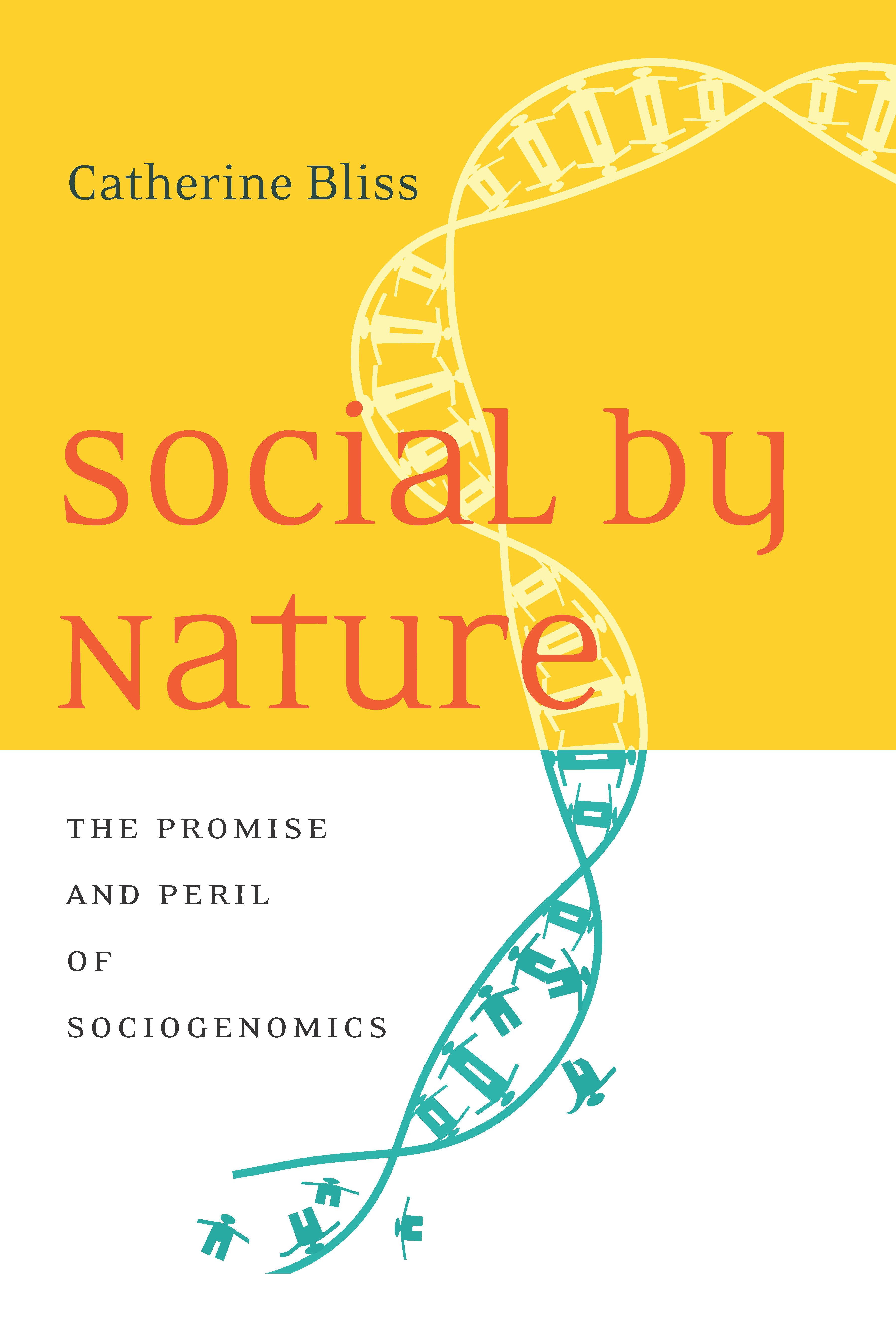
Sociogenomics has rapidly become one of the trendiest sciences of the new millennium. Practitioners view human nature and life outcomes as the result of genetic and social factors. In Social by Nature, Catherine Bliss recognizes the promise of this interdisciplinary young science, but also questions its implications for the future. As she points out, the claim that genetic similarities cause groups of people to behave in similar ways is not new—and a dark history of eugenics warns us of its dangers.
Over the last decade, sociogenomics has enjoyed a largely uncritical rise to prominence and acceptance in popular culture. Researchers have published studies showing that things like educational attainment, gang membership, and life satisfaction are encoded in our DNA long before we say our first word. Strangely, unlike the racial debates over IQ scores in the '70s and '90s, sociogenomics has not received any major backlash. By exposing the shocking parallels between sociogenomics and older, long-discredited, sciences, Bliss persuasively argues for a more thoughtful public reception of any study that reduces human nature to a mere sequence of genes.
This book is a powerful call for researchers to approach their work in more socially responsible ways, and a must-read for anyone who wants to better understand the scholarship that impacts how we see ourselves and our society.
Płać wygodnie kartą, Klarną, Apple Pay lub Google Pay. Nie jesteś zadowolony? Zawsze masz 14-dniową gwarancję zwrotu pieniędzy. Więcej przeczytasz w naszych warunkach. Masz pytania? Napisz do nas na hello@memmo.org.
Memmo ułatwia naukę – gdziekolwiek jesteś na świecie. U nas znajdziesz podręczniki i sprytne narzędzia do nauki w jednym miejscu: streszczenia, quizy, podcasty i fiszki. A do tego Ted, Twój kumpel do nauki, który odpowie na wszystko, co Cię nurtuje. Ponad 50 000 studentów już tu się uczy – stworzone, byś uczył się szybciej i mniej stresował.