
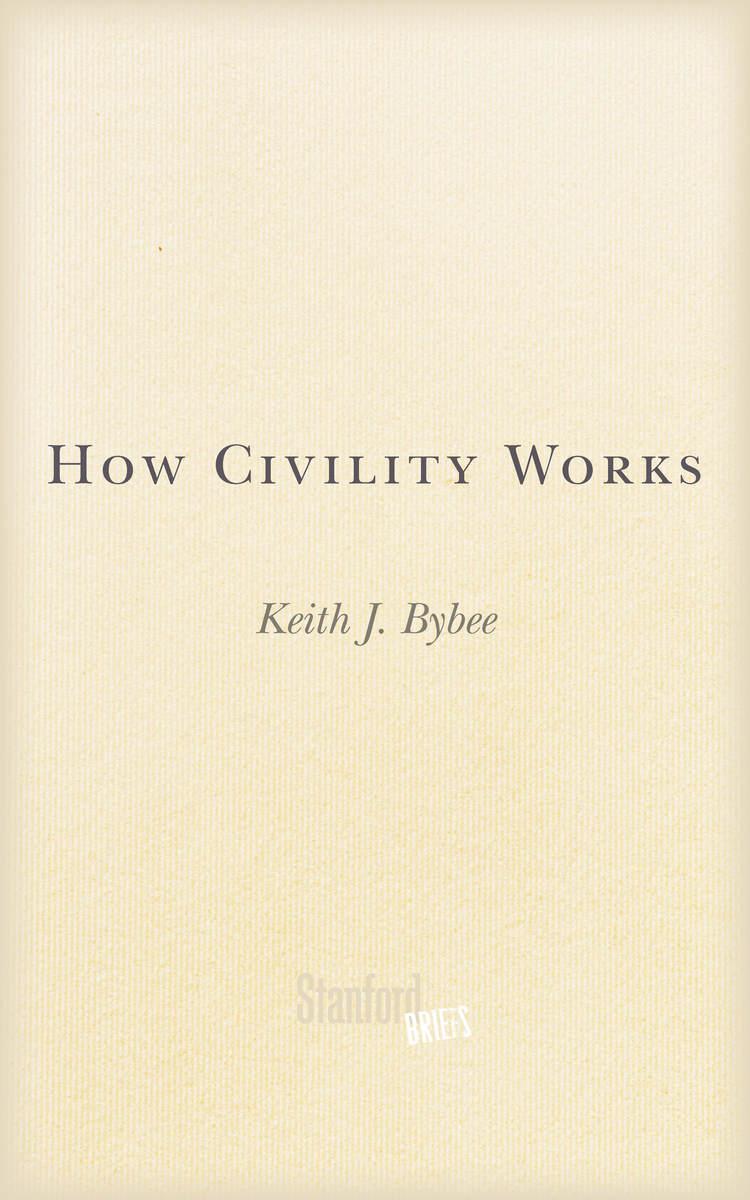
Is civility dead? Americans ask this question every election season, but their concern is hardly limited to political campaigns. Doubts about civility regularly arise in just about every aspect of American public life. Rudeness runs rampant. Our news media is saturated with aggressive bluster and vitriol. Our digital platforms teem with trolls and expressions of disrespect. Reflecting these conditions, surveys show that a significant majority of Americans believe we are living in an age of unusual anger and discord. Everywhere we look, there seems to be conflict and hostility, with shared respect and consideration nowhere to be found. In a country that encourages thick skins and speaking one's mind, is civility even possible, let alone desirable?
In How Civility Works, Keith J. Bybee elegantly explores the "crisis" in civility, looking closely at how civility intertwines with our long history of boorish behavior and the ongoing quest for pleasant company. Bybee argues that the very features that make civility ineffective and undesirable also point to civility's power and appeal. Can we all get along? If we live by the contradictions on which civility depends, then yes, we can, and yes, we should.
Płać wygodnie kartą, Klarną, Apple Pay lub Google Pay. Nie jesteś zadowolony? Zawsze masz 14-dniową gwarancję zwrotu pieniędzy. Więcej przeczytasz w naszych warunkach. Masz pytania? Napisz do nas na hello@memmo.org.
Memmo ułatwia naukę – gdziekolwiek jesteś na świecie. U nas znajdziesz podręczniki i sprytne narzędzia do nauki w jednym miejscu: streszczenia, quizy, podcasty i fiszki. A do tego Ted, Twój kumpel do nauki, który odpowie na wszystko, co Cię nurtuje. Ponad 50 000 studentów już tu się uczy – stworzone, byś uczył się szybciej i mniej stresował.