
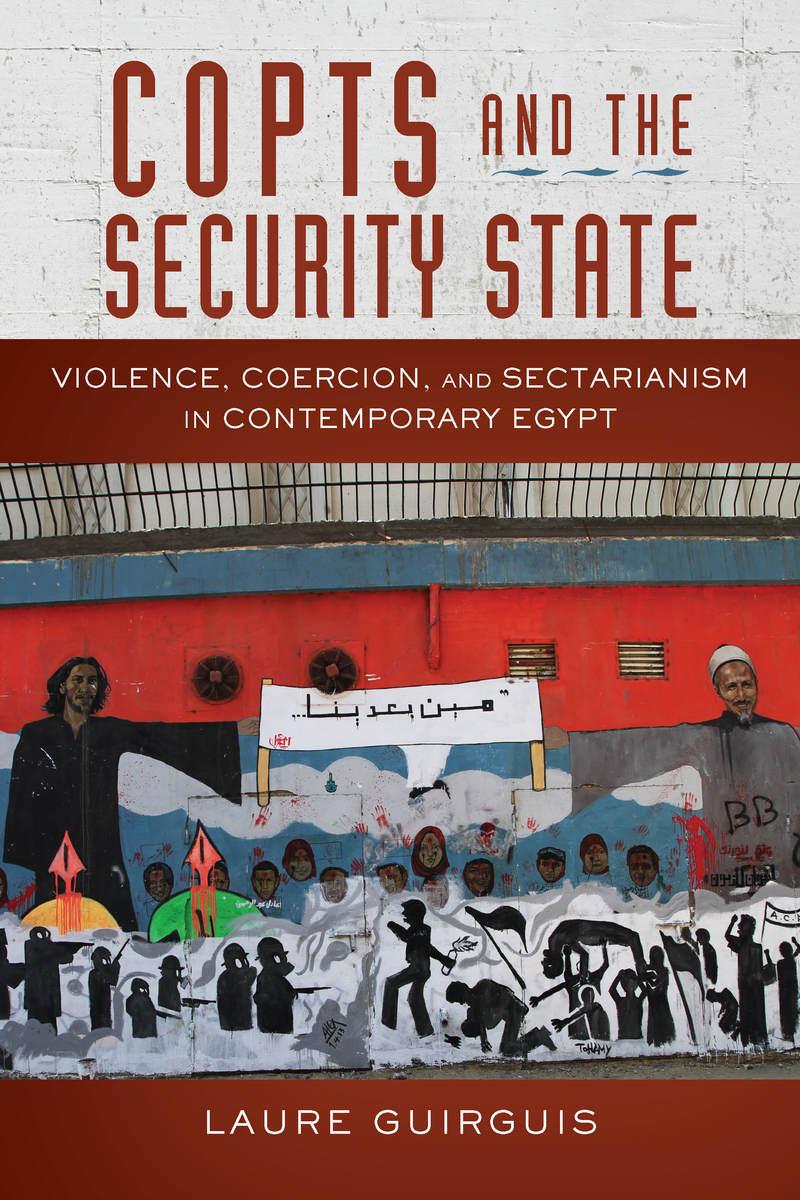
Copts and the Security State combines political, anthropological, and social history to analyze the practices of the Egyptian state and the political acts of the Egyptian Coptic minority. Laure Guirguis considers how the state, through its subjugation of Coptic citizens, reproduces a political order based on religious identity and difference. The leadership of the Coptic Church, in turn, has taken more political stances, thus foreclosing opportunities for secularization or common ground. In each instance, the underlying logics of authoritarianism and sectarianism articulate a fear of the Other, and, as Guirguis argues, are ultimately put to use to justify the expanding Egyptian security state.
In outlining the development of the security state, Guirguis focuses on state discourses and practices, with particular emphasis on the period of Hosni Mubarak's rule, and shows the transformation of the Orthodox Coptic Church under the leadership of Pope Chenouda III. She also considers what could be done to counter the growing tensions and violence in Egypt. The 2011 Egyptian uprising constitutes the most radical recent attempt to subvert the predominant order. Still, the revolutionary discourses and practices have not yet brought forward a new system to counter the sectarian rhetoric, and the ongoing counter-revolution continues to repress political dissent.
Płać wygodnie kartą, Klarną, Apple Pay lub Google Pay. Nie jesteś zadowolony? Zawsze masz 14-dniową gwarancję zwrotu pieniędzy. Więcej przeczytasz w naszych warunkach. Masz pytania? Napisz do nas na hello@memmo.org.
Memmo ułatwia naukę – gdziekolwiek jesteś na świecie. U nas znajdziesz podręczniki i sprytne narzędzia do nauki w jednym miejscu: streszczenia, quizy, podcasty i fiszki. A do tego Ted, Twój kumpel do nauki, który odpowie na wszystko, co Cię nurtuje. Ponad 50 000 studentów już tu się uczy – stworzone, byś uczył się szybciej i mniej stresował.