
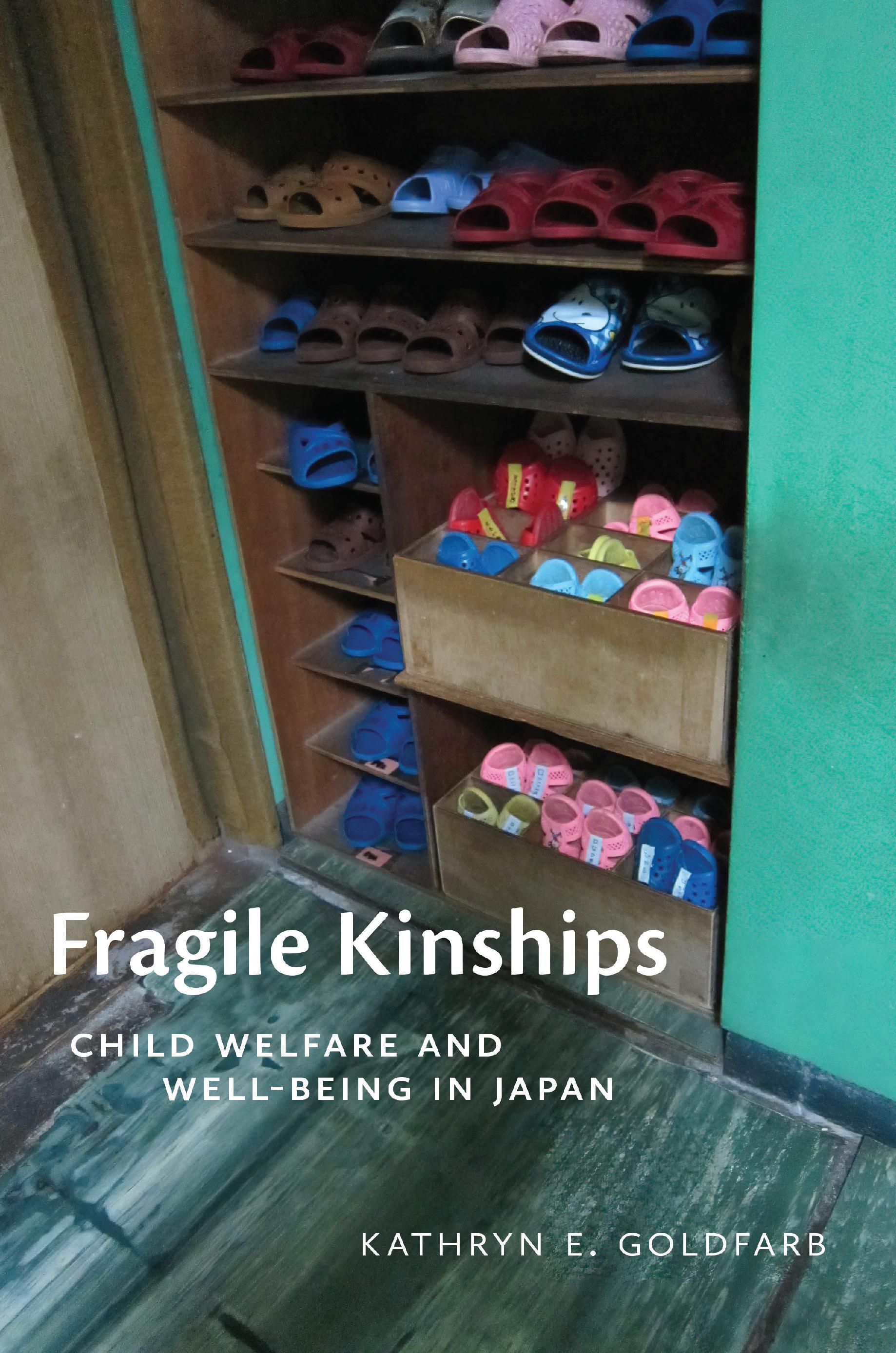
In Fragile Kinships, Kathryn E. Goldfarb shows how child welfare systems do not always generate well-being. This is true across the world, as it is in Japan. Policymakers, caregivers, and people with experience in state care endeavor to imagine—and implement—child welfare systems that are genuinely supportive. Yet despite these efforts, social welfare systems too often produce people who are alone. By centering relationality in theorizing social forms of care, Fragile Kinships offers key insights into embodied and socioemotional well-being. Goldfarb analyzes both the feelings and effects of lacking kin, and the transformative energy people invest in creating new forms of kinship and relatedness.
Fragile Kinships demonstrates why welfare systems must support relational well-being. In her contributions to anthropological theories of kinship, embodiment, and the field of Japanese studies, Goldfarb also speaks to academics, practitioners, and policymakers in Japan and globally with ethnographically grounded perspectives suggesting ways that child welfare systems might truly achieve wellbeing.
Płać wygodnie kartą, Klarną, Apple Pay lub Google Pay. Nie jesteś zadowolony? Zawsze masz 14-dniową gwarancję zwrotu pieniędzy. Więcej przeczytasz w naszych warunkach. Masz pytania? Napisz do nas na hello@memmo.org.
Memmo ułatwia naukę – gdziekolwiek jesteś na świecie. U nas znajdziesz podręczniki i sprytne narzędzia do nauki w jednym miejscu: streszczenia, quizy, podcasty i fiszki. A do tego Ted, Twój kumpel do nauki, który odpowie na wszystko, co Cię nurtuje. Ponad 50 000 studentów już tu się uczy – stworzone, byś uczył się szybciej i mniej stresował.