
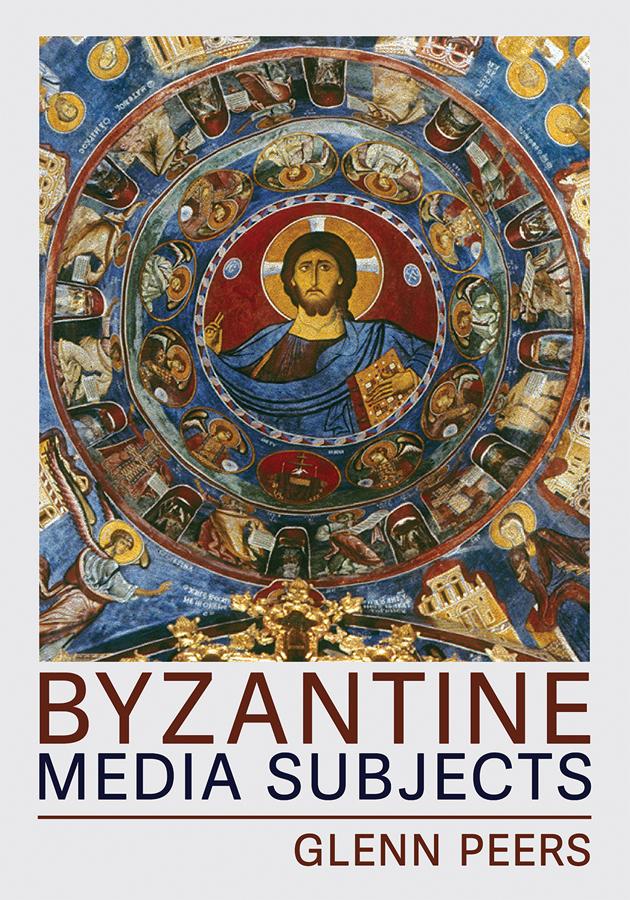
Byzantine Media Subjects invites readers into a world replete with images—icons, frescoes, and mosaics filling places of worship, politics, and community. Glenn Peers asks readers to think themselves into a world where representation reigned and humans followed, and indeed were formed. Interrogating the fundamental role of representation in the making of the Byzantine human, Peers argues that Byzantine culture was (already) posthuman.
The Byzantine experience reveals the extent to which media like icons, manuscripts, music, animals, and mirrors fundamentally determine humans. In the Byzantine world, representation as such was deeply persuasive, even coercive; it had the power to affect human relationships, produce conflict, and form self-perception. Media studies has made its subject the modern world, but this book argues for media having made historical subjects. Here, it is shown that media long ago also made Byzantine humans, defining them, molding them, mediating their relationship to time, to nature, to God, and to themselves.
Płać wygodnie kartą, Klarną, Apple Pay lub Google Pay. Nie jesteś zadowolony? Zawsze masz 14-dniową gwarancję zwrotu pieniędzy. Więcej przeczytasz w naszych warunkach. Masz pytania? Napisz do nas na hello@memmo.org.
Memmo ułatwia naukę – gdziekolwiek jesteś na świecie. U nas znajdziesz podręczniki i sprytne narzędzia do nauki w jednym miejscu: streszczenia, quizy, podcasty i fiszki. A do tego Ted, Twój kumpel do nauki, który odpowie na wszystko, co Cię nurtuje. Ponad 50 000 studentów już tu się uczy – stworzone, byś uczył się szybciej i mniej stresował.