
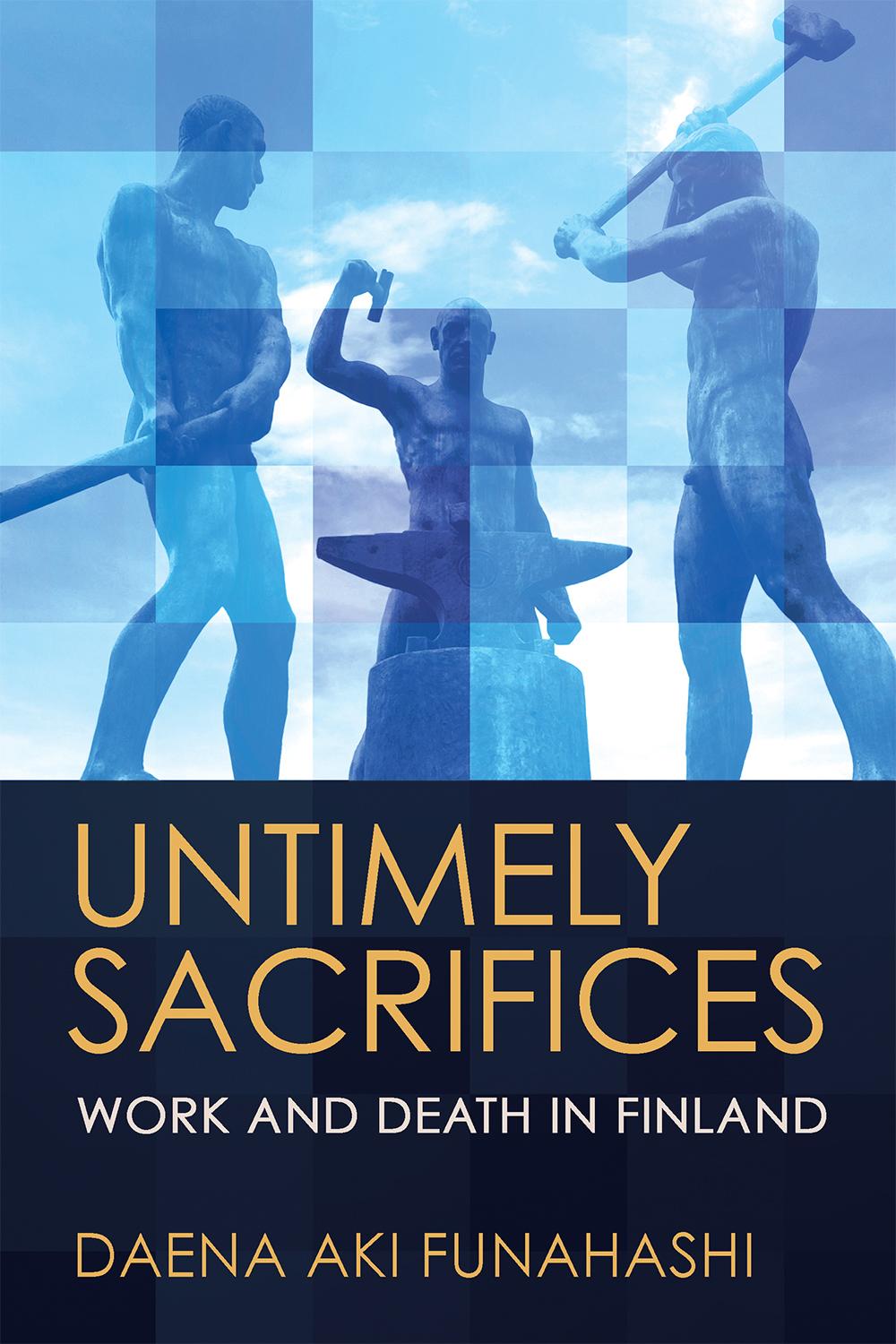
Untimely Sacrifices questions why individuals may give their time and energy to the collective against their own self-interest. Turning to Finland where public health officials named occupational burnout as a "new hazard" of the new economy, Daena Funahashi asks: What moves people to work to the point of pathological stress?
Contrary to health experts who highlight the importance of self-management and energetic conservation, Funahashi questions the very economic premise of cognitive psychology that one could "economize" one's energy and thus save oneself. By pitting anthropological takes on sacrifice next to the clinical discourses on pressure, work, and coping, Funahashi offers ways to rethink what drives stress.
Untimely Sacrifices also provides a compelling critique of state welfare and political economy, contesting the tendency to treat the gift economy as something separate from the force that makes redistributive mechanisms of state welfare work. It is a book essential to those interested in how forces unassimilable to conventional economy come to matter in issues of labor, stress, and welfare.
Płać wygodnie kartą, Klarną, Apple Pay lub Google Pay. Nie jesteś zadowolony? Zawsze masz 14-dniową gwarancję zwrotu pieniędzy. Więcej przeczytasz w naszych warunkach. Masz pytania? Napisz do nas na hello@memmo.org.
Memmo ułatwia naukę – gdziekolwiek jesteś na świecie. U nas znajdziesz podręczniki i sprytne narzędzia do nauki w jednym miejscu: streszczenia, quizy, podcasty i fiszki. A do tego Ted, Twój kumpel do nauki, który odpowie na wszystko, co Cię nurtuje. Ponad 50 000 studentów już tu się uczy – stworzone, byś uczył się szybciej i mniej stresował.