
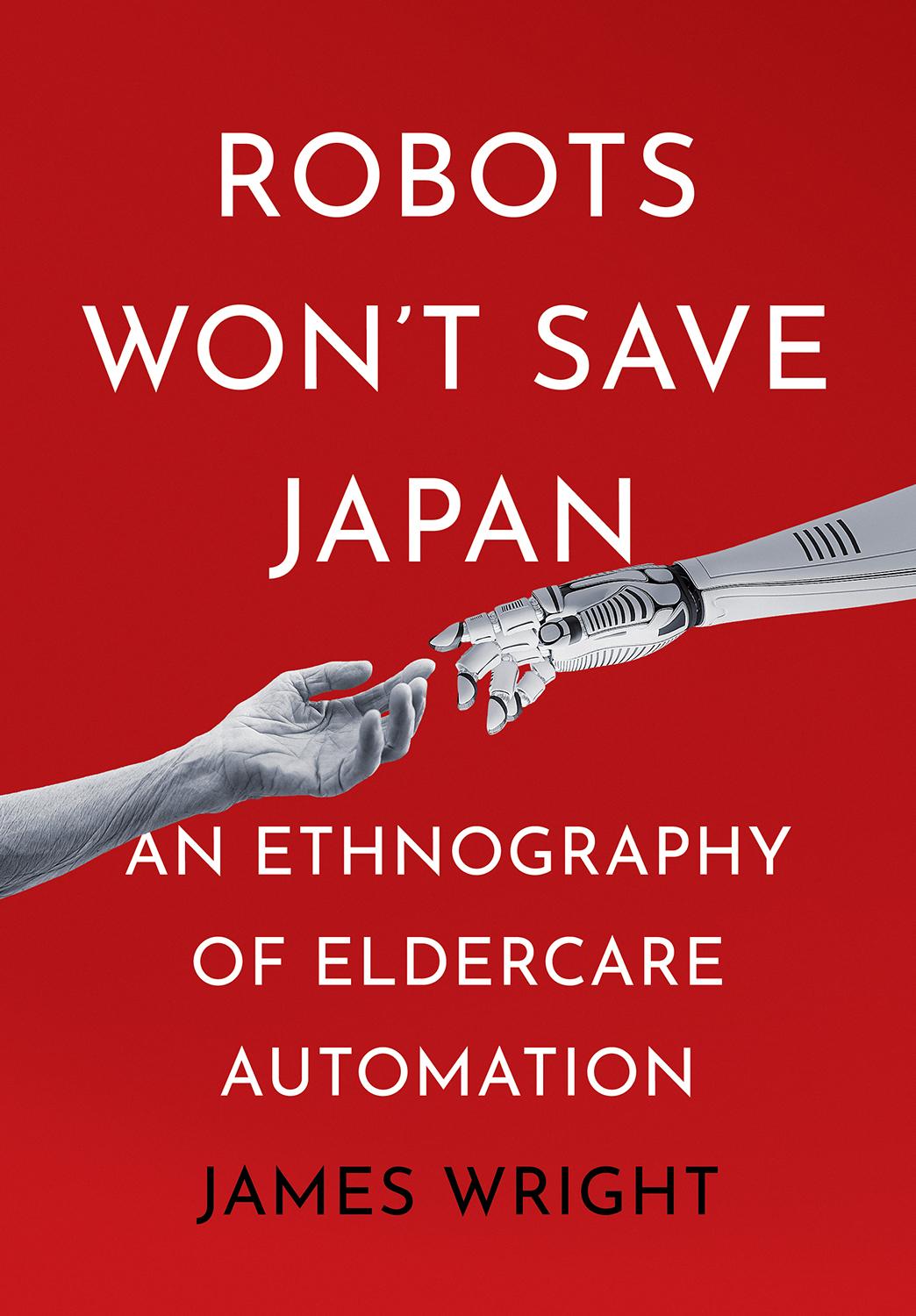
Robots Won't Save Japan addresses the Japanese government's efforts to develop care robots in response to the challenges of an aging population, rising demand for eldercare, and a critical shortage of care workers. Drawing on ethnographic research at key sites of Japanese robot development and implementation, James Wright reveals how such devices are likely to transform the practices, organization, meanings, and ethics of caregiving if implemented at scale.
This new form of techno-welfare state that Japan is prototyping involves a reconfiguration of care that deskills and devalues care work and reduces opportunities for human social interaction and relationship building. Moreover, contrary to expectations that care robots will save labor and reduce health care expenditures, robots cost more money and require additional human labor to tend to the machines. As Wright shows, robots alone will not rescue Japan from its care crisis. The attempts to implement robot care instead point to the importance of looking beyond such techno-fixes to consider how to support rather than undermine the human times, spaces, and relationships necessary for sustainably cultivating good care.
Płać wygodnie kartą, Klarną, Apple Pay lub Google Pay. Nie jesteś zadowolony? Zawsze masz 14-dniową gwarancję zwrotu pieniędzy. Więcej przeczytasz w naszych warunkach. Masz pytania? Napisz do nas na hello@memmo.org.
Memmo ułatwia naukę – gdziekolwiek jesteś na świecie. U nas znajdziesz podręczniki i sprytne narzędzia do nauki w jednym miejscu: streszczenia, quizy, podcasty i fiszki. A do tego Ted, Twój kumpel do nauki, który odpowie na wszystko, co Cię nurtuje. Ponad 50 000 studentów już tu się uczy – stworzone, byś uczył się szybciej i mniej stresował.