
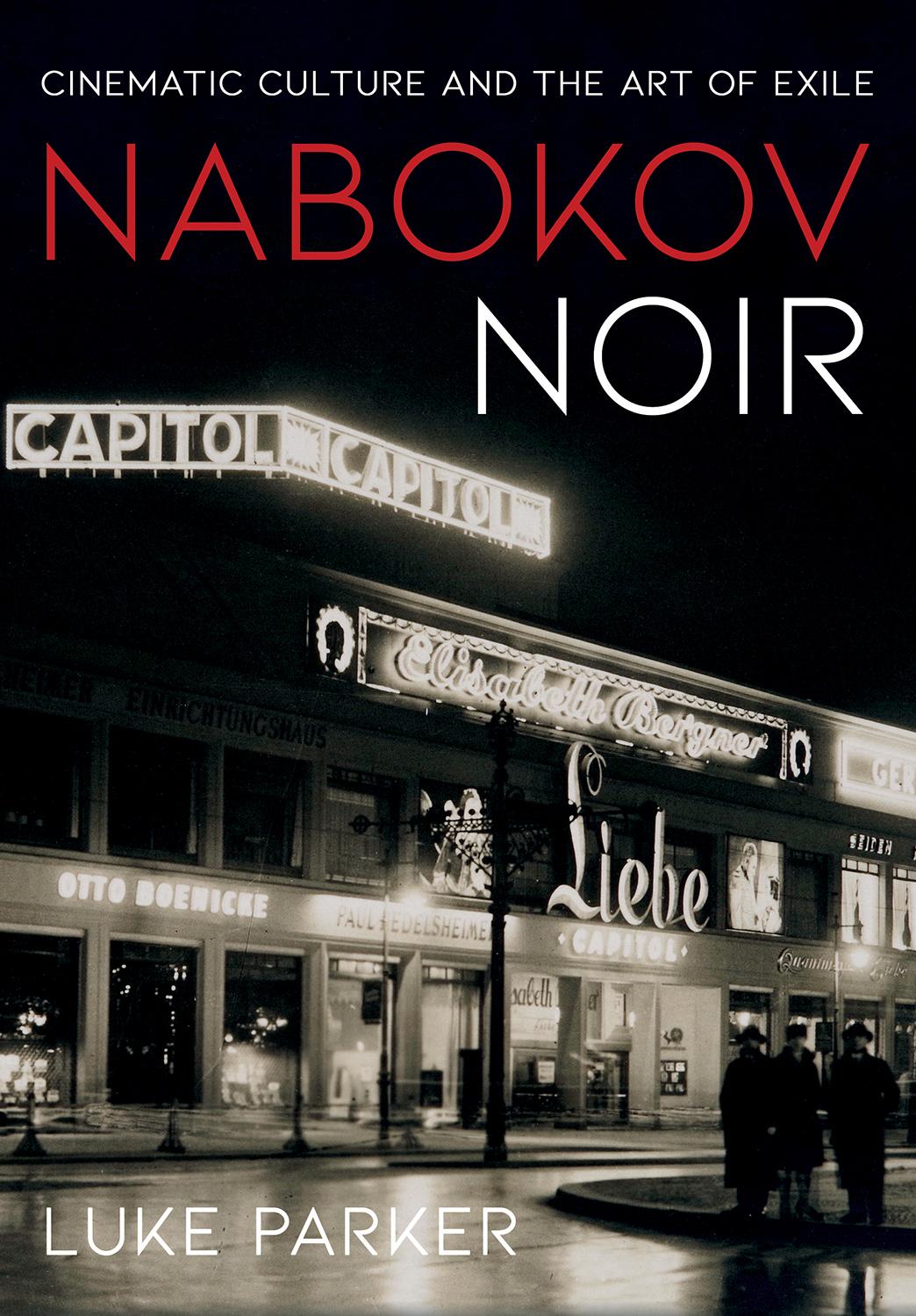
Nabokov Noir places Vladimir Nabokov's early literary career—from the 1920s to the 1940s—in the context of his fascination with silent and early sound cinema and the chiaroscuro darkness and artificial brightness of the Weimar era, with its movie palaces, cultural Americanism, and surface culture. Luke Parker argues that Nabokov's engagement with the cinema and the dynamics of mass culture more broadly is an art of exile, understood both as literary poetics and practical strategy.
Obsessive and competitive, fascinated and disturbed, Nabokov's Russian-language fiction and essays, written in Berlin, present a compelling rethinking of modernist-era literature's relationship to an unabashedly mass cultural phenomenon. Parker examines how Nabokov's involvement with the cinema as actor, screenwriter, moviegoer, and, above all, chronicler of the cinematized culture of interwar Europe enabled him to flourish as a transnational writer. Nabokov, Parker shows, worked tirelessly to court publishers and film producers for maximum exposure for his fiction across languages, media, and markets. In revealing the story of Nabokov's cinema praxis—his strategic instrumentalization of the movie industry—Nabokov Noir reconstructs the deft response of a modern master to the artificial isolation and shrinking audiences of exile.
Płać wygodnie kartą, Klarną, Apple Pay lub Google Pay. Nie jesteś zadowolony? Zawsze masz 14-dniową gwarancję zwrotu pieniędzy. Więcej przeczytasz w naszych warunkach. Masz pytania? Napisz do nas na hello@memmo.org.
Memmo ułatwia naukę – gdziekolwiek jesteś na świecie. U nas znajdziesz podręczniki i sprytne narzędzia do nauki w jednym miejscu: streszczenia, quizy, podcasty i fiszki. A do tego Ted, Twój kumpel do nauki, który odpowie na wszystko, co Cię nurtuje. Ponad 50 000 studentów już tu się uczy – stworzone, byś uczył się szybciej i mniej stresował.