
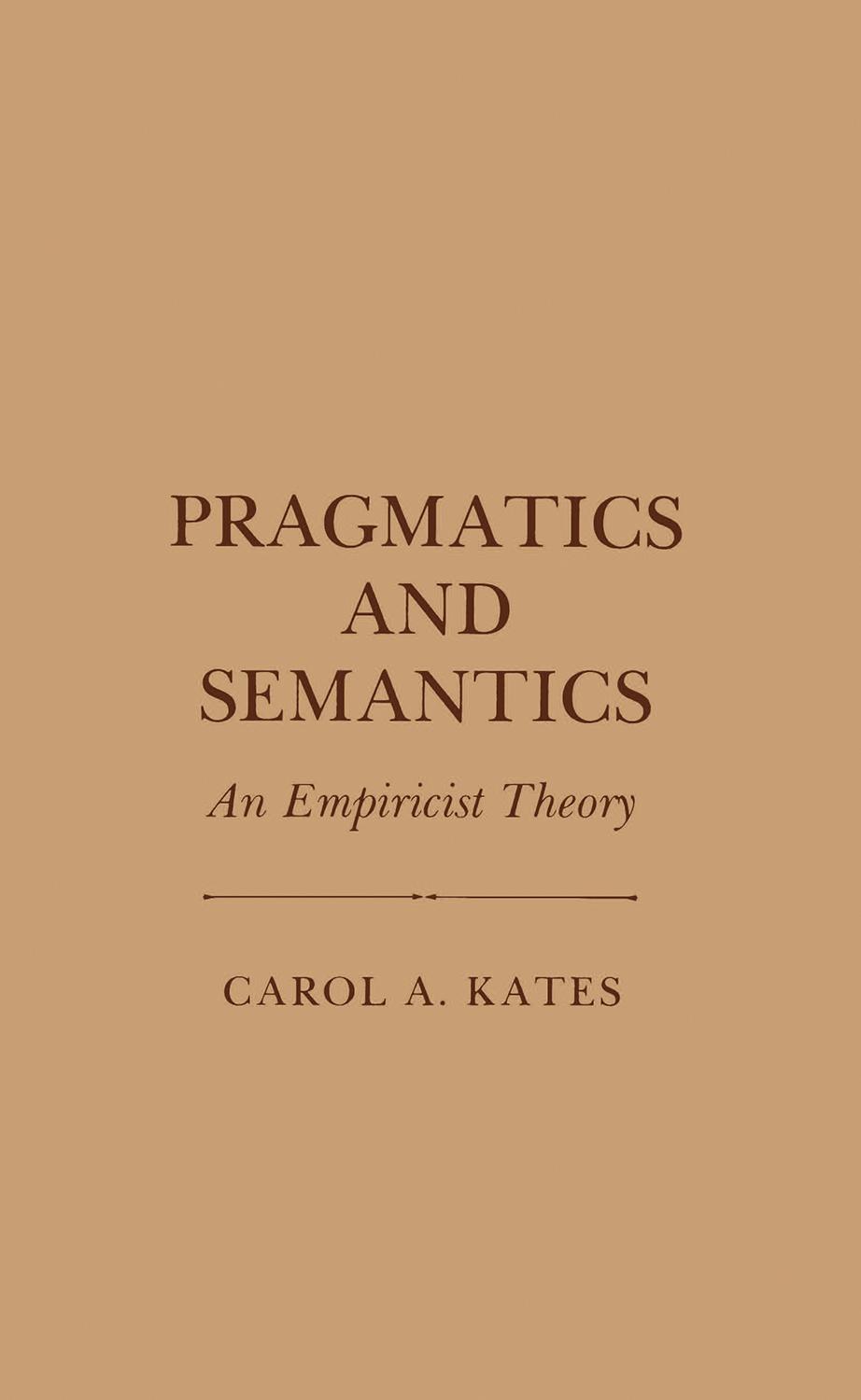
What is the nature of communicative competence? Carol Kates addresses this crucial linguistic question, examining and finally rejecting the rationalistic theory proposed by Noam Chomsky and elaborated by Jerrold J. Katz, among others. She sets forth three reasons why the rationalistic model shoudl be rejected: (1) it has not been supported by empirical tests; (2) it cannot accommodate the pragmatic relation between speaker and sign; and (3) the theory of universal grammar carries with it unacceptable metaphysical implications unless it is interpreted in light of empiricism. Kates proposes an empiricist model in place of the rationalistic theory—a model that, in her view, is more consistent with recent findings in linguistics and psycholinguistics.
In attempting to clarify the nature of utterance meaning, Kates develops theoretical perspectives on phenomenological empiricism and produces an account of reference and intentionality directly relevant to empiricaly based theories of speaking and understanding.
Among the major topics addressed in the book are transformational-generative and universal grammer, cognitive theories of language acquisition, pragmatic structure, predication and topic-comment structure, and empiricism and the philosophical problem of universals.
An innovative and probing work, Pragmatics and Semantics will be welcomed by philosophers, linguists, and psycholinguists.
Płać wygodnie kartą, Klarną, Apple Pay lub Google Pay. Nie jesteś zadowolony? Zawsze masz 14-dniową gwarancję zwrotu pieniędzy. Więcej przeczytasz w naszych warunkach. Masz pytania? Napisz do nas na hello@memmo.org.
Memmo ułatwia naukę – gdziekolwiek jesteś na świecie. U nas znajdziesz podręczniki i sprytne narzędzia do nauki w jednym miejscu: streszczenia, quizy, podcasty i fiszki. A do tego Ted, Twój kumpel do nauki, który odpowie na wszystko, co Cię nurtuje. Ponad 50 000 studentów już tu się uczy – stworzone, byś uczył się szybciej i mniej stresował.