
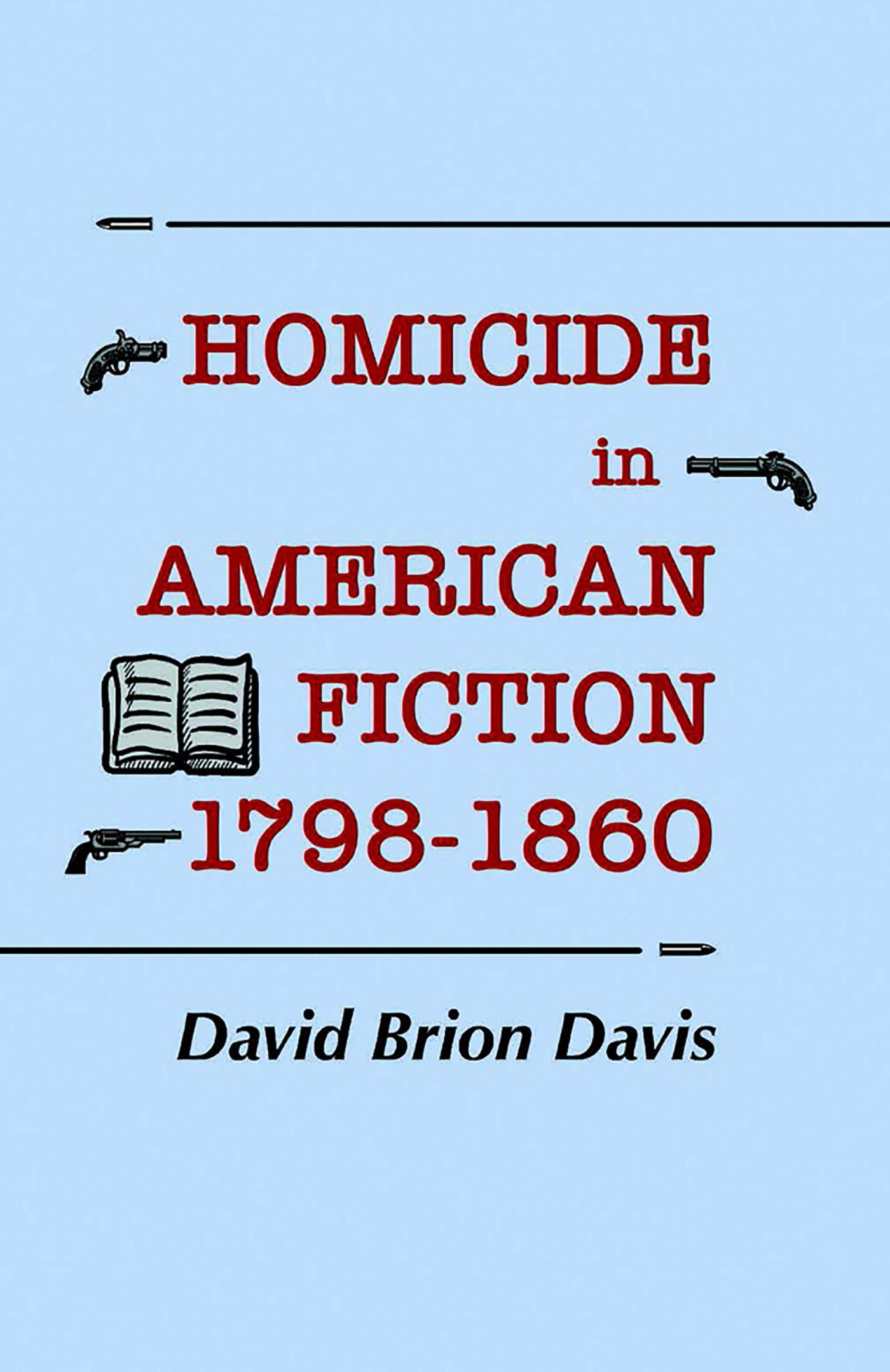
Homicide has many social and psychological implications that vary from culture to culture and which change as people accept new ideas concerning guilt, responsibility, and the causes of crime. A study of attitudes toward homicide is therefore a method of examining social values in a specific setting. Homicide in American Fiction, 1798–1860 is the first book to contrast psychological assumptions of imaginative writers with certain social and intellectual currents in an attempt to integrate social attitudes toward such diverse subjects as human evil, moral responsibility, criminal insanity, social causes of crime, dueling, lynching, the "unwritten law" of a husband's revenge, and capital punishment. In addition to works of literary distinction by Cooper, Hawthorne, Irving, and Poe, among others, Davis considers a large body of cheap popular fiction generally ignored in previous studies of the literature of this period. This is an engrossing study of fiction as a reflection of and a commentary on social problems and as an influence shaping general beliefs and opinions.
Płać wygodnie kartą, Klarną, Apple Pay lub Google Pay. Nie jesteś zadowolony? Zawsze masz 14-dniową gwarancję zwrotu pieniędzy. Więcej przeczytasz w naszych warunkach. Masz pytania? Napisz do nas na hello@memmo.org.
Memmo ułatwia naukę – gdziekolwiek jesteś na świecie. U nas znajdziesz podręczniki i sprytne narzędzia do nauki w jednym miejscu: streszczenia, quizy, podcasty i fiszki. A do tego Ted, Twój kumpel do nauki, który odpowie na wszystko, co Cię nurtuje. Ponad 50 000 studentów już tu się uczy – stworzone, byś uczył się szybciej i mniej stresował.