
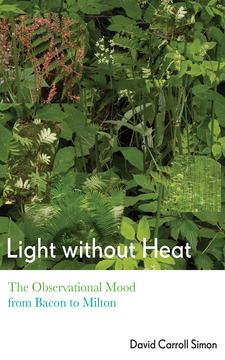
In Light without Heat, David Carroll Simon argues for the importance of carelessness to the literary and scientific experiments of the seventeenth century. While scholars have often looked to this period in order to narrate the triumph of methodical rigor as a quintessentially modern intellectual value, Simon describes the appeal of open-ended receptivity to the protagonists of the New Science. In straying from the work of self-possession and the duty to sift fact from fiction, early modern intellectuals discovered the cognitive advantages of the undisciplined mind.
Exploring the influence of what he calls the "observational mood" on both poetry and prose, Simon offers new readings of Michel de Montaigne, Francis Bacon, Izaak Walton, Henry Power, Robert Hooke, Robert Boyle, Andrew Marvell, and John Milton. He also extends his inquiry beyond the boundaries of early modernity, arguing for a literary theory that trades strict methodological commitment for an openness to lawless drift.
Płać wygodnie kartą, Klarną, Apple Pay lub Google Pay. Nie jesteś zadowolony? Zawsze masz 14-dniową gwarancję zwrotu pieniędzy. Więcej przeczytasz w naszych warunkach. Masz pytania? Napisz do nas na hello@memmo.org.
Memmo ułatwia naukę – gdziekolwiek jesteś na świecie. U nas znajdziesz podręczniki i sprytne narzędzia do nauki w jednym miejscu: streszczenia, quizy, podcasty i fiszki. A do tego Ted, Twój kumpel do nauki, który odpowie na wszystko, co Cię nurtuje. Ponad 50 000 studentów już tu się uczy – stworzone, byś uczył się szybciej i mniej stresował.