
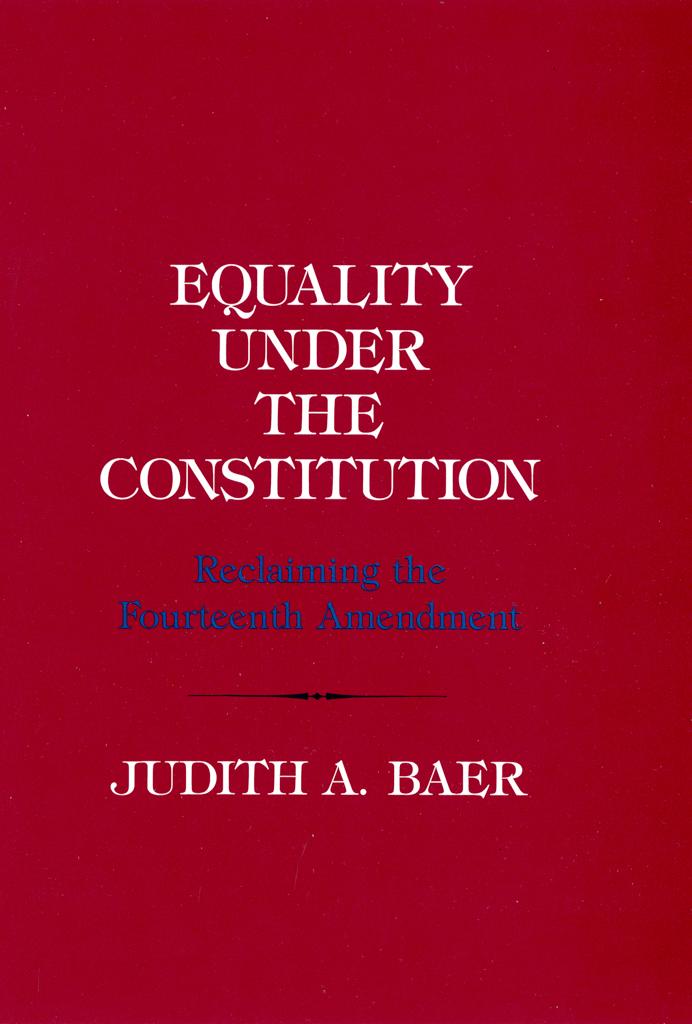
The principle of equality embedded in the Declaration of Independence and reaffirmed in the Constitution does not distinguish between individuals according to their capacities or merits. It is written into these documents to ensure that each and every person enjoys equal respect and equal rights. Judith Baer maintains, however, that in fact American judicial decisions have consistently denied individuals the form of equality to which they are legally entitled—that the courts have interpreted constitutional guarantees of equal protection in ways that undermine the original intent of Congress. In Equality under the Constitution, Baer examines the background, scope, and purpose of the Constitution's Fourteenth Amendment and the history of its interpretation by the courts. She traces the development of the idea of equality, drawing on the Bill of Rights, Congressional records, the Civil War amendments, and other sections of the Constitution. Baer discusses many of the significant equal-protection cases decided by the Supreme Court from the time of the amendment's ratification, including decisions on reverse discrimination, age discrimination, the rights of the disabled, and gay rights. She concludes with a theory of equality more faithful to the history, language, and spirit of the Constitution.
Płać wygodnie kartą, Klarną, Apple Pay lub Google Pay. Nie jesteś zadowolony? Zawsze masz 14-dniową gwarancję zwrotu pieniędzy. Więcej przeczytasz w naszych warunkach. Masz pytania? Napisz do nas na hello@memmo.org.
Memmo ułatwia naukę – gdziekolwiek jesteś na świecie. U nas znajdziesz podręczniki i sprytne narzędzia do nauki w jednym miejscu: streszczenia, quizy, podcasty i fiszki. A do tego Ted, Twój kumpel do nauki, który odpowie na wszystko, co Cię nurtuje. Ponad 50 000 studentów już tu się uczy – stworzone, byś uczył się szybciej i mniej stresował.