
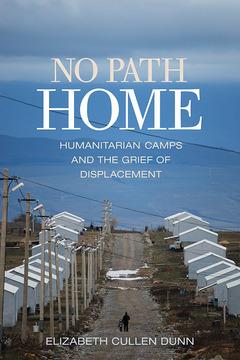
For more than 60 million displaced people around the world, humanitarian aid has become a chronic condition. No Path Home describes its symptoms in detail. Elizabeth Cullen Dunn shows how war creates a deeply damaged world in which the structures that allow people to occupy social roles, constitute economic value, preserve bodily integrity, and engage in meaningful daily practice have been blown apart.
After the Georgian war with Russia in 2008, Dunn spent sixteen months immersed in the everyday lives of the 28,000 people placed in thirty-six resettlement camps by official and nongovernmental organizations acting in concert with the Georgian government. She reached the conclusion that the humanitarian condition poses a survival problem that is not only biological but also existential. In No Path Home, she paints a moving picture of the ways in which humanitarianism leaves displaced people in limbo, neither in a state of emergency nor able to act as normal citizens in the country where they reside.
Płać wygodnie kartą, Klarną, Apple Pay lub Google Pay. Nie jesteś zadowolony? Zawsze masz 14-dniową gwarancję zwrotu pieniędzy. Więcej przeczytasz w naszych warunkach. Masz pytania? Napisz do nas na hello@memmo.org.
Memmo ułatwia naukę – gdziekolwiek jesteś na świecie. U nas znajdziesz podręczniki i sprytne narzędzia do nauki w jednym miejscu: streszczenia, quizy, podcasty i fiszki. A do tego Ted, Twój kumpel do nauki, który odpowie na wszystko, co Cię nurtuje. Ponad 50 000 studentów już tu się uczy – stworzone, byś uczył się szybciej i mniej stresował.