
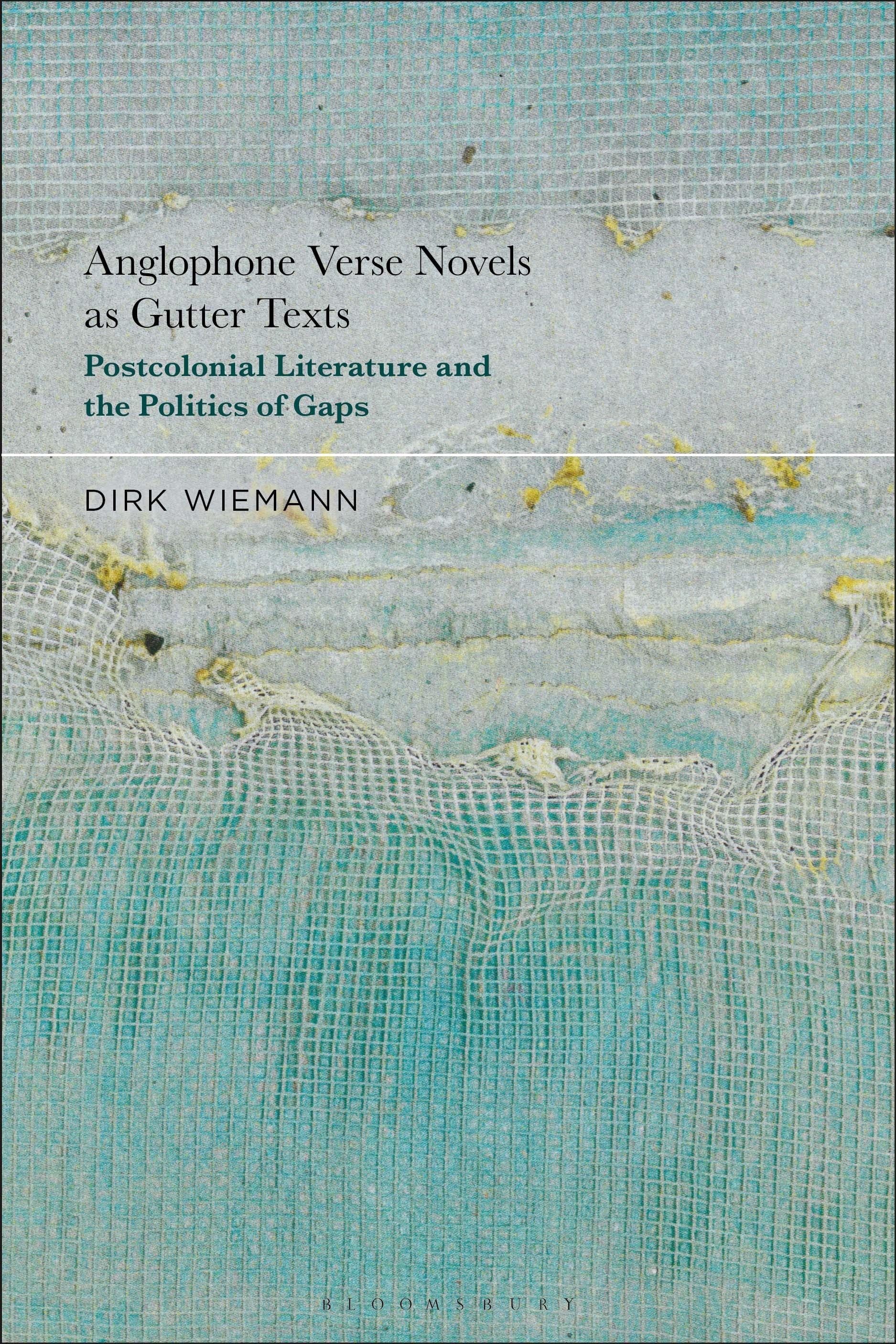
Anglophone Verse Novels as Gutter Texts draws on the notion of the 'gutter' in graphic narratives – the gap between panels that a reader has to imaginatively fill to generate narrative sequence – to analyse the largely overlooked literary form of the verse novel. Marked at all levels by the tense constellation of segment and sequence, and a conspicuously 'gappy' texture, verse novels offer productive alternatives to the dominant prose novel in contemporary fiction, where a similar 'gappiness' has become a hallmark, as illustrated by the loosely interlaced multi-strand plot structures of influential 'world novels' (Bolaño, Mitchell, Powers).
The verse novel is a form particularly prolific in the postcolonial world and among diasporic or minoritarian writers in the Global North. This study concentrates on two of the most prominent areas in which verse novels distinguish themselves from the prose novel to read texts by Derek Walcott, Anne Carson, Bernardine Evaristo, Patience Agbabi and others: In 'planetary' verse novels from the Caribbean, Canada, Samoa and Hawai'i, the central trope of the volcano evokes a world in constant un/making; while post-national verse novels, particularly in Britain, modify the established paradigms of imagined communities. Dirk Wiemann's study speculates whether the resurgence of verse novels correlates with the apprehension of inhabiting a world that has become unpredictable and dangerous but also promising: a 'post-prosaic' world.
The verse novel is a form particularly prolific in the postcolonial world and among diasporic or minoritarian writers in the Global North. This study concentrates on two of the most prominent areas in which verse novels distinguish themselves from the prose novel to read texts by Derek Walcott, Anne Carson, Bernardine Evaristo, Patience Agbabi and others: In 'planetary' verse novels from the Caribbean, Canada, Samoa and Hawai'i, the central trope of the volcano evokes a world in constant un/making; while post-national verse novels, particularly in Britain, modify the established paradigms of imagined communities. Dirk Wiemann's study speculates whether the resurgence of verse novels correlates with the apprehension of inhabiting a world that has become unpredictable and dangerous but also promising: a 'post-prosaic' world.
Płać wygodnie kartą, Klarną, Apple Pay lub Google Pay. Nie jesteś zadowolony? Zawsze masz 14-dniową gwarancję zwrotu pieniędzy. Więcej przeczytasz w naszych warunkach. Masz pytania? Napisz do nas na hello@memmo.org.
Memmo ułatwia naukę – gdziekolwiek jesteś na świecie. U nas znajdziesz podręczniki i sprytne narzędzia do nauki w jednym miejscu: streszczenia, quizy, podcasty i fiszki. A do tego Ted, Twój kumpel do nauki, który odpowie na wszystko, co Cię nurtuje. Ponad 50 000 studentów już tu się uczy – stworzone, byś uczył się szybciej i mniej stresował.