
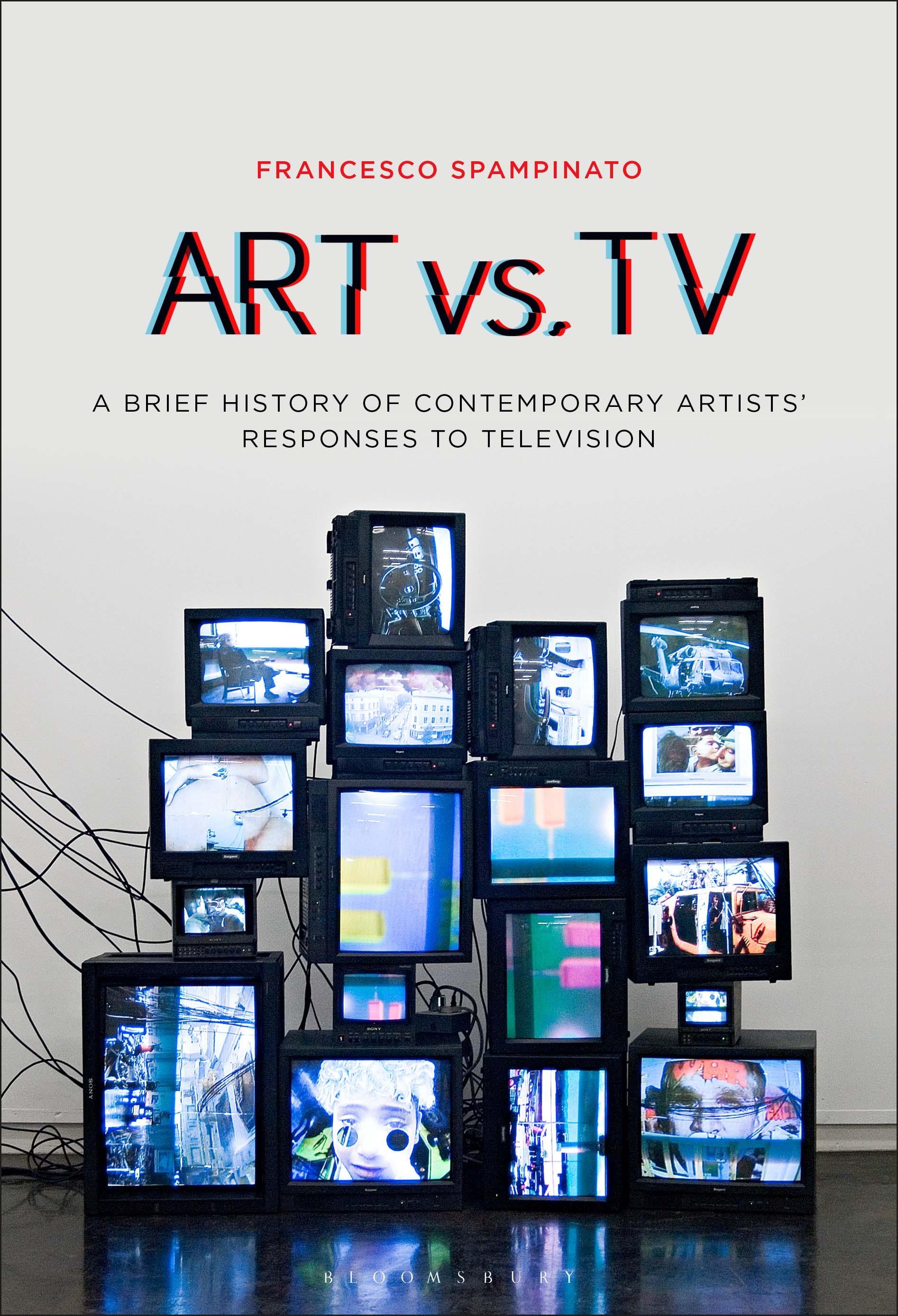
While highlighting the prevailing role of television in Western societies, Art vs. TV maps and condenses a comprehensive history of the relationships of art and television. With a particular focus on the link between reality and representation, Francesco Spampinato analyzes video art works, installations, performances, interventions and television programs made by contemporary artists as forms of resistance to and appropriation and parody of mainstream television.
The artists discussed belong to different generations: those that emerged in the 1960s in association with art movements such as Pop Art, Fluxus and Happening; and those appearing on the scene in the 1980s, whose work aimed at deconstructing media representation in line with postmodernist theories; to those arriving in the 2000s, an era in which, through reality shows and the Internet, anybody could potentially become a media personality; and finally those active in the 2010s, whose work reflects on how old media like television has definitively vaporized through the electronic highways of cyberspace.
These works and phenomena elicit a tension between art and television, exposing an incongruence; an impossibility not only to converge but at the very least to open up a dialogical exchange.
The artists discussed belong to different generations: those that emerged in the 1960s in association with art movements such as Pop Art, Fluxus and Happening; and those appearing on the scene in the 1980s, whose work aimed at deconstructing media representation in line with postmodernist theories; to those arriving in the 2000s, an era in which, through reality shows and the Internet, anybody could potentially become a media personality; and finally those active in the 2010s, whose work reflects on how old media like television has definitively vaporized through the electronic highways of cyberspace.
These works and phenomena elicit a tension between art and television, exposing an incongruence; an impossibility not only to converge but at the very least to open up a dialogical exchange.
Strony: 368
Kategoria: Film- & Medievetenskap
e-ISBN: 9781501370564
Waga przesyłki: 1.2 kg
Wysyłka w ciągu: 1-2 dni
Płać wygodnie kartą, Klarną, Apple Pay lub Google Pay. Nie jesteś zadowolony? Zawsze masz 14-dniową gwarancję zwrotu pieniędzy. Więcej przeczytasz w naszych warunkach. Masz pytania? Napisz do nas na hello@memmo.org.
Memmo ułatwia naukę – gdziekolwiek jesteś na świecie. U nas znajdziesz podręczniki i sprytne narzędzia do nauki w jednym miejscu: streszczenia, quizy, podcasty i fiszki. A do tego Ted, Twój kumpel do nauki, który odpowie na wszystko, co Cię nurtuje. Ponad 50 000 studentów już tu się uczy – stworzone, byś uczył się szybciej i mniej stresował.