
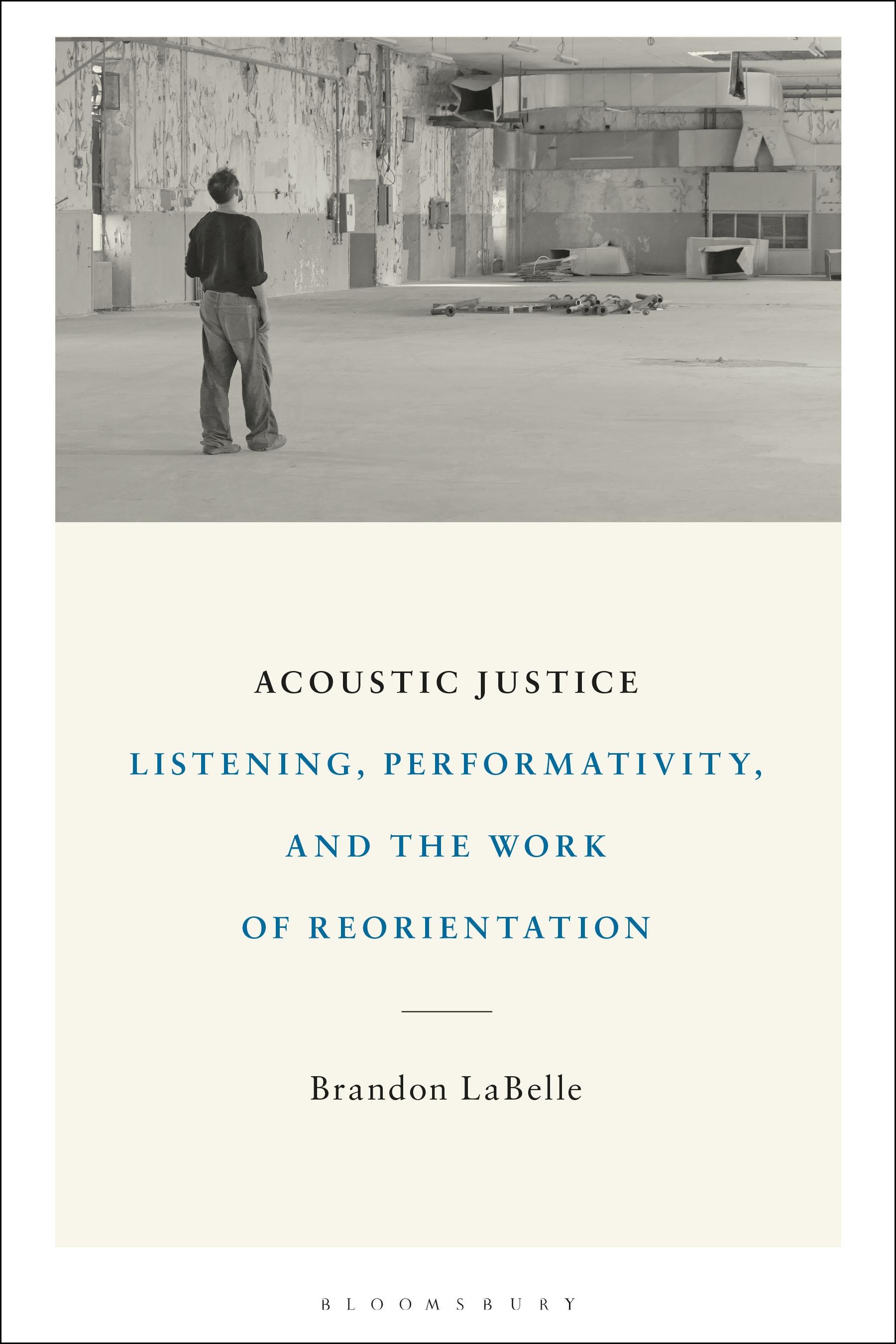
Acoustic Justice engages issues of recognition and misrecognition by mobilizing an acoustic framework. From the vibrational intensities of common life to the rhythm of bodies in movement, and drawing from his ongoing work on sound and agency, Brandon LaBelle positions acoustics, and the broader experience of listening, as a dynamic means for fostering responsiveness, understanding, dispute, and the work of reorientation. As such, acoustic justice emerges as a compelling platform for engaging struggles over the right to speak and to be heard that extends toward a broader materialist and planetary view. This entails critically addressing questions of space, borders, community, and the acoustic norms defining capacities of listening, leading to what LaBelle terms “poetic ecologies of resonance.” Acoustic Justice works at issues of recognition and resistance, place and displacement, by moving across a range of pertinent references and topics, from social practices and sound art to the performativity of skin and the poetics of Deaf voice. Through such transversality, LaBelle captures acoustics as the basis for strategies of refusal and repair.
Płać wygodnie kartą, Klarną, Apple Pay lub Google Pay. Nie jesteś zadowolony? Zawsze masz 14-dniową gwarancję zwrotu pieniędzy. Więcej przeczytasz w naszych warunkach. Masz pytania? Napisz do nas na hello@memmo.org.
Memmo ułatwia naukę – gdziekolwiek jesteś na świecie. U nas znajdziesz podręczniki i sprytne narzędzia do nauki w jednym miejscu: streszczenia, quizy, podcasty i fiszki. A do tego Ted, Twój kumpel do nauki, który odpowie na wszystko, co Cię nurtuje. Ponad 50 000 studentów już tu się uczy – stworzone, byś uczył się szybciej i mniej stresował.