
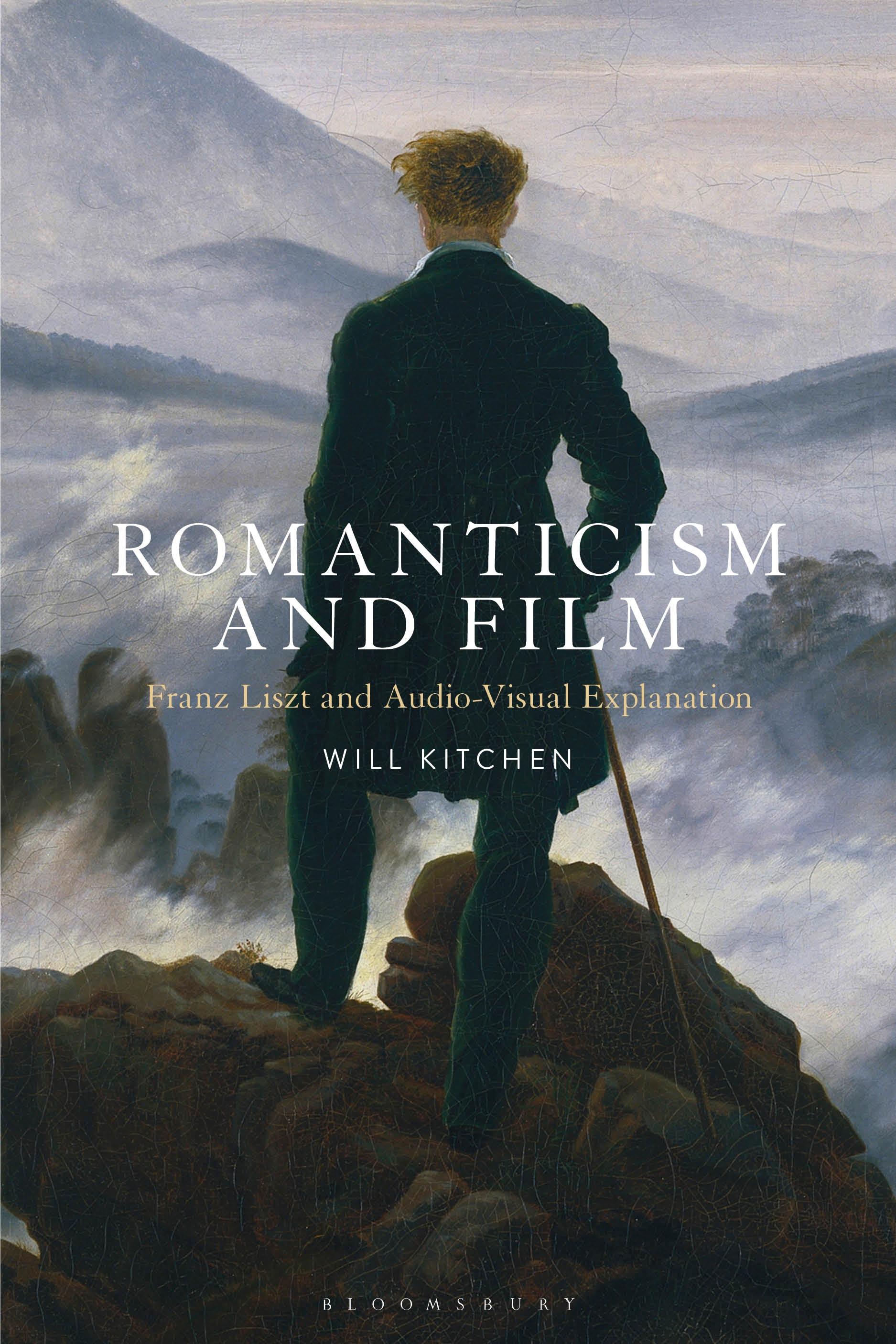
The relationship between Romanticism and film remains one of the most neglected topics in film theory and history, with analysis often focusing on the proto-cinematic significance of Richard Wagner's music-dramas. One new and interesting way of examining this relationship is by looking beyond Wagner, and developing a concept of audio-visual explanation rooted in Romantic philosophical aesthetics, and employing it in the analysis of film discourse and representation.
Using this concept of audio-visual explanation, the cultural image of the Hungarian pianist and composer Franz Liszt, a contemporary of Wagner and another significant practitioner of Romantic audio-visual aesthetics, is examined in reference to specific case studies, including the rarely-explored films Song Without End (1960) and Lisztomania (1975).
This multifaceted study of film discourse and representation employs Liszt as a guiding-thread, structuring a general exploration of the concept of Romanticism and its relationship with film more generally. This exploration is supported by new theories of representation based on schematic cognition, the philosophy of explanation, and the recently-developed film theory of Jacques Rancière.
Individual chapters address the historical background of audio-visual explanation in Romantic philosophical aesthetics, Liszt's role in the historical discourses of film and film music, and various filmic representations of Liszt and his compositions. Throughout these investigations, Will Kitchen explores the various ways that films explain, or 'make sense' of things, through a 'Romantic' aesthetic combination of sound and vision.
Using this concept of audio-visual explanation, the cultural image of the Hungarian pianist and composer Franz Liszt, a contemporary of Wagner and another significant practitioner of Romantic audio-visual aesthetics, is examined in reference to specific case studies, including the rarely-explored films Song Without End (1960) and Lisztomania (1975).
This multifaceted study of film discourse and representation employs Liszt as a guiding-thread, structuring a general exploration of the concept of Romanticism and its relationship with film more generally. This exploration is supported by new theories of representation based on schematic cognition, the philosophy of explanation, and the recently-developed film theory of Jacques Rancière.
Individual chapters address the historical background of audio-visual explanation in Romantic philosophical aesthetics, Liszt's role in the historical discourses of film and film music, and various filmic representations of Liszt and his compositions. Throughout these investigations, Will Kitchen explores the various ways that films explain, or 'make sense' of things, through a 'Romantic' aesthetic combination of sound and vision.
Strony: 264
Kategoria: Film- & Medievetenskap
e-ISBN: 9781501361357
Waga przesyłki: 1.2 kg
Wysyłka w ciągu: 1-2 dni
Płać wygodnie kartą, Klarną, Apple Pay lub Google Pay. Nie jesteś zadowolony? Zawsze masz 14-dniową gwarancję zwrotu pieniędzy. Więcej przeczytasz w naszych warunkach. Masz pytania? Napisz do nas na hello@memmo.org.
Memmo ułatwia naukę – gdziekolwiek jesteś na świecie. U nas znajdziesz podręczniki i sprytne narzędzia do nauki w jednym miejscu: streszczenia, quizy, podcasty i fiszki. A do tego Ted, Twój kumpel do nauki, który odpowie na wszystko, co Cię nurtuje. Ponad 50 000 studentów już tu się uczy – stworzone, byś uczył się szybciej i mniej stresował.