
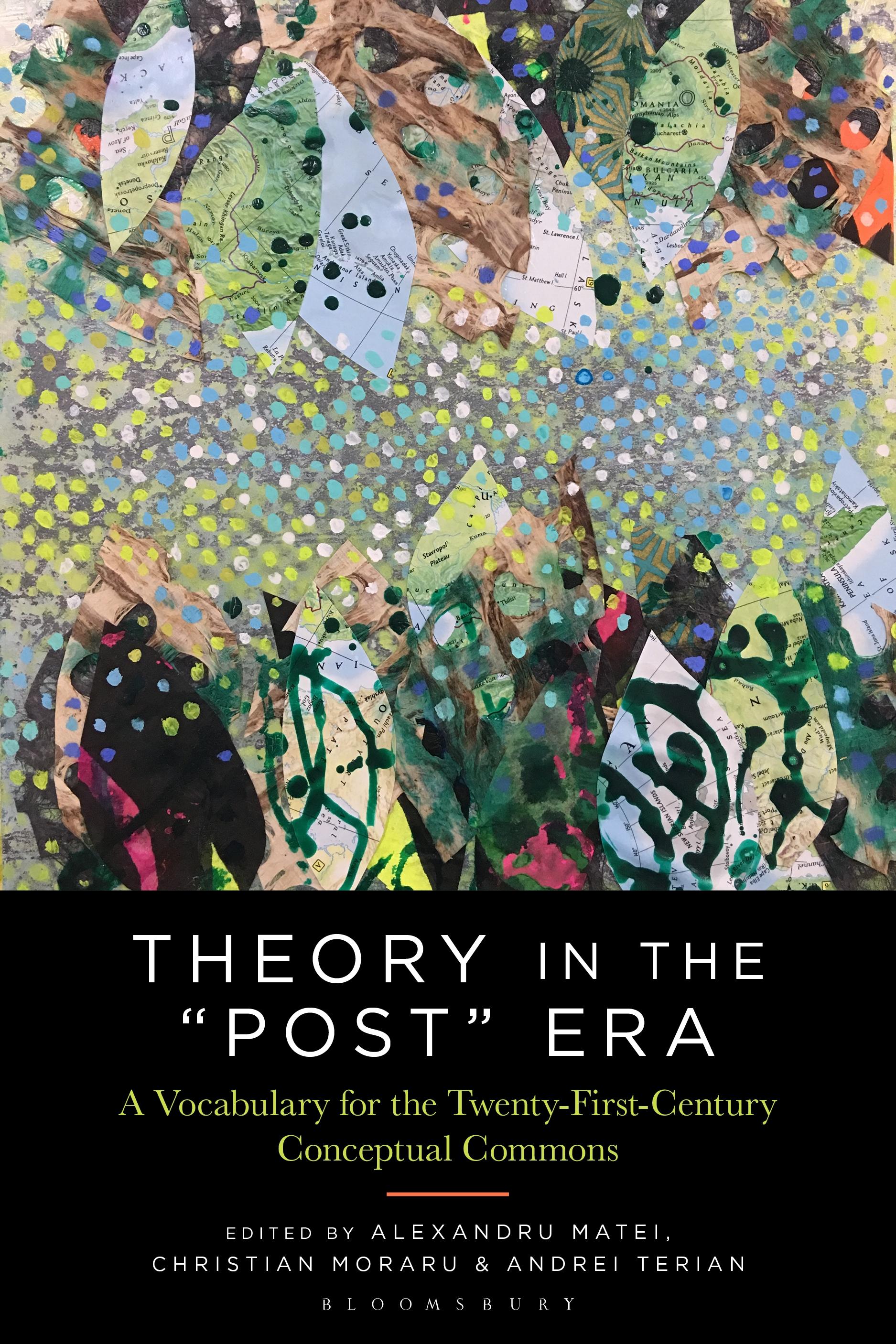
Shortlisted for the AATSEEL 2022 Award for Best Edited Multi-Author Scholarly Volume (AATSEEL is The American Association of Teachers of Slavic and East European Languages)
Theory in the "Post" Era brings together the work and perspectives of a group of Romanian theorists who discuss the morphings of contemporary theory in what the editors call the “post” era. Since the Cold War's end and especially in the third millennium, theorists have been exploring the aftermath - and sometimes just the “after” - of whole paradigms, the crisis or “passing” of anthropocentrism, the twilight of an entire ontological and cultural “condition,” as well as the corresponding rise of an antagonist model, of an “anti,” “meta,” or “neo” alternative, with examples ranging from “posthumanism” and “post-postmodernism” to “post-aesthetics,” “postanalog” interpretation or “digicriticism,” “post-presentism,” “post-memory,” “post-“ or “neo-critique,” and so forth.
It is no coincidence, the contributors to this volume argue, that this “post” moment is also a time when theory is practiced as a world genre. If theory has always been a “worlded” enterprise, a quintessentially communal, cross-cultural and international project, this is truer at present than ever. Perhaps more than other humanist constituencies, today's theorists work and belong in a theory commons that is transnational if still uneven economically, politically, and otherwise. Theory in the "Post" Era reports the results of Romanian theory experiments that join efforts made in other places to foster a theory for the “post” age.
Theory in the "Post" Era brings together the work and perspectives of a group of Romanian theorists who discuss the morphings of contemporary theory in what the editors call the “post” era. Since the Cold War's end and especially in the third millennium, theorists have been exploring the aftermath - and sometimes just the “after” - of whole paradigms, the crisis or “passing” of anthropocentrism, the twilight of an entire ontological and cultural “condition,” as well as the corresponding rise of an antagonist model, of an “anti,” “meta,” or “neo” alternative, with examples ranging from “posthumanism” and “post-postmodernism” to “post-aesthetics,” “postanalog” interpretation or “digicriticism,” “post-presentism,” “post-memory,” “post-“ or “neo-critique,” and so forth.
It is no coincidence, the contributors to this volume argue, that this “post” moment is also a time when theory is practiced as a world genre. If theory has always been a “worlded” enterprise, a quintessentially communal, cross-cultural and international project, this is truer at present than ever. Perhaps more than other humanist constituencies, today's theorists work and belong in a theory commons that is transnational if still uneven economically, politically, and otherwise. Theory in the "Post" Era reports the results of Romanian theory experiments that join efforts made in other places to foster a theory for the “post” age.
Strony: 376
Kategoria: Litteraturvetenskap & Teori
e-ISBN: 9781501358968
Waga przesyłki: 1.2 kg
Wysyłka w ciągu: 1-2 dni
Płać wygodnie kartą, Klarną, Apple Pay lub Google Pay. Nie jesteś zadowolony? Zawsze masz 14-dniową gwarancję zwrotu pieniędzy. Więcej przeczytasz w naszych warunkach. Masz pytania? Napisz do nas na hello@memmo.org.
Memmo ułatwia naukę – gdziekolwiek jesteś na świecie. U nas znajdziesz podręczniki i sprytne narzędzia do nauki w jednym miejscu: streszczenia, quizy, podcasty i fiszki. A do tego Ted, Twój kumpel do nauki, który odpowie na wszystko, co Cię nurtuje. Ponad 50 000 studentów już tu się uczy – stworzone, byś uczył się szybciej i mniej stresował.