
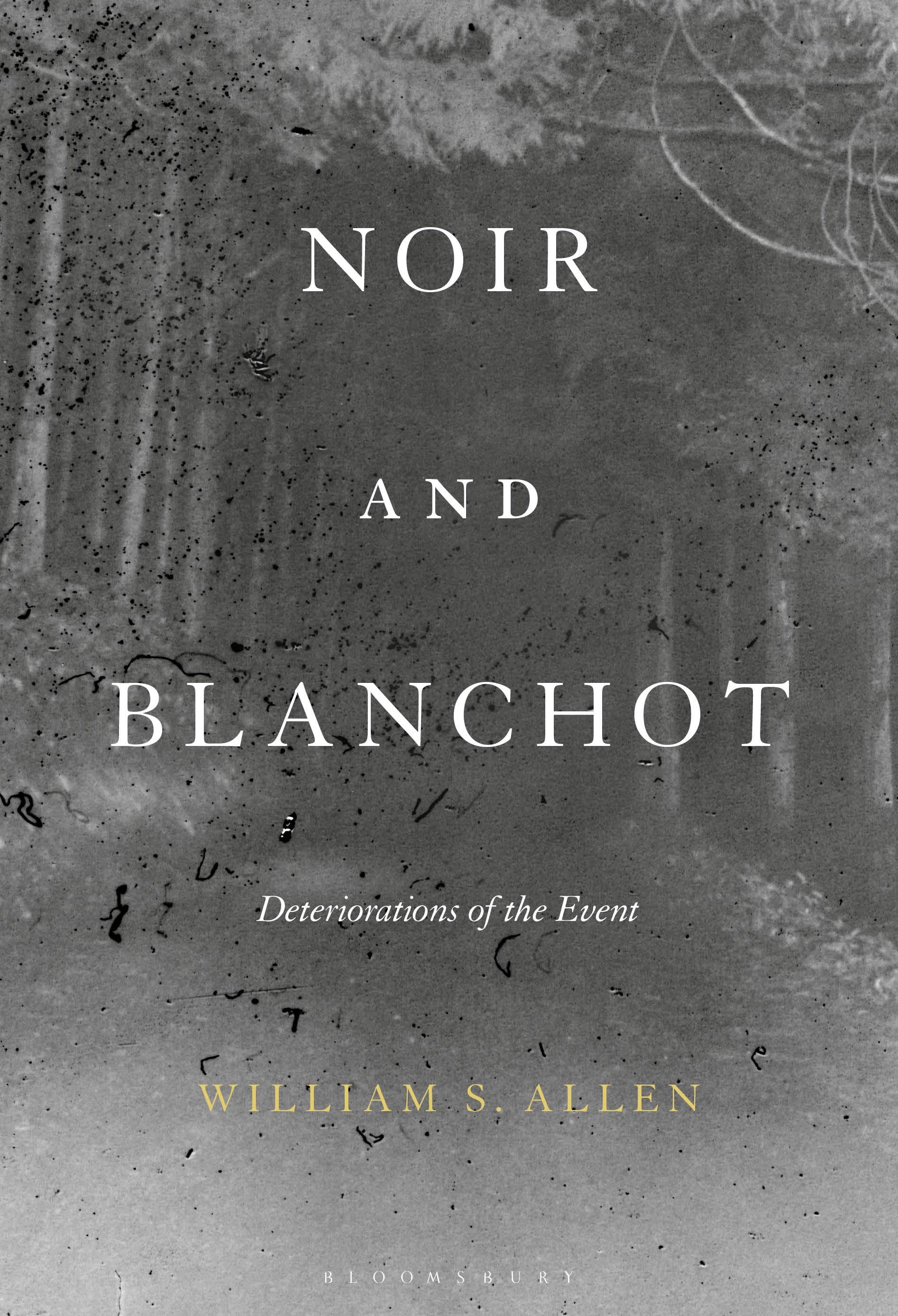
In dark or desperate times, the artwork is placed in a difficult position. Optimism seems naïve, while pessimism is no better. During some of the most demanding years of the 20th century two distinctive bodies of work sought to respond to this problem: the writings of Maurice Blanchot and American film noir. Both were seeking not only to respond to the times but also to critically reflect them, but both were often criticised for their own darkness. Understanding how this darkness became the means of responding to the darkness of the times is the focus of Noir and Blanchot, which examines key films from the period (including Double Indemnity and Vertigo) alongside Blanchot's writings (particularly his 1948 narrative Death Sentence).
What emerges from this investigation is the complex manner in which these works disrupt the experience of time and the event and in doing so expose an entirely different mode of material expression.
What emerges from this investigation is the complex manner in which these works disrupt the experience of time and the event and in doing so expose an entirely different mode of material expression.
Strony: 200
Kategoria: Film- & Medievetenskap
e-ISBN: 9781501358920
Waga przesyłki: 1.2 kg
Wysyłka w ciągu: 1-2 dni
Płać wygodnie kartą, Klarną, Apple Pay lub Google Pay. Nie jesteś zadowolony? Zawsze masz 14-dniową gwarancję zwrotu pieniędzy. Więcej przeczytasz w naszych warunkach. Masz pytania? Napisz do nas na hello@memmo.org.
Memmo ułatwia naukę – gdziekolwiek jesteś na świecie. U nas znajdziesz podręczniki i sprytne narzędzia do nauki w jednym miejscu: streszczenia, quizy, podcasty i fiszki. A do tego Ted, Twój kumpel do nauki, który odpowie na wszystko, co Cię nurtuje. Ponad 50 000 studentów już tu się uczy – stworzone, byś uczył się szybciej i mniej stresował.