
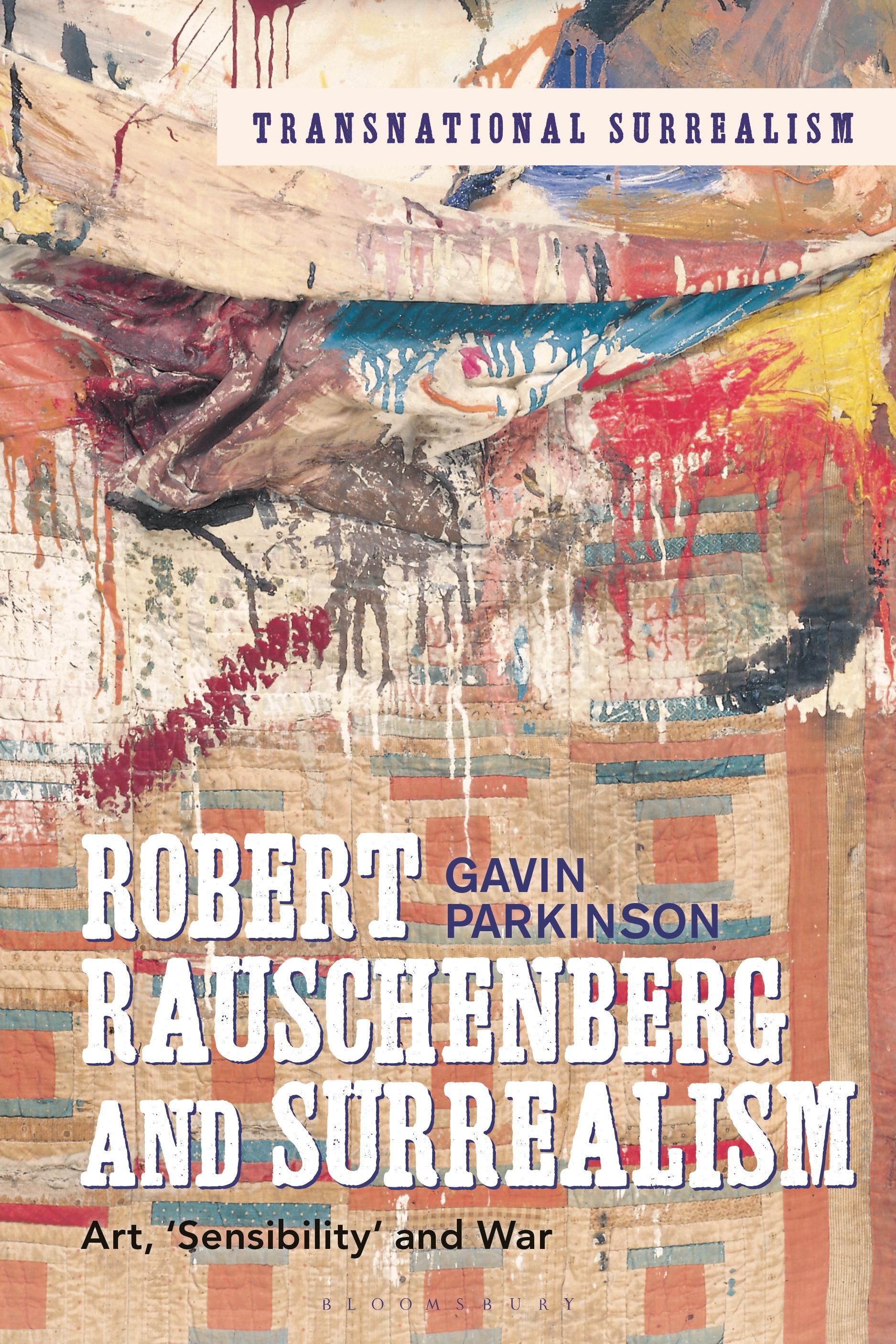
The art of Robert Rauschenberg (1925-2008) is usually viewed as quite distinct from Surrealism, a movement which the artist himself displayed some hostility towards. However, Rauschenberg had a very positive reception among Surrealists, particularly across the period 1959-69.
In the face of Rauschenberg's avowals of his own 'literalism' and insistence on his art as 'facts,' this book gathers generous evidence of the poetic, metaphorical, allusive, associative and connotative dimensions of the artist's oeuvre as identified by Surrealists, and thus extrapolates new readings from Rauschenberg's key works on that basis. By viewing Rauschenberg's art against the expansion of the cultural influence of the United States in Europe in the period after the Second World War and the increasingly politicized activities of the Surrealists in the era of the Algerian War of Independence (1954-62), Robert Rauschenberg and Surrealism shows how poetic inference of the artist's work was turned towards political interpretation. By analysing Rauschenberg's art in the context of Surrealism, and drawing from it new interpretations and perspectives, this volume simultaneously situates the Surrealist movement in 1960s American art criticism and history.
In the face of Rauschenberg's avowals of his own 'literalism' and insistence on his art as 'facts,' this book gathers generous evidence of the poetic, metaphorical, allusive, associative and connotative dimensions of the artist's oeuvre as identified by Surrealists, and thus extrapolates new readings from Rauschenberg's key works on that basis. By viewing Rauschenberg's art against the expansion of the cultural influence of the United States in Europe in the period after the Second World War and the increasingly politicized activities of the Surrealists in the era of the Algerian War of Independence (1954-62), Robert Rauschenberg and Surrealism shows how poetic inference of the artist's work was turned towards political interpretation. By analysing Rauschenberg's art in the context of Surrealism, and drawing from it new interpretations and perspectives, this volume simultaneously situates the Surrealist movement in 1960s American art criticism and history.
Płać wygodnie kartą, Klarną, Apple Pay lub Google Pay. Nie jesteś zadowolony? Zawsze masz 14-dniową gwarancję zwrotu pieniędzy. Więcej przeczytasz w naszych warunkach. Masz pytania? Napisz do nas na hello@memmo.org.
Memmo ułatwia naukę – gdziekolwiek jesteś na świecie. U nas znajdziesz podręczniki i sprytne narzędzia do nauki w jednym miejscu: streszczenia, quizy, podcasty i fiszki. A do tego Ted, Twój kumpel do nauki, który odpowie na wszystko, co Cię nurtuje. Ponad 50 000 studentów już tu się uczy – stworzone, byś uczył się szybciej i mniej stresował.