
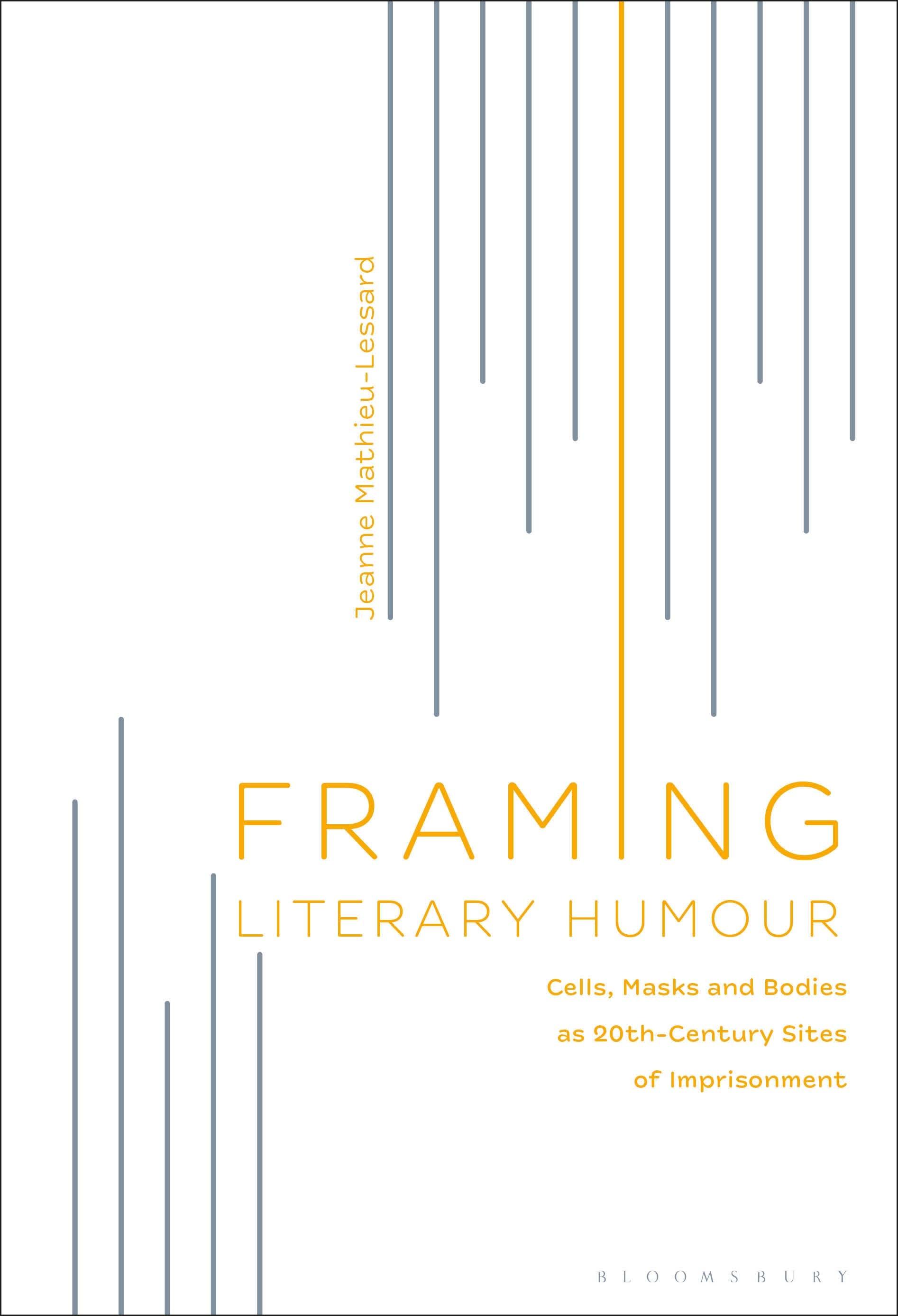
Contrary to what their oppressive design would lead us to believe, might structures of imprisonment actually incite humour? Starting from the most obvious areas of imprisonment (war camps, prison cells) and moving to the less obvious (masks, bodies), Framing Literary Humour demonstrates how 20th-century humour in theory and in fiction cannot be fully understood without a careful look at its connection with the notion of imprisonment.
Understanding imprisonment as a concrete spatial setting or a metaphorical image, Jeanne Mathieu-Lessard analyses selected works of Romain Gary, Giovannino Guareschi, Wyndham Lewis, Vladimir Nabokov and Luigi Pirandello to reconfigure confinement as an essential structural condition for the emergence of humour.
Understanding imprisonment as a concrete spatial setting or a metaphorical image, Jeanne Mathieu-Lessard analyses selected works of Romain Gary, Giovannino Guareschi, Wyndham Lewis, Vladimir Nabokov and Luigi Pirandello to reconfigure confinement as an essential structural condition for the emergence of humour.
Strony: 208
Kategoria: Litteraturvetenskap & Teori
e-ISBN: 9781501356568
Waga przesyłki: 1.2 kg
Wysyłka w ciągu: 1-2 dni
Płać wygodnie kartą, Klarną, Apple Pay lub Google Pay. Nie jesteś zadowolony? Zawsze masz 14-dniową gwarancję zwrotu pieniędzy. Więcej przeczytasz w naszych warunkach. Masz pytania? Napisz do nas na hello@memmo.org.
Memmo ułatwia naukę – gdziekolwiek jesteś na świecie. U nas znajdziesz podręczniki i sprytne narzędzia do nauki w jednym miejscu: streszczenia, quizy, podcasty i fiszki. A do tego Ted, Twój kumpel do nauki, który odpowie na wszystko, co Cię nurtuje. Ponad 50 000 studentów już tu się uczy – stworzone, byś uczył się szybciej i mniej stresował.