
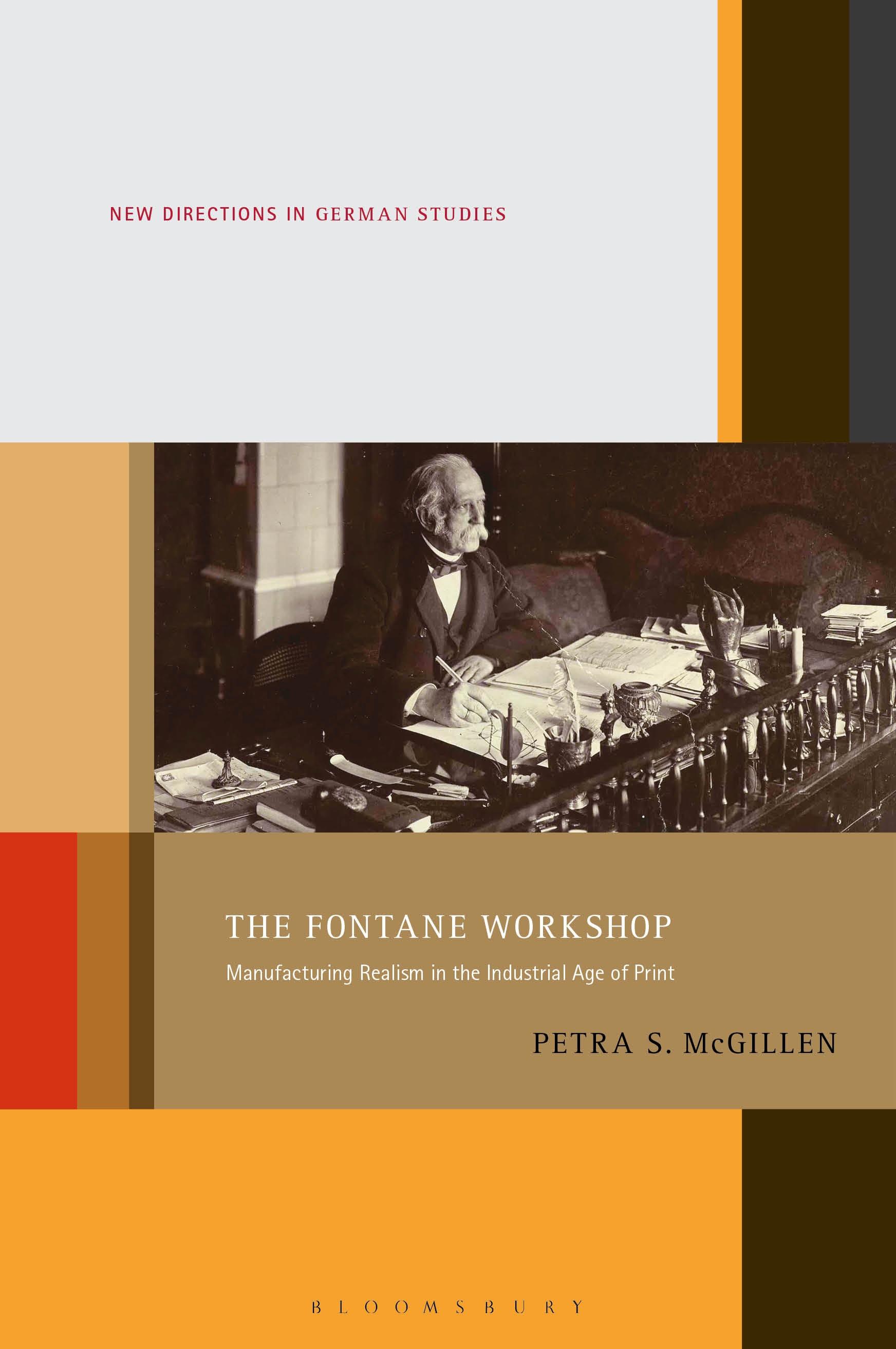
Winner of the Aldo and Jeanne Scaglione Prize for Studies in Germanic Languages and Literatures (Awarded by the MLA)
With an innovative approach that combines material media history, media theory, and literary poetics, this book reconstructs the great German writer Theodor Fontane's creative process.
Petra McGillen follows Fontane into the engine room of his text production. Analyzing a wealth of unexplored archival evidence--which includes a collection of the author's 67 extant notebooks, along with an array of other "paper tools," such as cardboard boxes, envelopes, and slips--McGillen demonstrates how Fontane compiled his realist prose works. That is, he assembled them from premediated sources, literally with scissors and glue, in an extraordinarily inorganic and radically intertextual manner that turned "writing" into a process of ongoing remix. By exploring the far-reaching implications of Fontane's creative practices for our understanding of his authorship, originality, and poetics, this book opens up a completely new way to think about his works and, by extension, 19th-century literary realism.
This conceptualization of authors' notebooks as creative tools makes a substantial contribution to scholarship on the history of writing media in several disciplines, from German studies and literary studies to media history, and to our understanding of the relationship between mass media and literary creativity in the late 19th century.
With an innovative approach that combines material media history, media theory, and literary poetics, this book reconstructs the great German writer Theodor Fontane's creative process.
Petra McGillen follows Fontane into the engine room of his text production. Analyzing a wealth of unexplored archival evidence--which includes a collection of the author's 67 extant notebooks, along with an array of other "paper tools," such as cardboard boxes, envelopes, and slips--McGillen demonstrates how Fontane compiled his realist prose works. That is, he assembled them from premediated sources, literally with scissors and glue, in an extraordinarily inorganic and radically intertextual manner that turned "writing" into a process of ongoing remix. By exploring the far-reaching implications of Fontane's creative practices for our understanding of his authorship, originality, and poetics, this book opens up a completely new way to think about his works and, by extension, 19th-century literary realism.
This conceptualization of authors' notebooks as creative tools makes a substantial contribution to scholarship on the history of writing media in several disciplines, from German studies and literary studies to media history, and to our understanding of the relationship between mass media and literary creativity in the late 19th century.
Strony: 328
Kategoria: Litteraturvetenskap & Teori
e-ISBN: 9781501351570
Waga przesyłki: 1.2 kg
Wysyłka w ciągu: 1-2 dni
Płać wygodnie kartą, Klarną, Apple Pay lub Google Pay. Nie jesteś zadowolony? Zawsze masz 14-dniową gwarancję zwrotu pieniędzy. Więcej przeczytasz w naszych warunkach. Masz pytania? Napisz do nas na hello@memmo.org.
Memmo ułatwia naukę – gdziekolwiek jesteś na świecie. U nas znajdziesz podręczniki i sprytne narzędzia do nauki w jednym miejscu: streszczenia, quizy, podcasty i fiszki. A do tego Ted, Twój kumpel do nauki, który odpowie na wszystko, co Cię nurtuje. Ponad 50 000 studentów już tu się uczy – stworzone, byś uczył się szybciej i mniej stresował.