
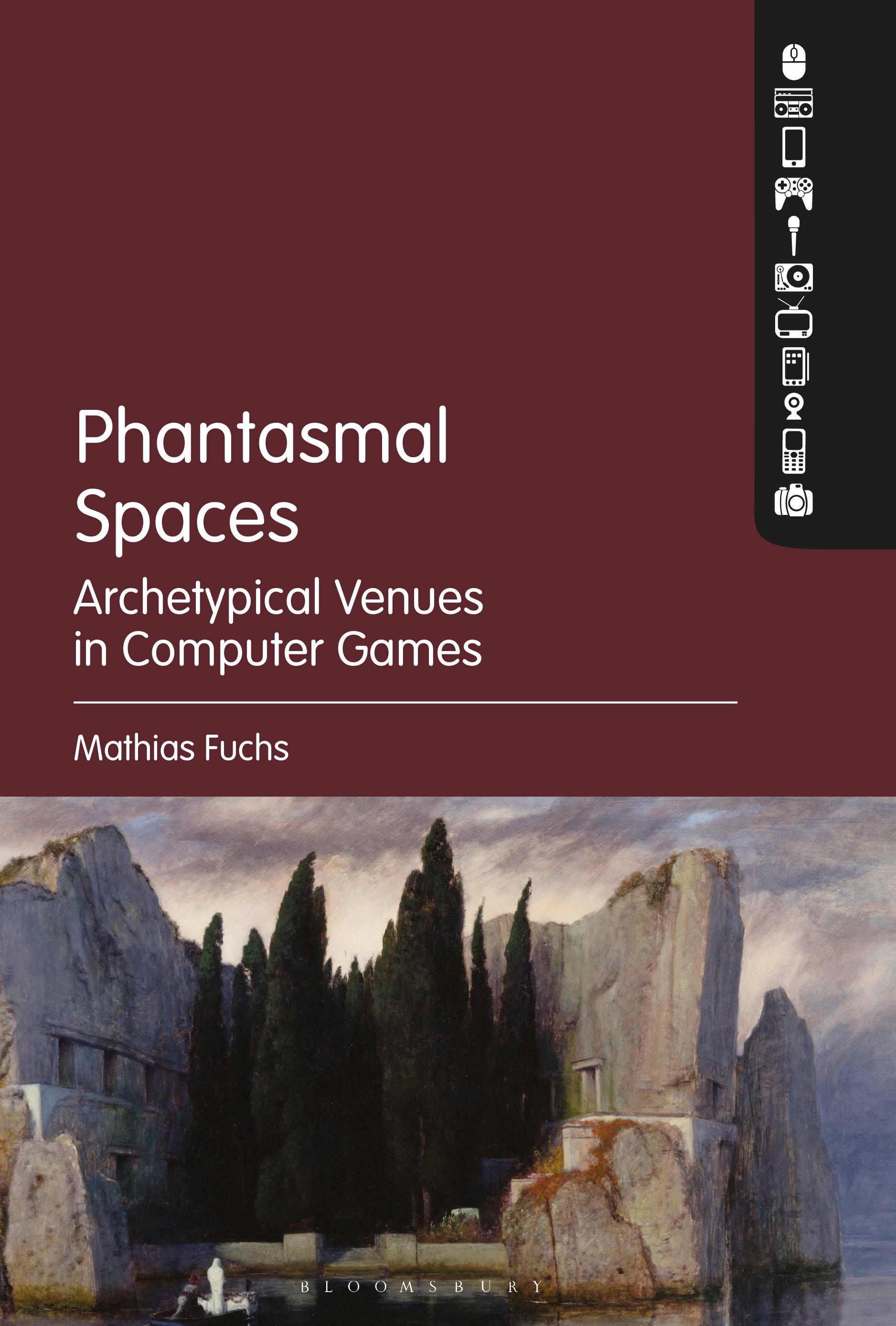
Recognizable, recurring spatial settings in video games serve not only as points of reference and signposts for orientation, but also as implicit sources of content. These spatial archetypes denote more than real-world objects or settings: they suggest and bring forward emotional states, historical context, atmospheric “attunement,” in the words of Massumi, and aesthetic programs that go beyond plain semiotic reference.
In each chapter, Mathias Fuchs brings to the fore an archetype commonly found in old and new digital games: The Ruin, The Cave, The Cloud, The Portal, The Road, The Forest, and The Island are each analysed at length, through the perspectives of aesthetics, games technology, psychoanalysis, and intertextuality. Gridding these seven tropes together with these four analytical lenses provides the reader with a systematic framework to understand the various complex considerations at play in evocative game design.
In each chapter, Mathias Fuchs brings to the fore an archetype commonly found in old and new digital games: The Ruin, The Cave, The Cloud, The Portal, The Road, The Forest, and The Island are each analysed at length, through the perspectives of aesthetics, games technology, psychoanalysis, and intertextuality. Gridding these seven tropes together with these four analytical lenses provides the reader with a systematic framework to understand the various complex considerations at play in evocative game design.
Płać wygodnie kartą, Klarną, Apple Pay lub Google Pay. Nie jesteś zadowolony? Zawsze masz 14-dniową gwarancję zwrotu pieniędzy. Więcej przeczytasz w naszych warunkach. Masz pytania? Napisz do nas na hello@memmo.org.
Memmo ułatwia naukę – gdziekolwiek jesteś na świecie. U nas znajdziesz podręczniki i sprytne narzędzia do nauki w jednym miejscu: streszczenia, quizy, podcasty i fiszki. A do tego Ted, Twój kumpel do nauki, który odpowie na wszystko, co Cię nurtuje. Ponad 50 000 studentów już tu się uczy – stworzone, byś uczył się szybciej i mniej stresował.