
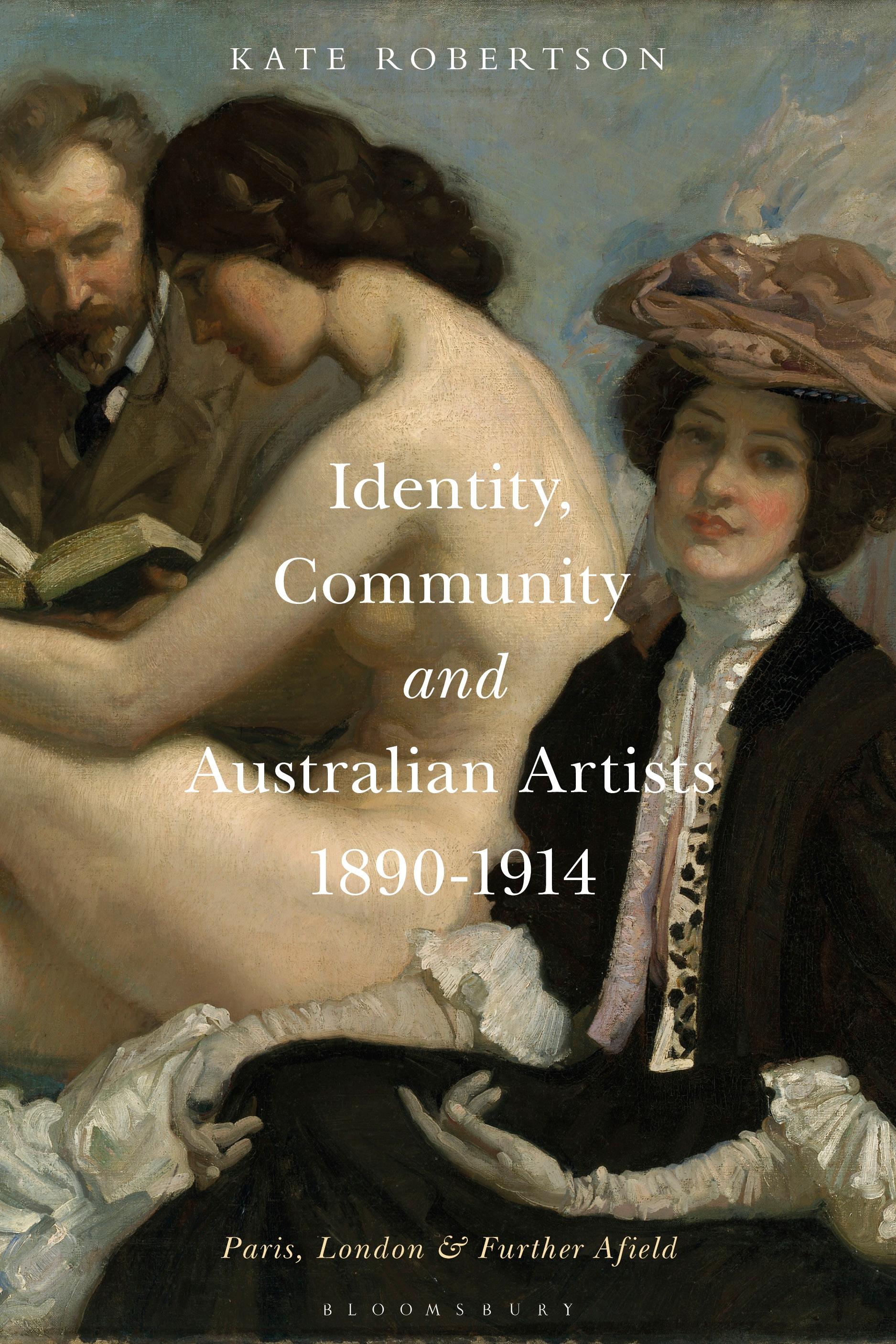
An irresistible call lured Australian artists abroad between 1890 and 1914, a transitional period immediately pre- and post-federation. Travelling enabled an extension of artistic frontiers, and Paris – the centre of art – and London – the heart of the Empire – promised wondrous opportunities. These expatriate artists formed communities based on their common bond to Australia, enacting their Australian-ness in private and public settings.
Yet, they also interacted with the broader creative community, fashioning a network of social and professional relationships. They joined ateliers in Paris such as the Académie Julian, clubs like the Chelsea Arts Club in London and visited artist colonies including St Ives in England and Étaples in France. Australian artists persistently sought a sense of belonging, negotiating their identity through activities such as plays, balls, tableaux, parties, dressing-up and, of course, the creation of art. While individual biographies are integral to this study, it is through exploring the connections between them that it offers new insights.
Through utilising extensive archival material, much of which has limited or no publication history, this book fills a gap in existing scholarship. It offers a vital exploration re-consideration of the fluidity of identity, place and belonging in the lives and work of Australian artists in this juncture in British-Australian history.
Yet, they also interacted with the broader creative community, fashioning a network of social and professional relationships. They joined ateliers in Paris such as the Académie Julian, clubs like the Chelsea Arts Club in London and visited artist colonies including St Ives in England and Étaples in France. Australian artists persistently sought a sense of belonging, negotiating their identity through activities such as plays, balls, tableaux, parties, dressing-up and, of course, the creation of art. While individual biographies are integral to this study, it is through exploring the connections between them that it offers new insights.
Through utilising extensive archival material, much of which has limited or no publication history, this book fills a gap in existing scholarship. It offers a vital exploration re-consideration of the fluidity of identity, place and belonging in the lives and work of Australian artists in this juncture in British-Australian history.
Płać wygodnie kartą, Klarną, Apple Pay lub Google Pay. Nie jesteś zadowolony? Zawsze masz 14-dniową gwarancję zwrotu pieniędzy. Więcej przeczytasz w naszych warunkach. Masz pytania? Napisz do nas na hello@memmo.org.
Memmo ułatwia naukę – gdziekolwiek jesteś na świecie. U nas znajdziesz podręczniki i sprytne narzędzia do nauki w jednym miejscu: streszczenia, quizy, podcasty i fiszki. A do tego Ted, Twój kumpel do nauki, który odpowie na wszystko, co Cię nurtuje. Ponad 50 000 studentów już tu się uczy – stworzone, byś uczył się szybciej i mniej stresował.