
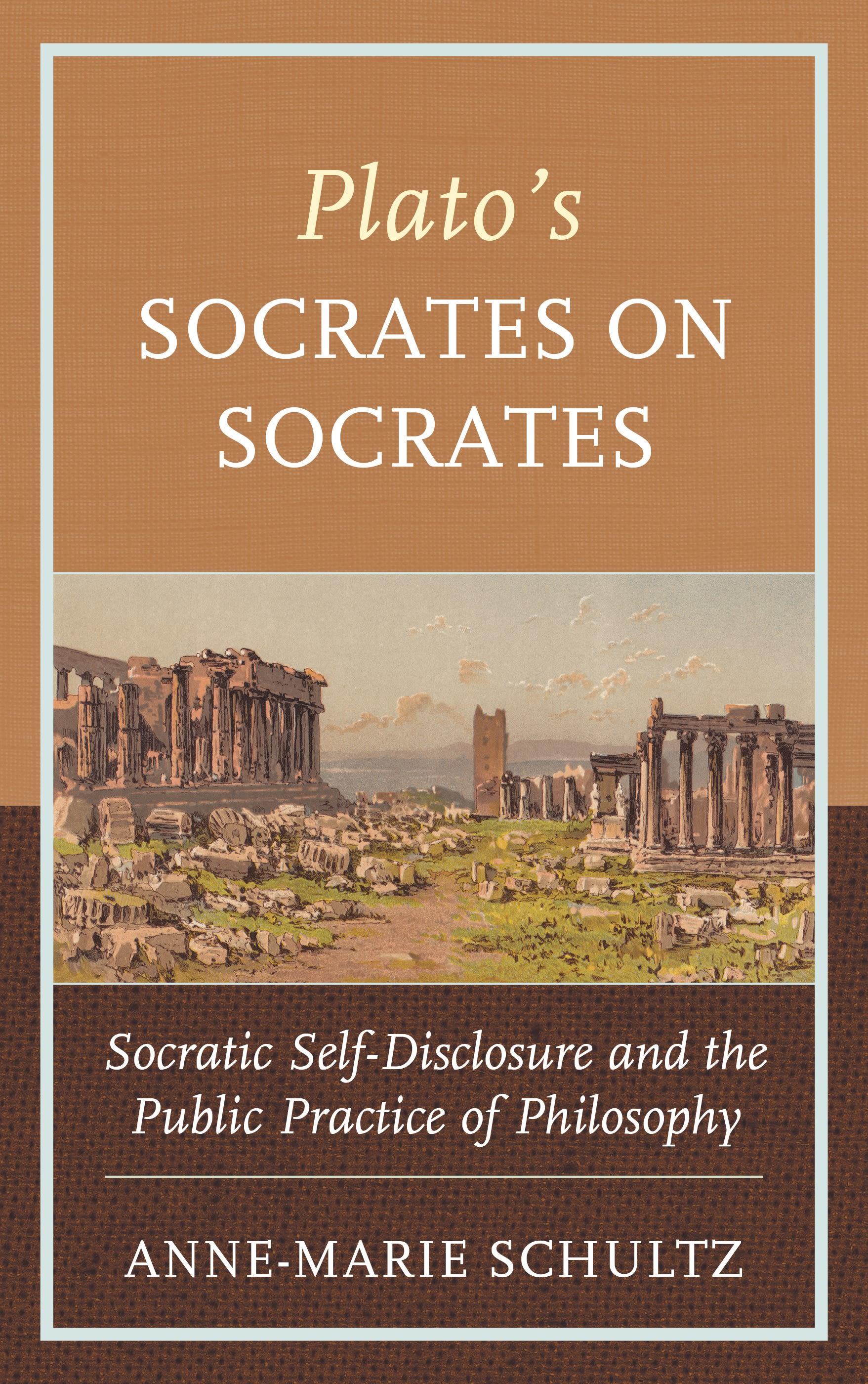
In Plato's Socrates on Socrates: Socratic Self-Disclosure and the Public Practice of Philosophy, Anne-Marie Schultz analyzes the philosophical and political implications of Plato’s presentation of Socrates’ self-disclosive speech in four dialogues: Theaetetus, Symposium, Apology, and Phaedo. Schultz argues that these moments of Socratic self-disclosure show that Plato’s presentation of “Socrates the narrator” is much more pervasive than the secondary literature typically acknowledges. Despite the pervasive appearance of a Socrates who describes his own experience throughout the dialogues, Socratic autobiographical self-disclosure has received surprisingly little scholarly attention. Plato’s use of narrative, particularly his trope of “Socrates the narrator,” is often subsumed into discussions of the dramatic nature of the dialogues more generally rather than studied in its own right. Schultz shows how these carefully crafted narrative remarks add to the richness and profundity of the Platonic texts on multiple levels. To illustrate how these embedded Socratic narratives contribute to the portrait of Socrates as a public philosopher in Plato’s dialogues, the author also examines Socratic self-disclosive practices in the works of bell hooks, Kathy Khang, and Ta-Neishi Coates, and even practices the art of Socratic self-disclosure herself.
Płać wygodnie kartą, Klarną, Apple Pay lub Google Pay. Nie jesteś zadowolony? Zawsze masz 14-dniową gwarancję zwrotu pieniędzy. Więcej przeczytasz w naszych warunkach. Masz pytania? Napisz do nas na hello@memmo.org.
Memmo ułatwia naukę – gdziekolwiek jesteś na świecie. U nas znajdziesz podręczniki i sprytne narzędzia do nauki w jednym miejscu: streszczenia, quizy, podcasty i fiszki. A do tego Ted, Twój kumpel do nauki, który odpowie na wszystko, co Cię nurtuje. Ponad 50 000 studentów już tu się uczy – stworzone, byś uczył się szybciej i mniej stresował.