
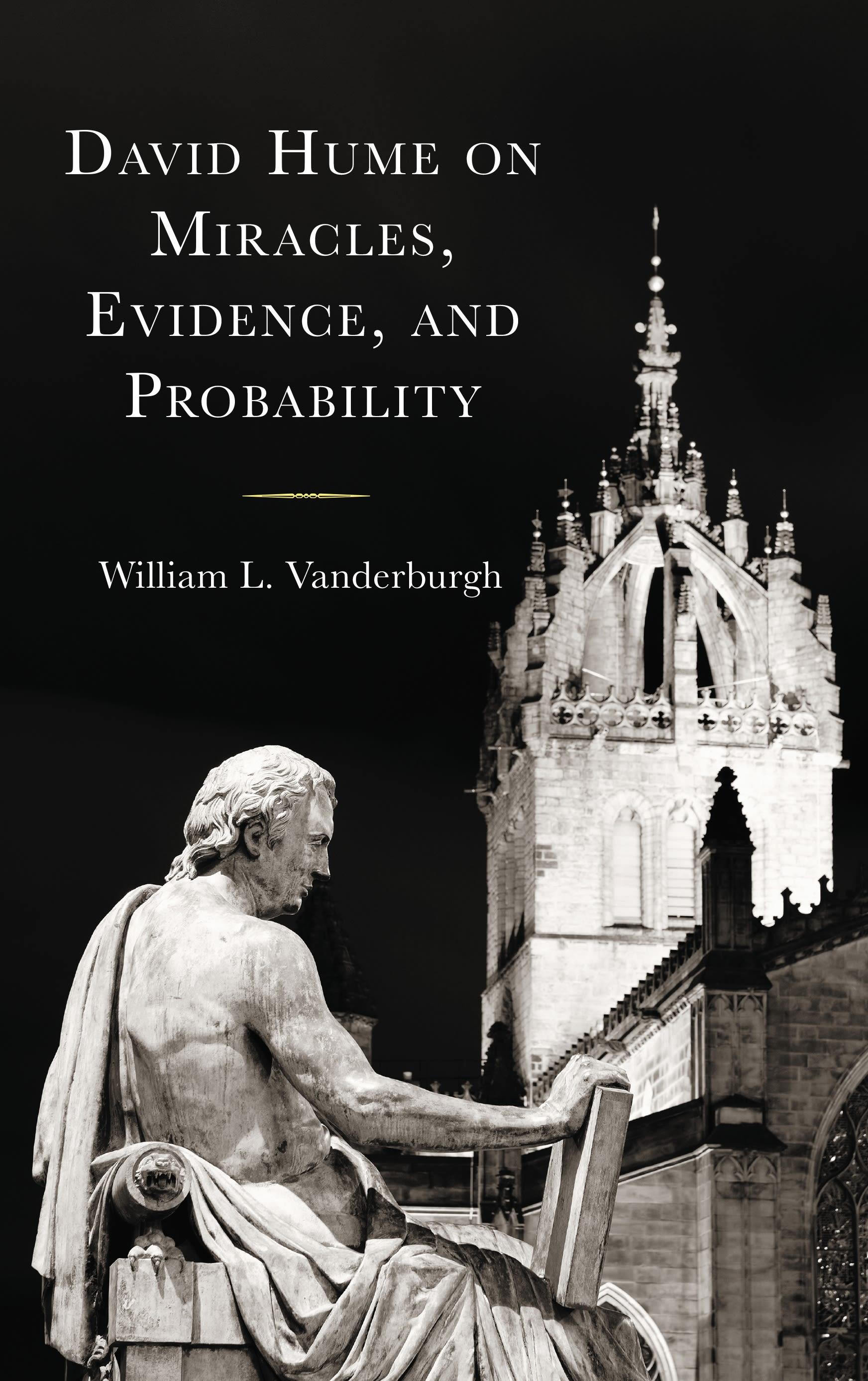
David Hume’s argument against believing in miracles has attracted nearly continuous attention from philosophers and theologians since it was first published in 1748. Hume’s many commentators, however, both pro and con, have often misunderstood key aspects of Hume’s account of evidential probability and as a result have misrepresented Hume’s argument and conclusions regarding miracles in fundamental ways. This book argues that Hume’s account of probability descends from a long and laudable tradition that goes back to ancient Roman and medieval law. That account is entirely and deliberately non-mathematical. As a result, any analysis of Hume’s argument in terms of the mathematical theory of probability is doomed to failure. Recovering the knowledge of this ancient tradition of probable reasoning leads us to a correct interpretation of Hume’s argument against miracles, enables a more accurate understanding of many other episodes in the history of science and of philosophy, and may be also useful in contemporary attempts to weigh evidence in epistemically complex situations where confirmation theory and mathematical probability theory have proven to be less helpful than we would have hoped.
Płać wygodnie kartą, Klarną, Apple Pay lub Google Pay. Nie jesteś zadowolony? Zawsze masz 14-dniową gwarancję zwrotu pieniędzy. Więcej przeczytasz w naszych warunkach. Masz pytania? Napisz do nas na hello@memmo.org.
Memmo ułatwia naukę – gdziekolwiek jesteś na świecie. U nas znajdziesz podręczniki i sprytne narzędzia do nauki w jednym miejscu: streszczenia, quizy, podcasty i fiszki. A do tego Ted, Twój kumpel do nauki, który odpowie na wszystko, co Cię nurtuje. Ponad 50 000 studentów już tu się uczy – stworzone, byś uczył się szybciej i mniej stresował.