
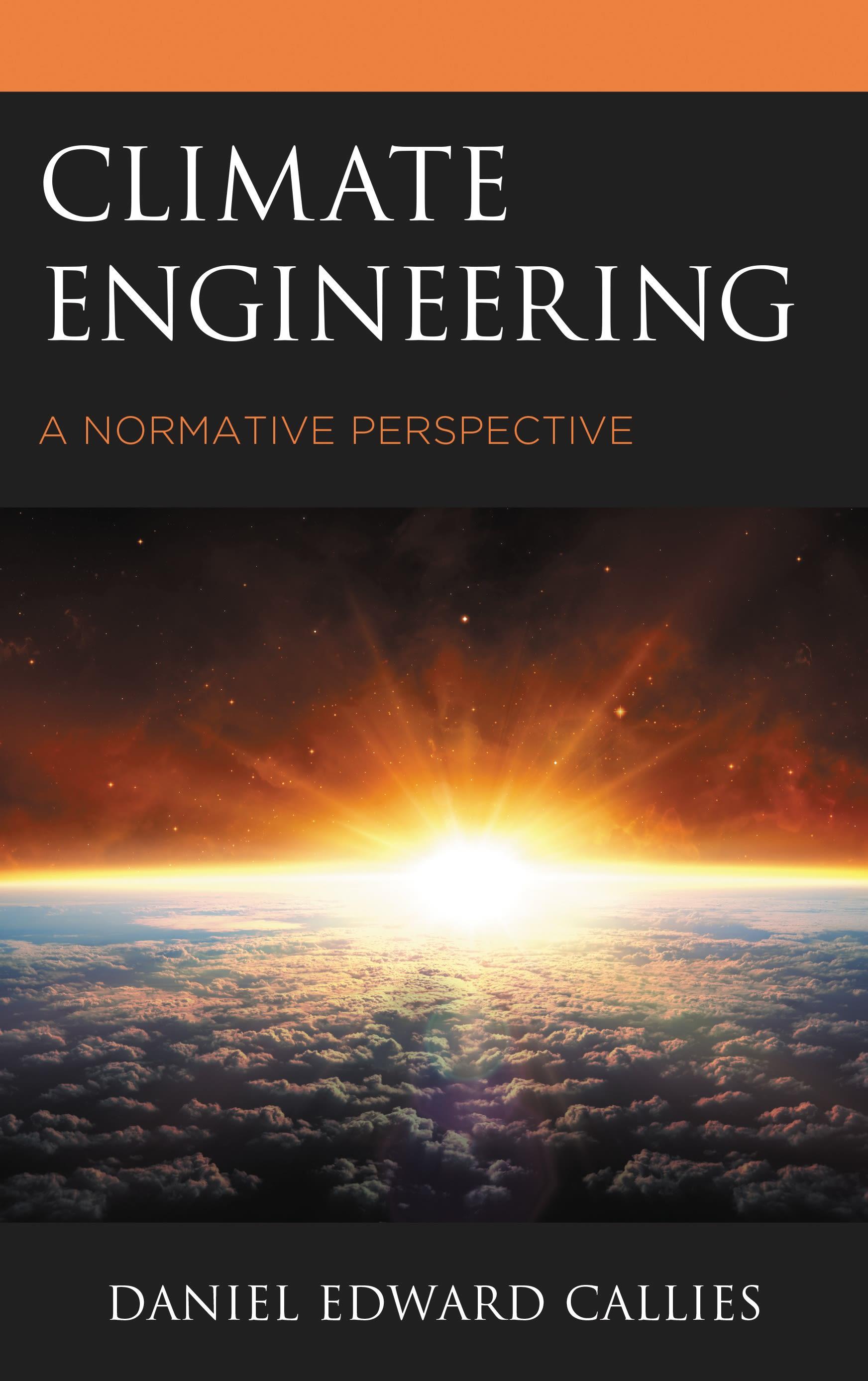
Climate Engineering: A Normative Perspective takes as its subject a prospective policy response to the urgent problem of climate change, one previously considered taboo. Climate engineering, the “deliberate, large-scale manipulation of the planetary environment in order to counteract anthropogenic climate change,” encapsulates a wide array of technological proposals. Daniel Edward Callies here focuses on one proposal currently being researched—stratospheric aerosol injection—which would spray aerosol particles into the upper atmosphere to thus reflect a small portion of incoming sunlight and slightly cool the globe.
This book asks important questions that should guide moral and political discussions of geoengineering. Does engaging in such research lead us towards inexorable deployment? Could this research draw us away from the more important tasks of mitigation and adaptation? Should we avoid risky interventions in the climate system altogether? What would legitimate governance of this technology look like? What would constitute a just distribution of the benefits and burdens associated with stratospheric aerosol injection? Who ought to be included in the decision-making process? Callies offers a normative perspective on these and other questions related to engineering the climate, ultimately arguing for research and regulation guided by norms of legitimacy, distributive justice, and procedural justice.
This book asks important questions that should guide moral and political discussions of geoengineering. Does engaging in such research lead us towards inexorable deployment? Could this research draw us away from the more important tasks of mitigation and adaptation? Should we avoid risky interventions in the climate system altogether? What would legitimate governance of this technology look like? What would constitute a just distribution of the benefits and burdens associated with stratospheric aerosol injection? Who ought to be included in the decision-making process? Callies offers a normative perspective on these and other questions related to engineering the climate, ultimately arguing for research and regulation guided by norms of legitimacy, distributive justice, and procedural justice.
Płać wygodnie kartą, Klarną, Apple Pay lub Google Pay. Nie jesteś zadowolony? Zawsze masz 14-dniową gwarancję zwrotu pieniędzy. Więcej przeczytasz w naszych warunkach. Masz pytania? Napisz do nas na hello@memmo.org.
Memmo ułatwia naukę – gdziekolwiek jesteś na świecie. U nas znajdziesz podręczniki i sprytne narzędzia do nauki w jednym miejscu: streszczenia, quizy, podcasty i fiszki. A do tego Ted, Twój kumpel do nauki, który odpowie na wszystko, co Cię nurtuje. Ponad 50 000 studentów już tu się uczy – stworzone, byś uczył się szybciej i mniej stresował.