
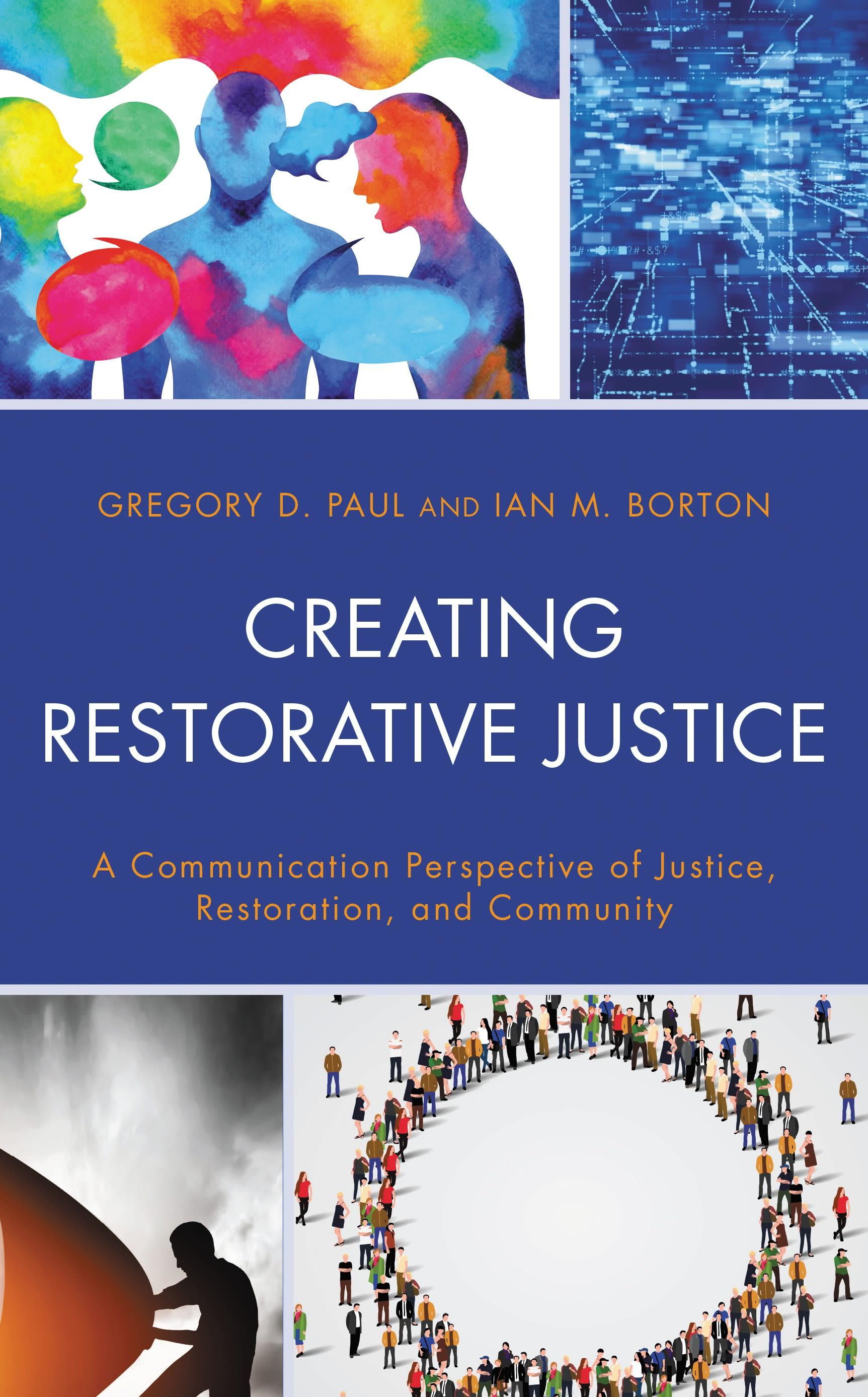
Discussion of the histories, meanings, and assumptions of restorative justice have enriched the development of its theory, research, and practices. While some of this work has addressed the role of communication, the treatment of communication within restorative justice remains rather under-developed. Communication plays a central role in processes of restoration and justice and a constitutive role in making restorative justice what it is. In Creating Restorative Justice: A Communication Perspective of Justice, Restoration, and Community, Gregory D. PaulandIan M. Borton argue that by centering communication in restorative justice as it occurs in various contexts (from families, to schools, to communities), we can simultaneously deepen our understanding, enrich our practice, and amplify our study of restoration and justice. From a communication perspective, restorative contexts both use and are created by the communication present. Any outcomes from restorative processes are thus the product of the communication both within and between restorative practices’ participants. As the world addresses the challenges presented by injustice, inequality, and insecurity, it is incumbent we expand our understanding of restorative processes to account for the vital role of communication.
Płać wygodnie kartą, Klarną, Apple Pay lub Google Pay. Nie jesteś zadowolony? Zawsze masz 14-dniową gwarancję zwrotu pieniędzy. Więcej przeczytasz w naszych warunkach. Masz pytania? Napisz do nas na hello@memmo.org.
Memmo ułatwia naukę – gdziekolwiek jesteś na świecie. U nas znajdziesz podręczniki i sprytne narzędzia do nauki w jednym miejscu: streszczenia, quizy, podcasty i fiszki. A do tego Ted, Twój kumpel do nauki, który odpowie na wszystko, co Cię nurtuje. Ponad 50 000 studentów już tu się uczy – stworzone, byś uczył się szybciej i mniej stresował.