
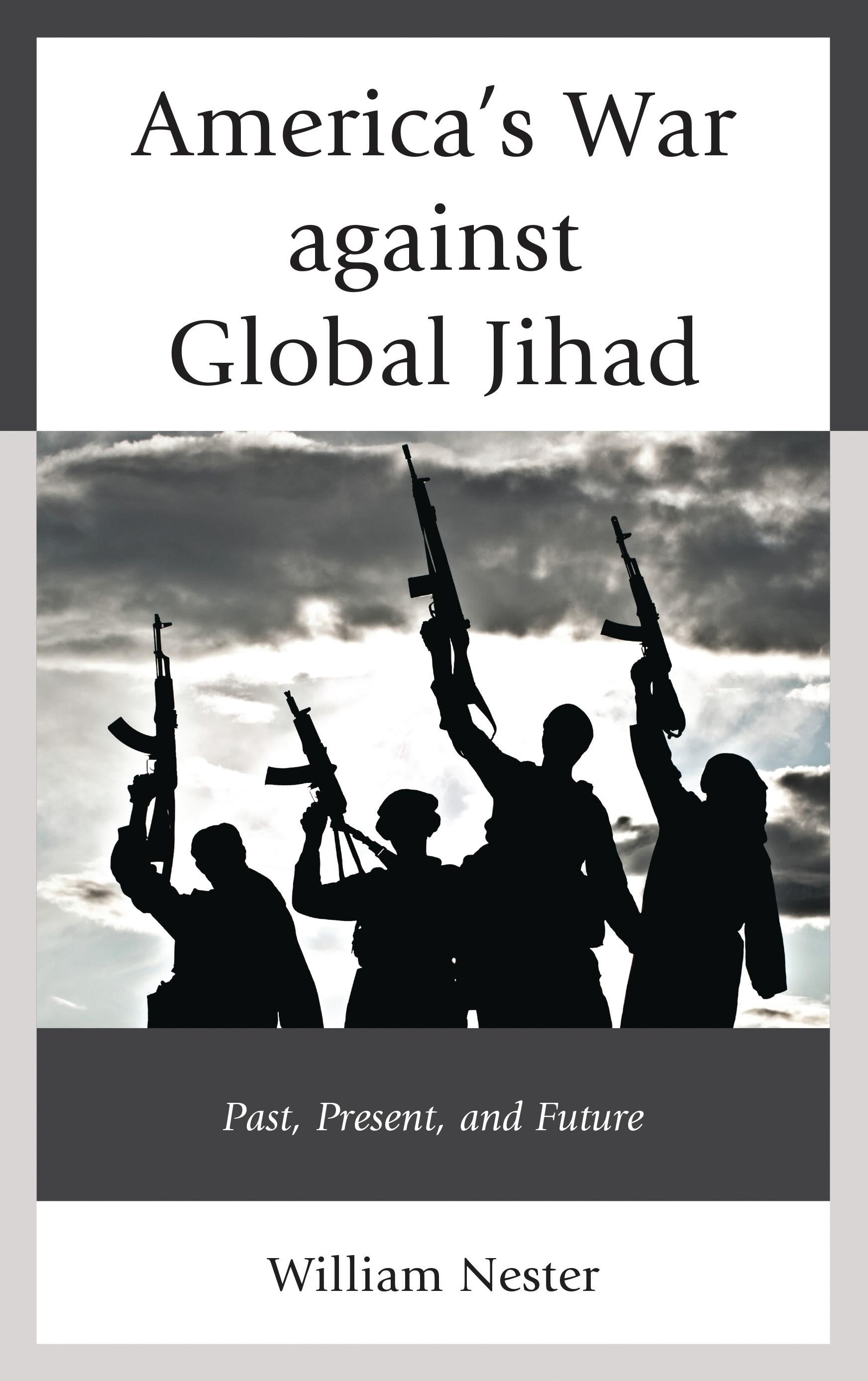
A specter haunts America, the specter of Global Jihad, Islamic Holy War. This specter was never more horrific than on September 11, 2001, when nineteen fanatics hijacked four jetliners and used them as guided missiles to destroy the twin World Trade Towers, damage the Pentagon, murder nearly 3,000 people, and cause as much as several hundred billion dollars’ worth of direct and indirect damage to New York City and the national economy. But Jihadists have periodically attacked Americans ever since November 1979, when mobs shouting death to America overran the American embassy in Tehran and held 52 officials hostage for 444 days.
President George W. Bush responded to the September 11 atrocities by declaring a global war on terror. Now in its second decade, that war has cost the United States thousands of lives and trillions of dollars. Americans are haunted by horrific televised images from across a swath of the Muslim world of bomb-blasted cities, hundreds of slaughtered bodies, thousands of refugees huddled in squalid camps, and American journalists in orange jump suits kneeling in the desert before the black robed and masked men who will behead them. Americans increasingly question whether the global war on terror has been worth those costs for their own nation and the lands where it is fought.
This book analyzes America’s crusade against Jihadism. The key related questions it addresses are these: Looking back, what were the successes and failures of Washington’s counter-Jihadist strategy before and after September 11? Looking ahead, should Americans stay the course or cut their losses in Iraq, Afghanistan, and elsewhere? Was the catastrophic September 11 attack a one-time event or could its equivalent or worse in death and destruction happen again? Renowned Harvard professor Samuel Huntington asserted that: “The underlying problem for the West is not Islamic fundamentalism, it is Islam, a different civilization, whose people are convinced of the superiority of their culture and are obsessed with the inferiority of their power.” Is that true? Just what of Muhammad’s words and deeds, if any, justifies the barbarism of al Qaeda, Islamic State, and other Jihadists? Finally, just how corporeal is that specter of global Jihad to the United States? A startling surprise awaits the reader in the final chapter as acclaimed expert William Nester weighs the specter of global Jihad against an array of other national security threats.
President George W. Bush responded to the September 11 atrocities by declaring a global war on terror. Now in its second decade, that war has cost the United States thousands of lives and trillions of dollars. Americans are haunted by horrific televised images from across a swath of the Muslim world of bomb-blasted cities, hundreds of slaughtered bodies, thousands of refugees huddled in squalid camps, and American journalists in orange jump suits kneeling in the desert before the black robed and masked men who will behead them. Americans increasingly question whether the global war on terror has been worth those costs for their own nation and the lands where it is fought.
This book analyzes America’s crusade against Jihadism. The key related questions it addresses are these: Looking back, what were the successes and failures of Washington’s counter-Jihadist strategy before and after September 11? Looking ahead, should Americans stay the course or cut their losses in Iraq, Afghanistan, and elsewhere? Was the catastrophic September 11 attack a one-time event or could its equivalent or worse in death and destruction happen again? Renowned Harvard professor Samuel Huntington asserted that: “The underlying problem for the West is not Islamic fundamentalism, it is Islam, a different civilization, whose people are convinced of the superiority of their culture and are obsessed with the inferiority of their power.” Is that true? Just what of Muhammad’s words and deeds, if any, justifies the barbarism of al Qaeda, Islamic State, and other Jihadists? Finally, just how corporeal is that specter of global Jihad to the United States? A startling surprise awaits the reader in the final chapter as acclaimed expert William Nester weighs the specter of global Jihad against an array of other national security threats.
Strony: 418
Kategoria: Statsvetenskap & Politik
e-ISBN: 9781498575317
Waga przesyłki: 1.2 kg
Wysyłka w ciągu: 1-2 dni
Płać wygodnie kartą, Klarną, Apple Pay lub Google Pay. Nie jesteś zadowolony? Zawsze masz 14-dniową gwarancję zwrotu pieniędzy. Więcej przeczytasz w naszych warunkach. Masz pytania? Napisz do nas na hello@memmo.org.
Memmo ułatwia naukę – gdziekolwiek jesteś na świecie. U nas znajdziesz podręczniki i sprytne narzędzia do nauki w jednym miejscu: streszczenia, quizy, podcasty i fiszki. A do tego Ted, Twój kumpel do nauki, który odpowie na wszystko, co Cię nurtuje. Ponad 50 000 studentów już tu się uczy – stworzone, byś uczył się szybciej i mniej stresował.