
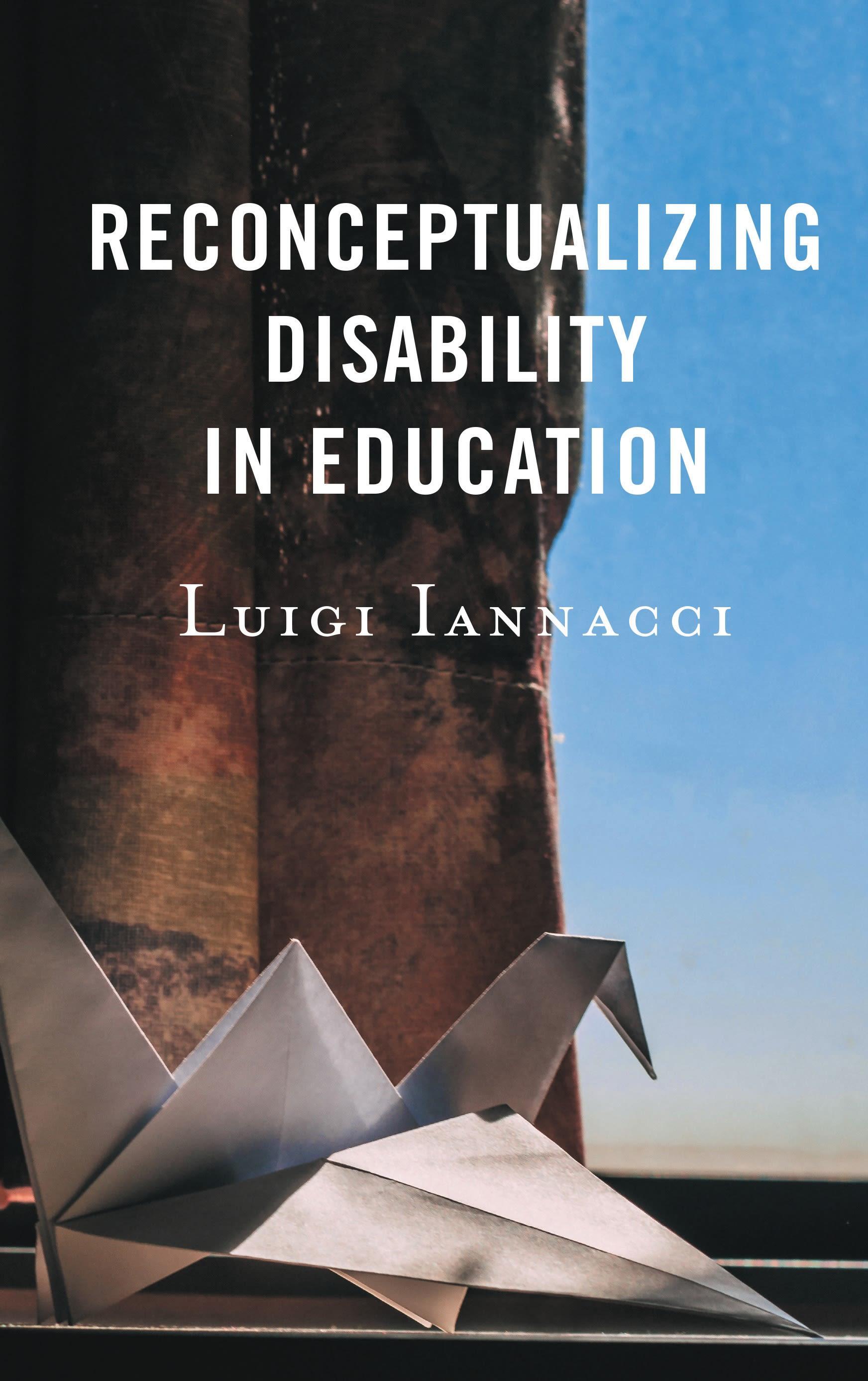
Reconceptualizing Disability in Education provides an essential critical exploration of problematic discourses, practices, and pedagogies that inform how disability is presently understood and responded to within the field of education. Luigi Iannacci interrogates and destabilizes ableist grand narratives that dominate every aspect of how disability is linguistically, bureaucratically, procedurally, and pedagogically configured within education. Ultimately, this book seeks to forward human rights for people with disabilities in educational contexts by clarifying and operationalizing inclusion so that it is not just a model necessitated by a hierarchy of legality, but rather a set of beliefs and practices based on critical analyses and a reconceptualization of current understandings and responses to disability that prevent inclusion and human rights from being realized.
As the book is grounded in reconceptualist theorizing, it draws on multiple perspectives—including critical disability theory, post-modernism, critical theory, critical pedagogy, and social constructivism—to deconstruct and destabilize what is currently taken for granted about disability and those ascribed disabled identities within education. A variety of personal, professional, research experiences and data are offered and drawn on to critically address questions regarding philosophical, epistemological, pedagogical, organizational, economic, and leadership issues as they relate to disability in education. Critical incidents, interviews, documents, and artifacts are drawn on and narratively presented to explore how disability is presently configured in language, identification, and placement processes, discourses, pedagogies, and interactions with students deemed disabled, as well as their parents/caregivers. This critical narrative approach fosters alternative ways of thinking, speaking, being, and doing that forward a human rights focused model of disability that sees as its mandate the amelioration of people with disabilities within education.
As the book is grounded in reconceptualist theorizing, it draws on multiple perspectives—including critical disability theory, post-modernism, critical theory, critical pedagogy, and social constructivism—to deconstruct and destabilize what is currently taken for granted about disability and those ascribed disabled identities within education. A variety of personal, professional, research experiences and data are offered and drawn on to critically address questions regarding philosophical, epistemological, pedagogical, organizational, economic, and leadership issues as they relate to disability in education. Critical incidents, interviews, documents, and artifacts are drawn on and narratively presented to explore how disability is presently configured in language, identification, and placement processes, discourses, pedagogies, and interactions with students deemed disabled, as well as their parents/caregivers. This critical narrative approach fosters alternative ways of thinking, speaking, being, and doing that forward a human rights focused model of disability that sees as its mandate the amelioration of people with disabilities within education.
Płać wygodnie kartą, Klarną, Apple Pay lub Google Pay. Nie jesteś zadowolony? Zawsze masz 14-dniową gwarancję zwrotu pieniędzy. Więcej przeczytasz w naszych warunkach. Masz pytania? Napisz do nas na hello@memmo.org.
Memmo ułatwia naukę – gdziekolwiek jesteś na świecie. U nas znajdziesz podręczniki i sprytne narzędzia do nauki w jednym miejscu: streszczenia, quizy, podcasty i fiszki. A do tego Ted, Twój kumpel do nauki, który odpowie na wszystko, co Cię nurtuje. Ponad 50 000 studentów już tu się uczy – stworzone, byś uczył się szybciej i mniej stresował.