
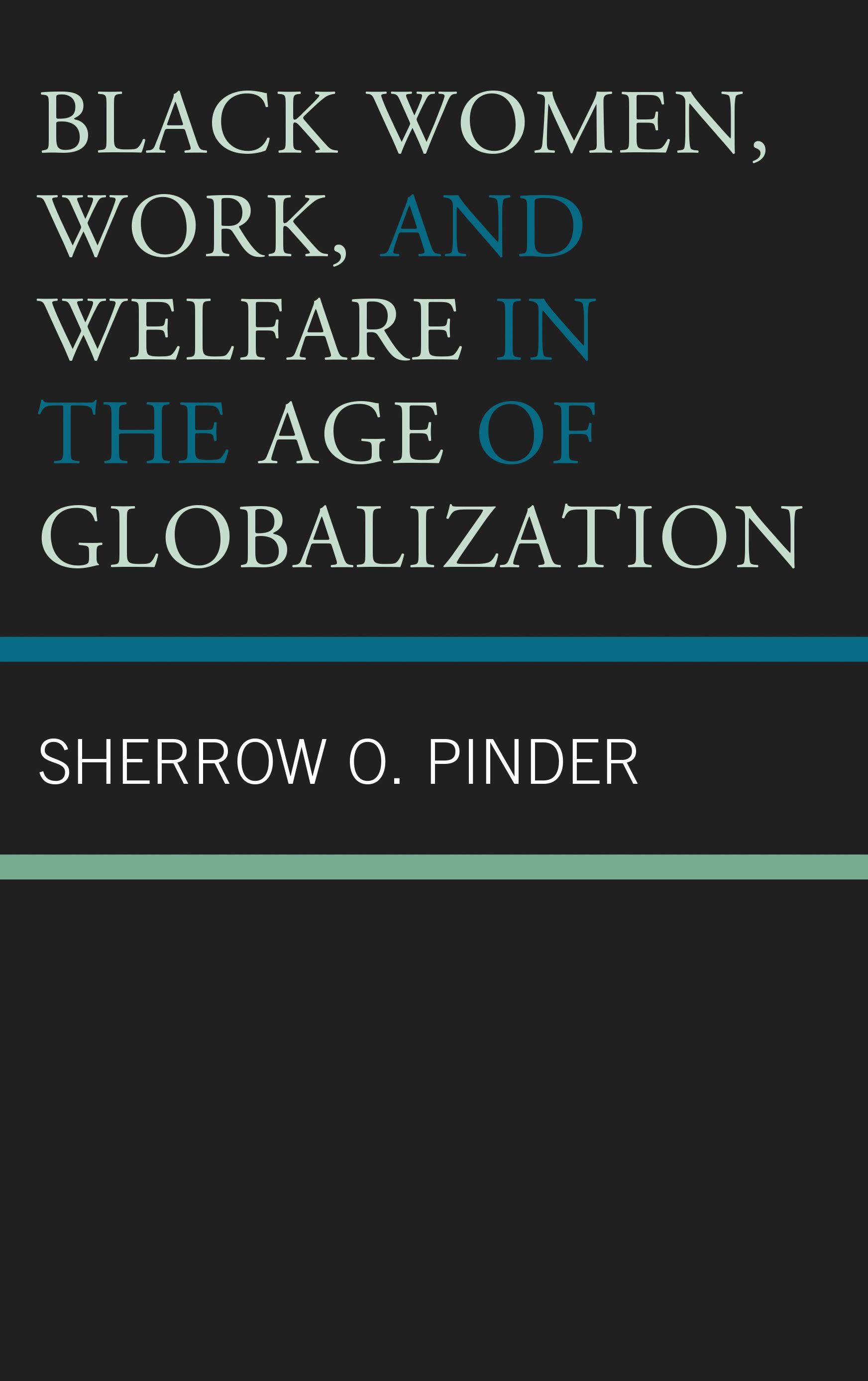
Pinder explores how globalization has shaped, and continues to shape, the American economy, which impacts the welfare state in markedly new ways. In the United States, the transformation from a manufacturing economy to a service economy escalated the need for an abundance of flexible, exploitable, cheap workers. The implementation of the Personal Responsibility Work Opportunity Reconciliation Act (PRWORA), whose generic term is workfare, is one of the many ways in which the government responded to capital need for cheap labor. While there is a clear link between welfare and low-wage markets, workfare forces welfare recipients, including single mothers with young children, to work outside of the home in exchange for their welfare checks. More importantly, workfare provides an “underclass” of labor that is trapped in jobs that pay minimum wage. This “underclass” is characteristically gendered and racialized, and the book builds on these insights and seeks to illuminate a crucial but largely overlooked aspect of the negative impact of workfare on black single mother welfare recipients. The stereotype of the “underclass,” which is infused with racial meaning, is used to describe and illustrate the position of black single mother welfare recipients and is an implicit way of talking about poor women with an invidious racist and sexist subtext, which Pinder suggests is one of the ways in which “gendered racism” presents itself in the United States. Ultimately, the book analyzes the intersectionality of race, gender, and class in terms of welfare policy reform in the United States.
Płać wygodnie kartą, Klarną, Apple Pay lub Google Pay. Nie jesteś zadowolony? Zawsze masz 14-dniową gwarancję zwrotu pieniędzy. Więcej przeczytasz w naszych warunkach. Masz pytania? Napisz do nas na hello@memmo.org.
Memmo ułatwia naukę – gdziekolwiek jesteś na świecie. U nas znajdziesz podręczniki i sprytne narzędzia do nauki w jednym miejscu: streszczenia, quizy, podcasty i fiszki. A do tego Ted, Twój kumpel do nauki, który odpowie na wszystko, co Cię nurtuje. Ponad 50 000 studentów już tu się uczy – stworzone, byś uczył się szybciej i mniej stresował.