
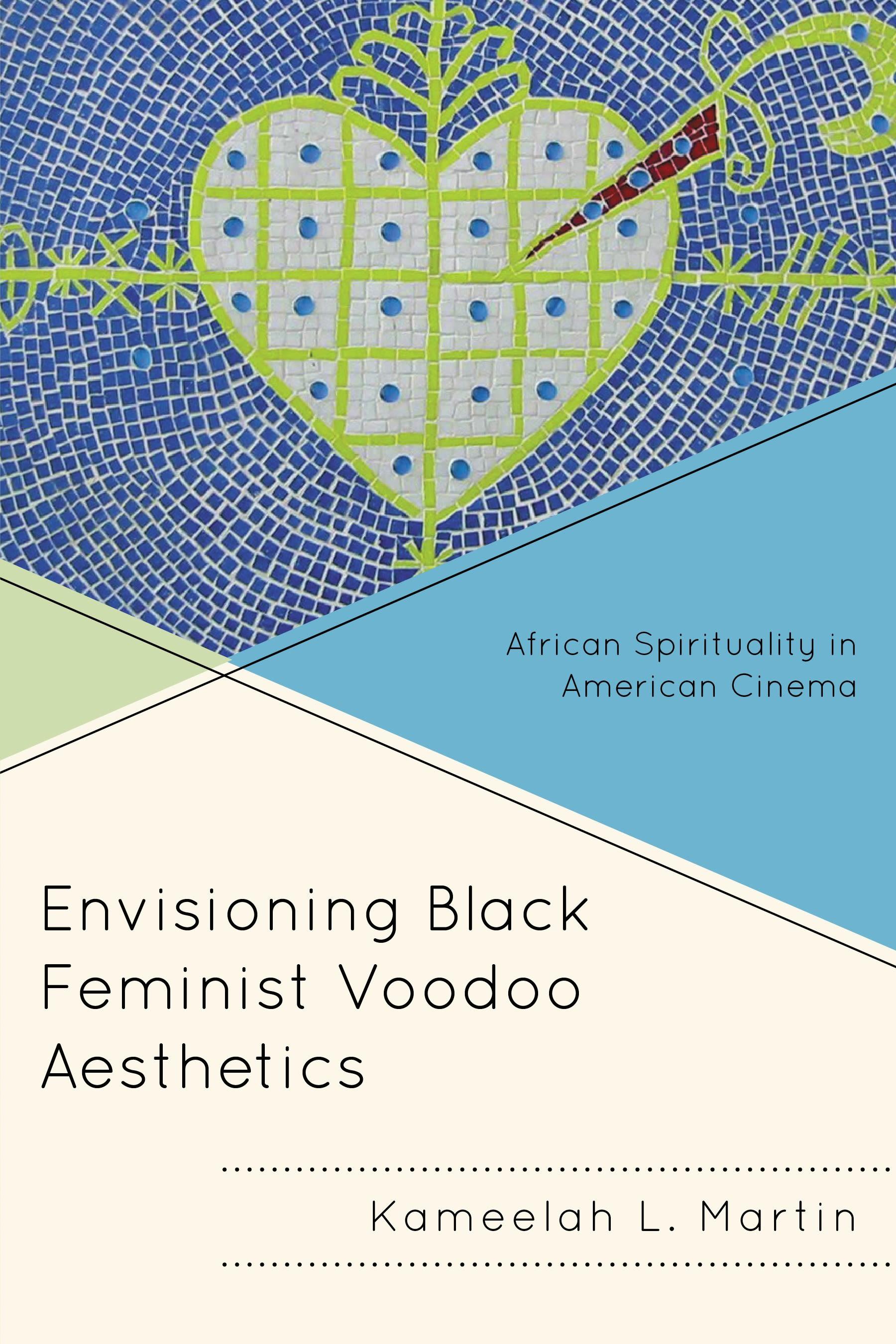
In the twenty-first century, American popular culture increasingly makes visible the performance of African spirituality by black women. Disney’s Princess and the Frog and Pirates of the Caribbean franchise are two notable examples. The reliance on the black priestess of African-derived religion as an archetype, however, has a much longer history steeped in the colonial othering of Haitian Vodou and American imperialist fantasies about so-called ‘black magic’.
Within this cinematic study, Martin unravels how religious autonomy impacts the identity, function, and perception of Africana women in the American popular imagination. Martin interrogates seventy-five years of American film representations of black women engaged in conjure, hoodoo, obeah, or Voodoo to discern what happens when race, gender, and African spirituality collide. She develops the framework of Voodoo aesthetics, or the inscription of African cosmologies on the black female body, as the theoretical lens through which to scrutinize black female religious performance in film. Martin places the genre of film in conversation with black feminist/womanist criticism, offering an interdisciplinary approach to film analysis.
Positioning the black priestess as another iteration of Patricia Hill Collins’ notion of controlling images, Martin theorizes whether film functions as a safe space for a racial and gendered embodiment in the performance of African diasporic religion. Approaching the close reading of eight signature films from a black female spectatorship, Martin works chronologically to express the trajectory of the black priestess as cinematic motif over the last century of filmmaking. Conceptually, Martin recalibrates the scholarship on black women and representation by distinctly centering black women as ritual specialists and Black Atlantic spirituality on the silver screen.
Within this cinematic study, Martin unravels how religious autonomy impacts the identity, function, and perception of Africana women in the American popular imagination. Martin interrogates seventy-five years of American film representations of black women engaged in conjure, hoodoo, obeah, or Voodoo to discern what happens when race, gender, and African spirituality collide. She develops the framework of Voodoo aesthetics, or the inscription of African cosmologies on the black female body, as the theoretical lens through which to scrutinize black female religious performance in film. Martin places the genre of film in conversation with black feminist/womanist criticism, offering an interdisciplinary approach to film analysis.
Positioning the black priestess as another iteration of Patricia Hill Collins’ notion of controlling images, Martin theorizes whether film functions as a safe space for a racial and gendered embodiment in the performance of African diasporic religion. Approaching the close reading of eight signature films from a black female spectatorship, Martin works chronologically to express the trajectory of the black priestess as cinematic motif over the last century of filmmaking. Conceptually, Martin recalibrates the scholarship on black women and representation by distinctly centering black women as ritual specialists and Black Atlantic spirituality on the silver screen.
Płać wygodnie kartą, Klarną, Apple Pay lub Google Pay. Nie jesteś zadowolony? Zawsze masz 14-dniową gwarancję zwrotu pieniędzy. Więcej przeczytasz w naszych warunkach. Masz pytania? Napisz do nas na hello@memmo.org.
Memmo ułatwia naukę – gdziekolwiek jesteś na świecie. U nas znajdziesz podręczniki i sprytne narzędzia do nauki w jednym miejscu: streszczenia, quizy, podcasty i fiszki. A do tego Ted, Twój kumpel do nauki, który odpowie na wszystko, co Cię nurtuje. Ponad 50 000 studentów już tu się uczy – stworzone, byś uczył się szybciej i mniej stresował.