
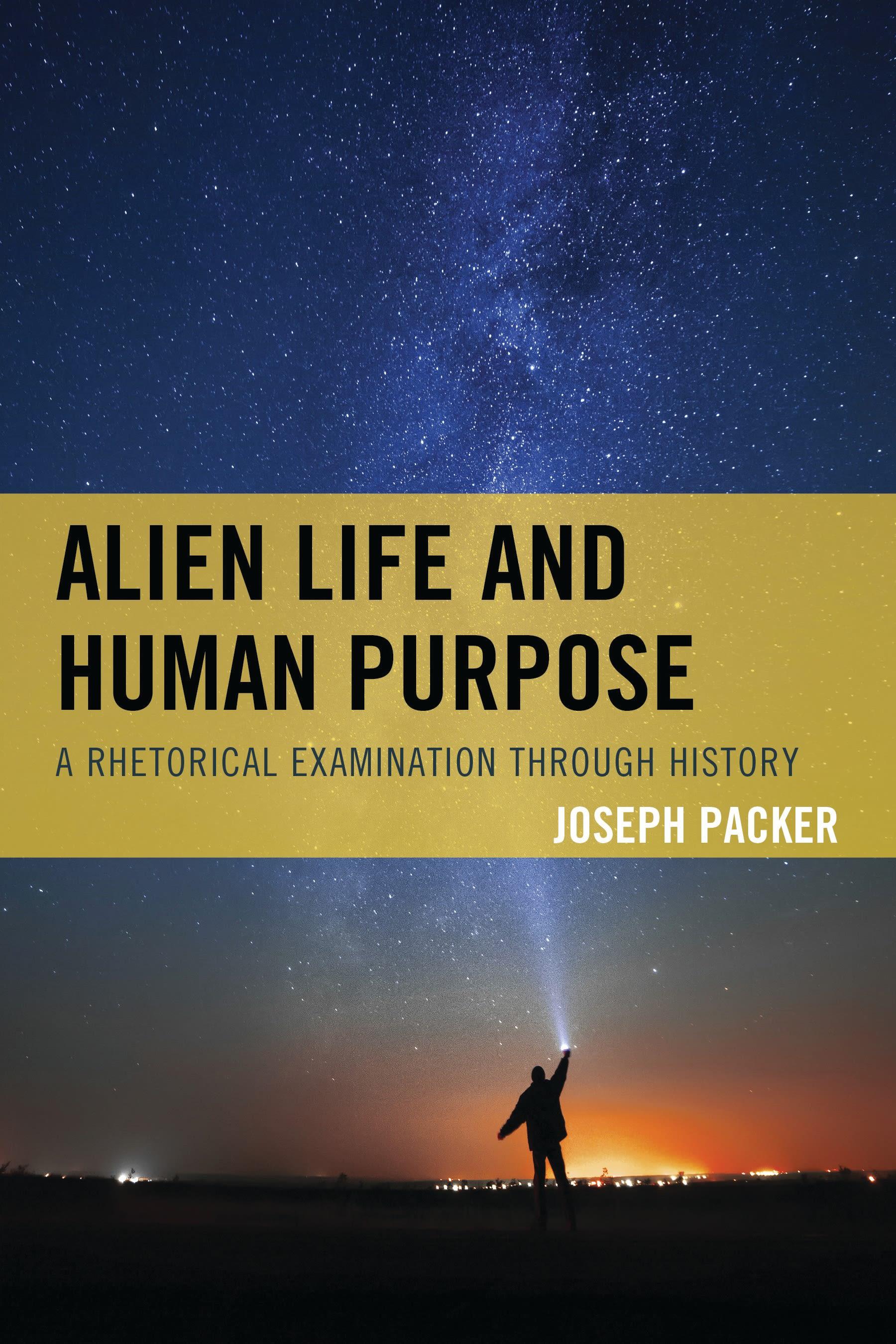
Alien Life and Human Purpose: A Rhetorical Examination through History provides a rhetorical examination of the way major historical figures connect their arguments for the absence of alien life, or “unity,” to their philosophical, religious, and ethical agendas. Although the unity myth has often existed in the background of society, shaping institutions and values, during periods where relativism gained prominence, its opponents actively wielded the unity myth as a response; Plato used the unity myth against the sophists, Anglican theologian and philosopher William Whewell against the utilitarians, co-discoverer of evolution Alfred Russell Wallace against the social Darwinists, university professors Frank J. Tipler and John D. Barrow against the postmodernists, etc. These individuals presented scientific defenses of unity and then used the “fact” of unity to claim the universe is teleological, knowable, and ordered, rather than chaotic and relativistic. This book argues that unity and its complimentary mythic function have played an important role in shaping values throughout history and more importantly continue to do so today.
Płać wygodnie kartą, Klarną, Apple Pay lub Google Pay. Nie jesteś zadowolony? Zawsze masz 14-dniową gwarancję zwrotu pieniędzy. Więcej przeczytasz w naszych warunkach. Masz pytania? Napisz do nas na hello@memmo.org.
Memmo ułatwia naukę – gdziekolwiek jesteś na świecie. U nas znajdziesz podręczniki i sprytne narzędzia do nauki w jednym miejscu: streszczenia, quizy, podcasty i fiszki. A do tego Ted, Twój kumpel do nauki, który odpowie na wszystko, co Cię nurtuje. Ponad 50 000 studentów już tu się uczy – stworzone, byś uczył się szybciej i mniej stresował.