
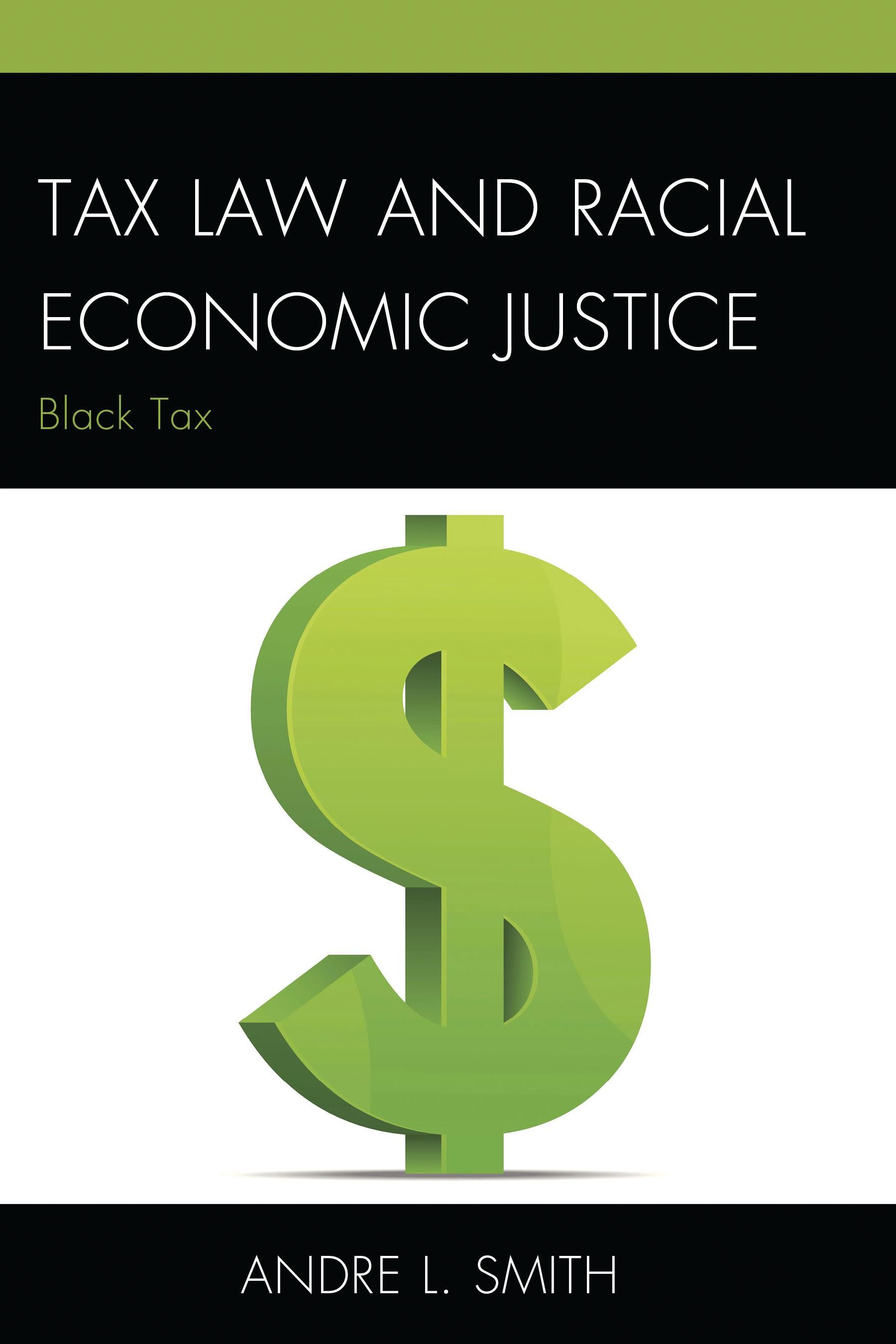
No study of Black people in America can be complete without considering how openly discriminatory tax laws helped establish a racial caste system in the United States, how they were designed to exclude blacks from lucrative markets and the voting franchise, and how tax laws extracted and redistributed vast sums of black wealth. Not only was slavery nearly a 100% tax on black labor, so too was Jim Crow apartheid and tax laws specified the peculiar institution as “negro slavery.” The first instances of affirmative action in the United States were tax laws designed to attract white men to the South. The nineteenth-century Federal Tariff indirectly redistributed perhaps a majority of the profits from slavery from the South to the North and is the principle reason the Confederate states seceded. The only constitutional amendment obtained by the Civil Rights Movement is the Twenty-Sixth Amendment abolishing poll taxes in federal elections. Blending traditional legal theory, neoclassical economics, and a pan-African view of history, these six interrelated essays on race and taxes demonstrate that, even in today’s supposedly post-racial society, there is no area of human activity where racial dynamics are absent.
Płać wygodnie kartą, Klarną, Apple Pay lub Google Pay. Nie jesteś zadowolony? Zawsze masz 14-dniową gwarancję zwrotu pieniędzy. Więcej przeczytasz w naszych warunkach. Masz pytania? Napisz do nas na hello@memmo.org.
Memmo ułatwia naukę – gdziekolwiek jesteś na świecie. U nas znajdziesz podręczniki i sprytne narzędzia do nauki w jednym miejscu: streszczenia, quizy, podcasty i fiszki. A do tego Ted, Twój kumpel do nauki, który odpowie na wszystko, co Cię nurtuje. Ponad 50 000 studentów już tu się uczy – stworzone, byś uczył się szybciej i mniej stresował.