
Black education in the South was the great social program of the post–Civil War era. Desperately strapped for operating capital, the first freedmen’s schools resorted to a bold fundraising experiment. Student troupes were sent to the North singing Negro spirituals, the sacred songs of slavery, in order to generate goodwill and entice financial support. The Fisk University Jubilee Singers set this strategy in motion in 1871; in the wake of their success, it was adopted by HBCUs throughout the Southland. Intrepid student singers introduced the outside world to the Negro spirituals, the “genuine jewels” they brought from their bondage, and “sang up” school buildings in the process. Negro spiritual singing was a revelation for the northern public; it was their initial exposure to an emergent, distinctly American kind of creative energy. Male quartets became the standard-bearers of this venerable Black music tradition.
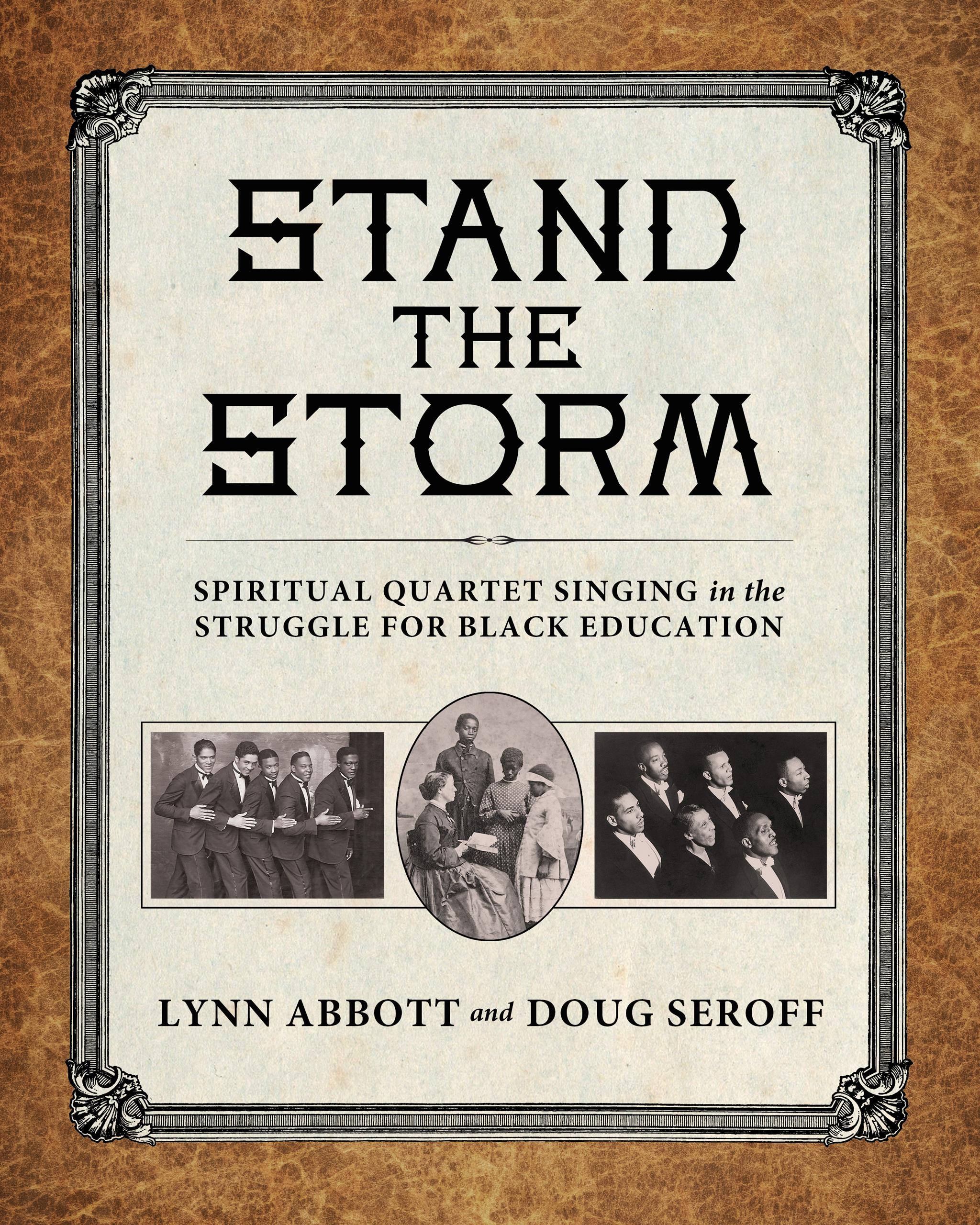
In Stand the Storm: Spiritual Quartet Singing in the Struggle for Black Education, award-winning authors Lynn Abbott and Doug Seroff dive into the history of three generations of fundraising quartets from seven representative schools: Fisk, Hampton, Tuskegee, Penn, Calhoun, Utica, and Piney Woods. They acknowledge the heroic founders of the schools and restore the names of forgotten singers to the historical record. They reevaluate the industrial education model that guided these schools. Finally, they plot the evolution of Negro spiritual singing after Emancipation by scrutinizing early published song collections and comparing them with songbooks and recordings from subsequent eras.
In Stand the Storm: Spiritual Quartet Singing in the Struggle for Black Education, award-winning authors Lynn Abbott and Doug Seroff dive into the history of three generations of fundraising quartets from seven representative schools: Fisk, Hampton, Tuskegee, Penn, Calhoun, Utica, and Piney Woods. They acknowledge the heroic founders of the schools and restore the names of forgotten singers to the historical record. They reevaluate the industrial education model that guided these schools. Finally, they plot the evolution of Negro spiritual singing after Emancipation by scrutinizing early published song collections and comparing them with songbooks and recordings from subsequent eras.
Strony: 464
Kategoria: Musikvetenskap
e-ISBN: 9781496857637
Waga przesyłki: 1.2 kg
Wysyłka w ciągu: 1-2 dni
Płać wygodnie kartą, Klarną, Apple Pay lub Google Pay. Nie jesteś zadowolony? Zawsze masz 14-dniową gwarancję zwrotu pieniędzy. Więcej przeczytasz w naszych warunkach. Masz pytania? Napisz do nas na hello@memmo.org.
Memmo ułatwia naukę – gdziekolwiek jesteś na świecie. U nas znajdziesz podręczniki i sprytne narzędzia do nauki w jednym miejscu: streszczenia, quizy, podcasty i fiszki. A do tego Ted, Twój kumpel do nauki, który odpowie na wszystko, co Cię nurtuje. Ponad 50 000 studentów już tu się uczy – stworzone, byś uczył się szybciej i mniej stresował.
Może Ci się spodobać
Kup książkę0