
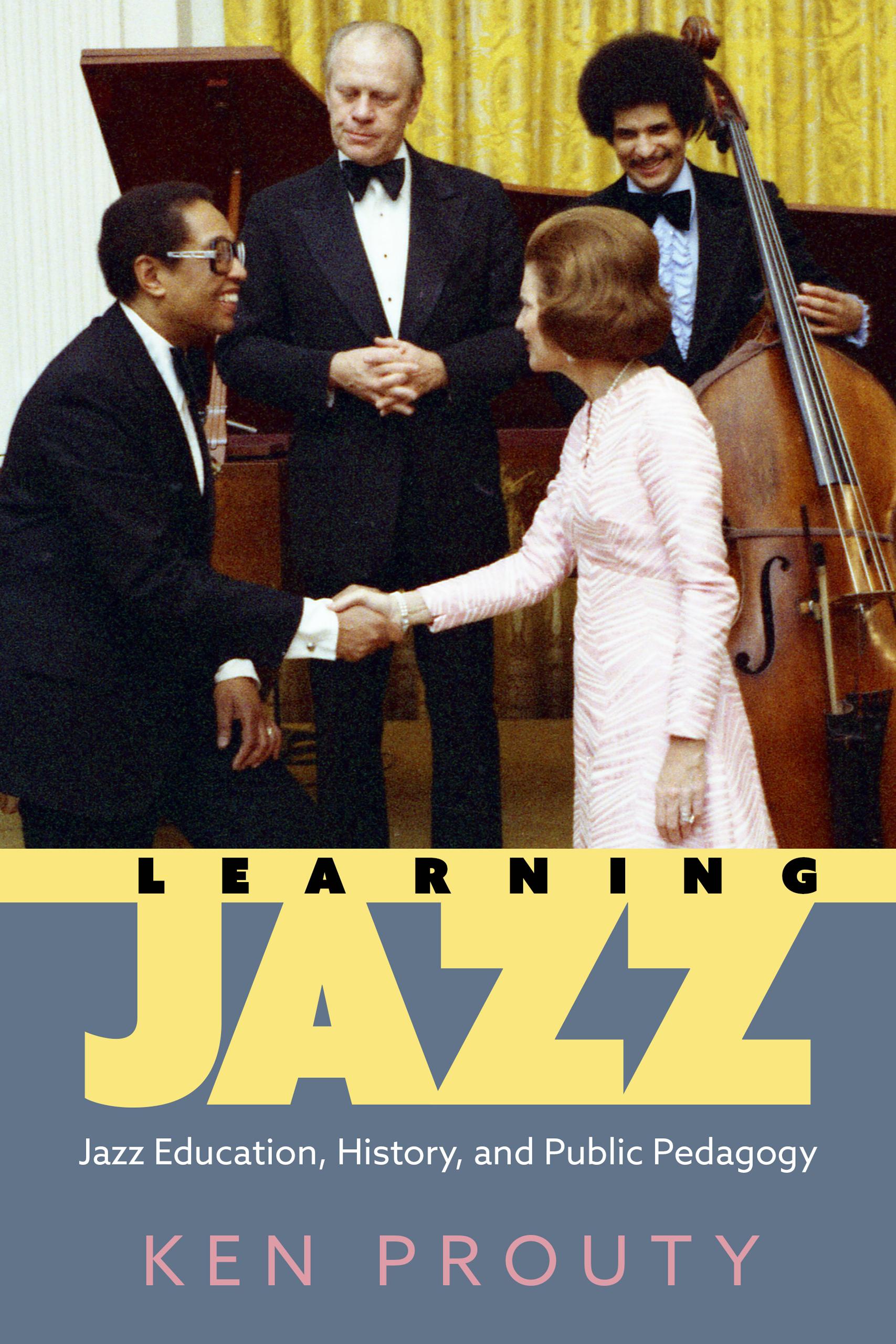
Learning Jazz: Jazz Education, History, and Public Pedagogy addresses a debate that has consumed practitioners and advocates since the music's early days. Studies on jazz learning typically focus on one of two methods: institutional education or the kinds of informal mentoring relationships long associated with the tradition. Ken Prouty argues that this distinction works against a common identity for audiences and communities. Rather, what happens within the institution impacts—and is impacted by—events and practices outside institutional contexts.
While formal institutions are well-defined in educational and civic contexts, informal institutions have profoundly influenced the development of jazz and its discourses. Drawing on historical case studies, Prouty details significant moments in jazz history. He examines the ways that early method books capitalized on a new commercial market, commandeering public expertise about the music. Chapters also discuss critic Paul Eduard Miller and his attempts to develop a jazz canon, as well as the disconnect between the spotlighted “great men” and the everyday realities of artists. Tackling race in jazz education, Prouty explores the intersections between identity and assessment; bandleaders Stan Kenton and Maynard Ferguson; public school segregation; Jazz at Lincoln Center; and more. He further examines jazz’s “public pedagogy,” and the sometimes-difficult relationships between “jazz people” and the general public. Ultimately, Learning Jazz posits that there is room for both institutional and noninstitutional forces in the educational realm of jazz.
While formal institutions are well-defined in educational and civic contexts, informal institutions have profoundly influenced the development of jazz and its discourses. Drawing on historical case studies, Prouty details significant moments in jazz history. He examines the ways that early method books capitalized on a new commercial market, commandeering public expertise about the music. Chapters also discuss critic Paul Eduard Miller and his attempts to develop a jazz canon, as well as the disconnect between the spotlighted “great men” and the everyday realities of artists. Tackling race in jazz education, Prouty explores the intersections between identity and assessment; bandleaders Stan Kenton and Maynard Ferguson; public school segregation; Jazz at Lincoln Center; and more. He further examines jazz’s “public pedagogy,” and the sometimes-difficult relationships between “jazz people” and the general public. Ultimately, Learning Jazz posits that there is room for both institutional and noninstitutional forces in the educational realm of jazz.
Strony: 244
Kategoria: Musikvetenskap
e-ISBN: 9781496847928
Waga przesyłki: 1.2 kg
Wysyłka w ciągu: 1-2 dni
Płać wygodnie kartą, Klarną, Apple Pay lub Google Pay. Nie jesteś zadowolony? Zawsze masz 14-dniową gwarancję zwrotu pieniędzy. Więcej przeczytasz w naszych warunkach. Masz pytania? Napisz do nas na hello@memmo.org.
Memmo ułatwia naukę – gdziekolwiek jesteś na świecie. U nas znajdziesz podręczniki i sprytne narzędzia do nauki w jednym miejscu: streszczenia, quizy, podcasty i fiszki. A do tego Ted, Twój kumpel do nauki, który odpowie na wszystko, co Cię nurtuje. Ponad 50 000 studentów już tu się uczy – stworzone, byś uczył się szybciej i mniej stresował.
Może Ci się spodobać
Kup książkę0