
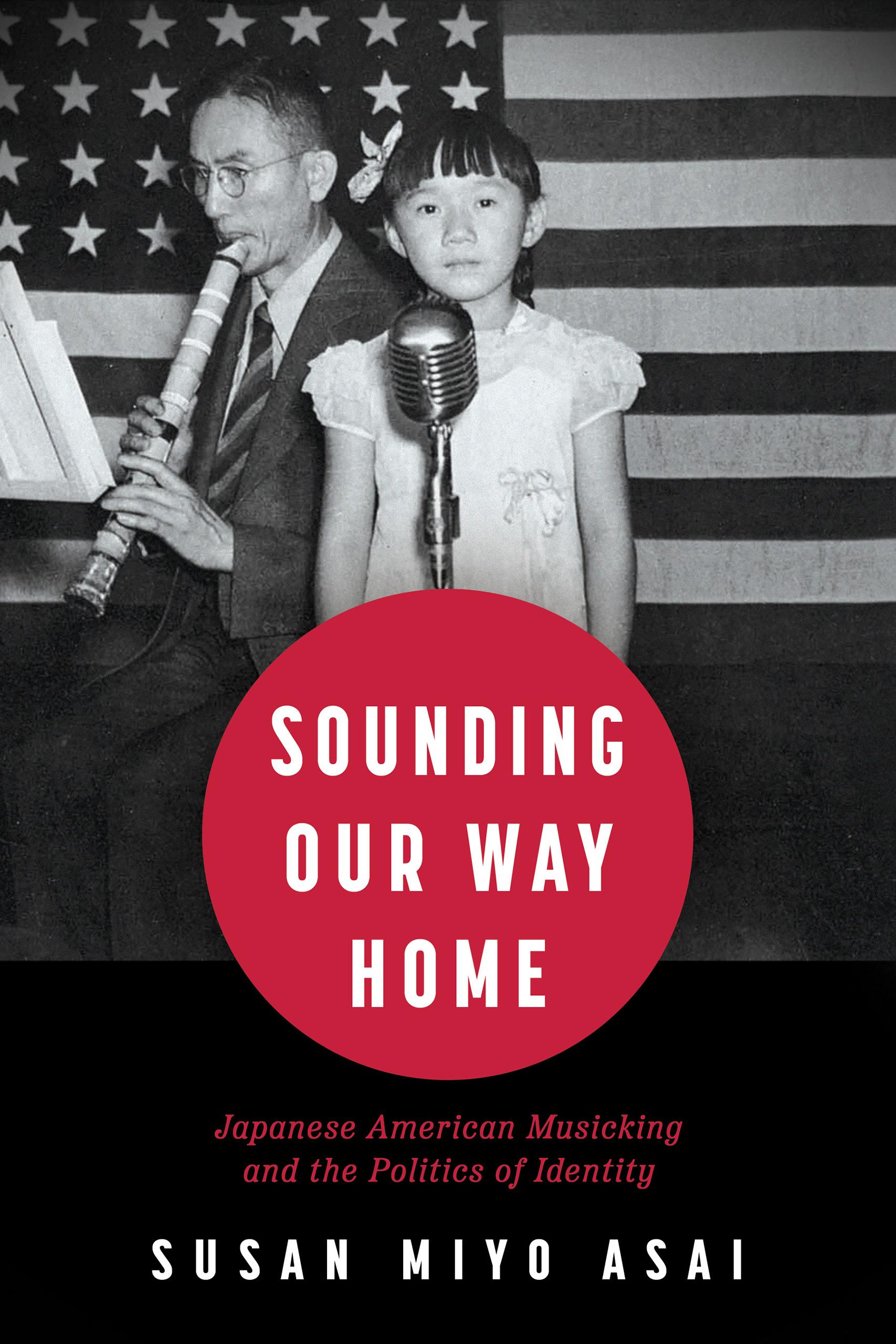
A product of twenty-five years of archival and primary research, Sounding Our Way Home: Japanese American Musicking and the Politics of Identity narrates the efforts of three generations of Japanese Americans to reach “home” through musicking. Using ethnomusicology as a lens, Susan Miyo Asai examines the musical choices of a population that, historically, is considered outside the racial and ethnic boundaries of American citizenship. Emphasizing the notion of national identity and belonging, the volume provokes a discussion about the challenges of nation-building in a democratic society.
Asai addresses the politics of music, interrogating the ways musicking functions as a performance of social, cultural, and political identification for Japanese Americans in the United States. Musicking is an inherently political act at the intersection of music, identity, and politics, particularly if it involves expressing one’s ethnicity and/or race. Asai further investigates how Japanese American ethnic identification and cultural practices relate to national belonging. Musicking cultivates a narrative of a shared history and aesthetic between performers and listeners. The discourse situates not only Japanese Americans, but all Asians into the Black/white binary of race relations in the United States.
Sounding Our Way Home contributes to the ongoing struggle for acceptance and equal representation for people of color in the US. A history of Japanese American musicking across three generations, the book unveils the social and political discrimination that nonwhite immigrants and their offspring continue to face when it comes to finding acceptance in US society and culture.
Asai addresses the politics of music, interrogating the ways musicking functions as a performance of social, cultural, and political identification for Japanese Americans in the United States. Musicking is an inherently political act at the intersection of music, identity, and politics, particularly if it involves expressing one’s ethnicity and/or race. Asai further investigates how Japanese American ethnic identification and cultural practices relate to national belonging. Musicking cultivates a narrative of a shared history and aesthetic between performers and listeners. The discourse situates not only Japanese Americans, but all Asians into the Black/white binary of race relations in the United States.
Sounding Our Way Home contributes to the ongoing struggle for acceptance and equal representation for people of color in the US. A history of Japanese American musicking across three generations, the book unveils the social and political discrimination that nonwhite immigrants and their offspring continue to face when it comes to finding acceptance in US society and culture.
Płać wygodnie kartą, Klarną, Apple Pay lub Google Pay. Nie jesteś zadowolony? Zawsze masz 14-dniową gwarancję zwrotu pieniędzy. Więcej przeczytasz w naszych warunkach. Masz pytania? Napisz do nas na hello@memmo.org.
Memmo ułatwia naukę – gdziekolwiek jesteś na świecie. U nas znajdziesz podręczniki i sprytne narzędzia do nauki w jednym miejscu: streszczenia, quizy, podcasty i fiszki. A do tego Ted, Twój kumpel do nauki, który odpowie na wszystko, co Cię nurtuje. Ponad 50 000 studentów już tu się uczy – stworzone, byś uczył się szybciej i mniej stresował.
Może Ci się spodobać
Kup książkę0