
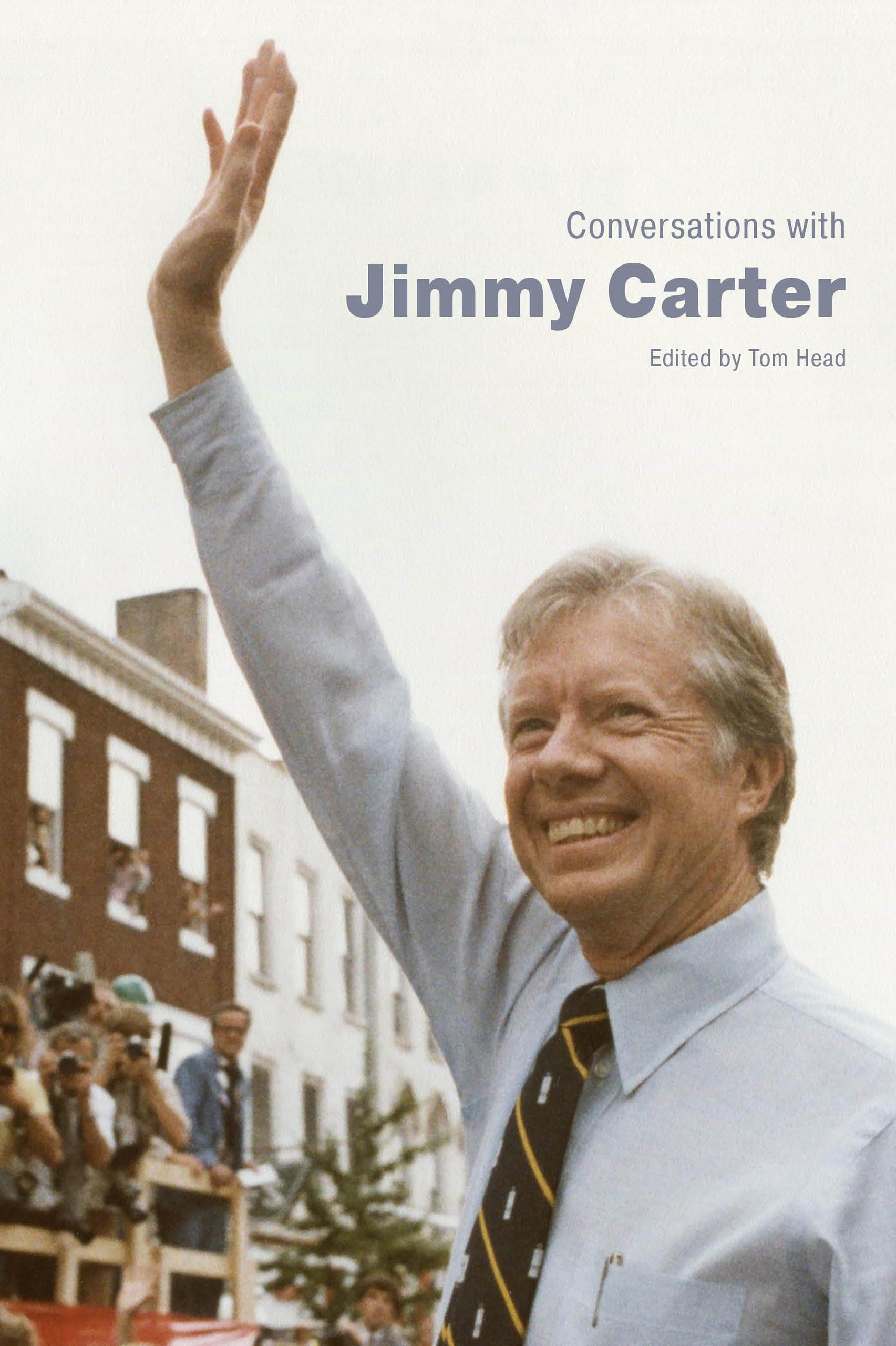
When Jimmy Carter (b. 1924) lost the presidency in 1980, it would have been reasonable to think his public life was coming to an end. The moderate, evangelical, blue-jeans-wearing peanut farmer made an unlikely governor of Georgia, and an even less likely winner of the vicious 1976 Democratic presidential primary. Coming into an era of American politics where evangelical and rural voters became increasingly identified with the Reagan revolution, and the Democratic Party’s identity became increasingly secular and urban, he did not fit neatly into the political categories of the emerging decade. But it was not politics that would define President Carter in the end: it would be his humble Christian faith and his enduring commitment to the poor, to peace, and to human rights.
In Conversations with Jimmy Carter, ten interviews, drawn from Carter’s five decades as a national public figure and author, capture the complexities and contradictions that have defined him—and that have helped to both reflect and shape the highest aspirations of the American experiment.
In Conversations with Jimmy Carter, ten interviews, drawn from Carter’s five decades as a national public figure and author, capture the complexities and contradictions that have defined him—and that have helped to both reflect and shape the highest aspirations of the American experiment.
Płać wygodnie kartą, Klarną, Apple Pay lub Google Pay. Nie jesteś zadowolony? Zawsze masz 14-dniową gwarancję zwrotu pieniędzy. Więcej przeczytasz w naszych warunkach. Masz pytania? Napisz do nas na hello@memmo.org.
Memmo ułatwia naukę – gdziekolwiek jesteś na świecie. U nas znajdziesz podręczniki i sprytne narzędzia do nauki w jednym miejscu: streszczenia, quizy, podcasty i fiszki. A do tego Ted, Twój kumpel do nauki, który odpowie na wszystko, co Cię nurtuje. Ponad 50 000 studentów już tu się uczy – stworzone, byś uczył się szybciej i mniej stresował.
Może Ci się spodobać
Kup książkę0