
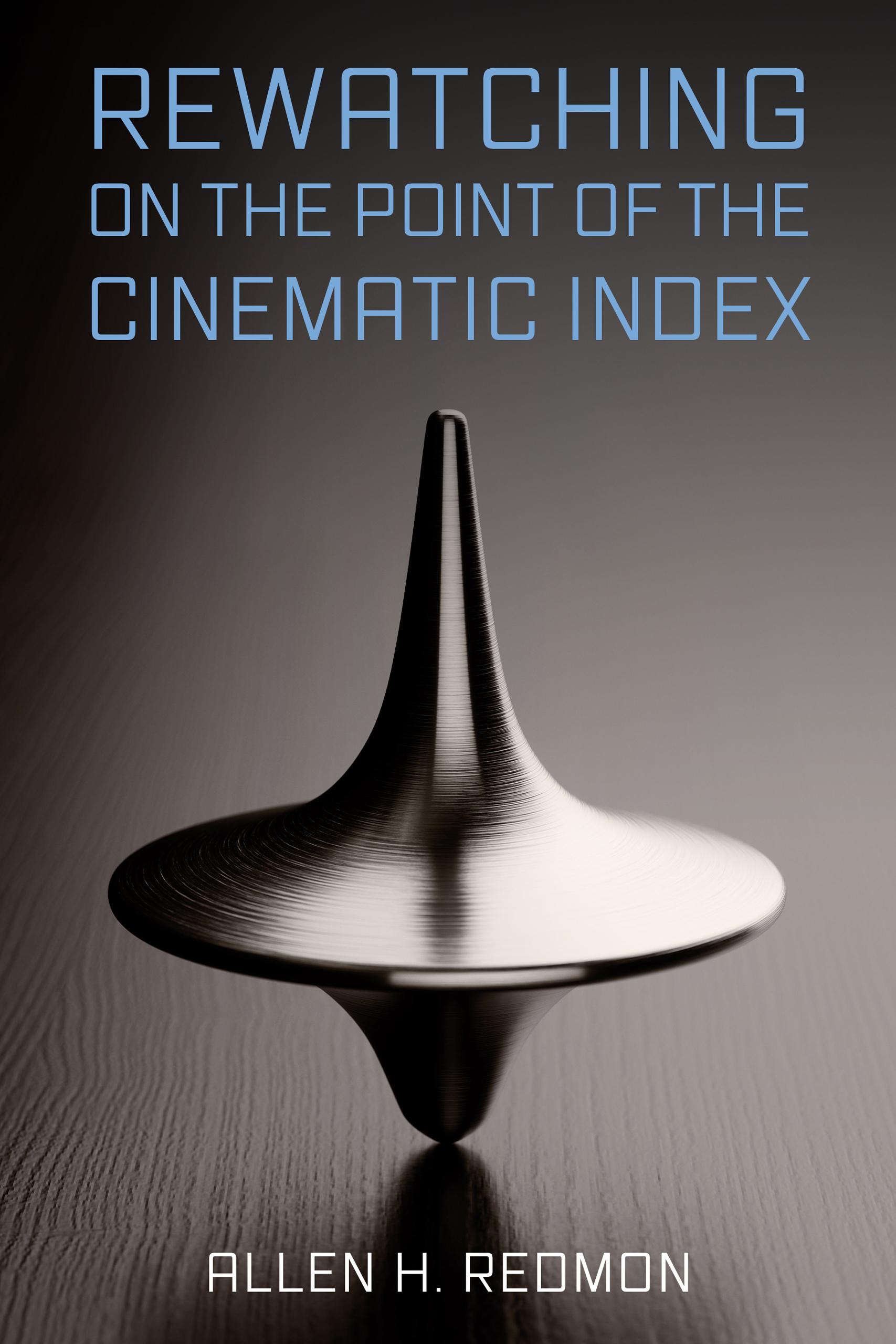
Rewatching on the Point of the Cinematic Index offers a reassessment of the cinematic index as it sits at the intersection of film studies, trauma studies, and adaptation studies. Author Allen H. Redmon argues that far too often scholars imagine the cinematic index to be nothing more than an acknowledgment that the lens-based camera captures and brings to the screen a reality that existed before the camera. When cinema’s indexicality is so narrowly defined, the entire nature of film is called into question the moment film no longer relies on a lens-based camera. The presence of digital technologies seemingly strips cinema of its indexical standing.
This volume pushes for a broader understanding of the cinematic index by returning to the early discussions of the index in film studies and the more recent discussions of the index in other digital arts. Bolstered by the insights these discussions can offer, the volume looks to replace what might be best deemed a diminished concept of the cinematic index with a series of more complex cinematic indices, the impoverished index, the indefinite index, the intertextual index, and the imaginative index. The central argument of this book is that these more complex indices encourage spectators to enter a process of ongoing adaptation of the reality they see on the screen, and that it is on the point of these indices that the most significant instances of rewatching movies occur.
Examining such films as John Lee Hancock’s Saving Mr. Banks (2013); Richard Linklater’s oeuvre; Paul Greengrass’s United 93 (2006); Oliver Stone’s World Trade Center (2006); Stephen Daldry’s Extremely Loud and Incredibly Close (2011); and Christopher Nolan’s Dunkirk (2017), Inception (2010), and Memento (2000), Redmon demonstrates that the cinematic index invites spectators to enter a process of ongoing adaptation.
This volume pushes for a broader understanding of the cinematic index by returning to the early discussions of the index in film studies and the more recent discussions of the index in other digital arts. Bolstered by the insights these discussions can offer, the volume looks to replace what might be best deemed a diminished concept of the cinematic index with a series of more complex cinematic indices, the impoverished index, the indefinite index, the intertextual index, and the imaginative index. The central argument of this book is that these more complex indices encourage spectators to enter a process of ongoing adaptation of the reality they see on the screen, and that it is on the point of these indices that the most significant instances of rewatching movies occur.
Examining such films as John Lee Hancock’s Saving Mr. Banks (2013); Richard Linklater’s oeuvre; Paul Greengrass’s United 93 (2006); Oliver Stone’s World Trade Center (2006); Stephen Daldry’s Extremely Loud and Incredibly Close (2011); and Christopher Nolan’s Dunkirk (2017), Inception (2010), and Memento (2000), Redmon demonstrates that the cinematic index invites spectators to enter a process of ongoing adaptation.
Strony: 216
Kategoria: Film- & Medievetenskap
e-ISBN: 9781496841834
Waga przesyłki: 1.2 kg
Wysyłka w ciągu: 1-2 dni
Płać wygodnie kartą, Klarną, Apple Pay lub Google Pay. Nie jesteś zadowolony? Zawsze masz 14-dniową gwarancję zwrotu pieniędzy. Więcej przeczytasz w naszych warunkach. Masz pytania? Napisz do nas na hello@memmo.org.
Memmo ułatwia naukę – gdziekolwiek jesteś na świecie. U nas znajdziesz podręczniki i sprytne narzędzia do nauki w jednym miejscu: streszczenia, quizy, podcasty i fiszki. A do tego Ted, Twój kumpel do nauki, który odpowie na wszystko, co Cię nurtuje. Ponad 50 000 studentów już tu się uczy – stworzone, byś uczył się szybciej i mniej stresował.
Może Ci się spodobać
Kup książkę0