
Winner of a 2023 Edited Collection Award from the South Atlantic Modern Language Association
Contributions by Cécile Accilien, Maria Rice Bellamy, Gwen Bergner, Olga Blomgren, Maia L. Butler, Isabel Caldeira, Nadège T. Clitandre, Thadious M. Davis, Joanna Davis-McElligatt, Laura Dawkins, Megan Feifer, Delphine Gras, Akia Jackson, Tammie Jenkins, Shewonda Leger, Jennifer M. Lozano, Marion Christina Rohrleitner, Thomás Rothe, Erika V. Serrato, Lucía Stecher, and Joyce White
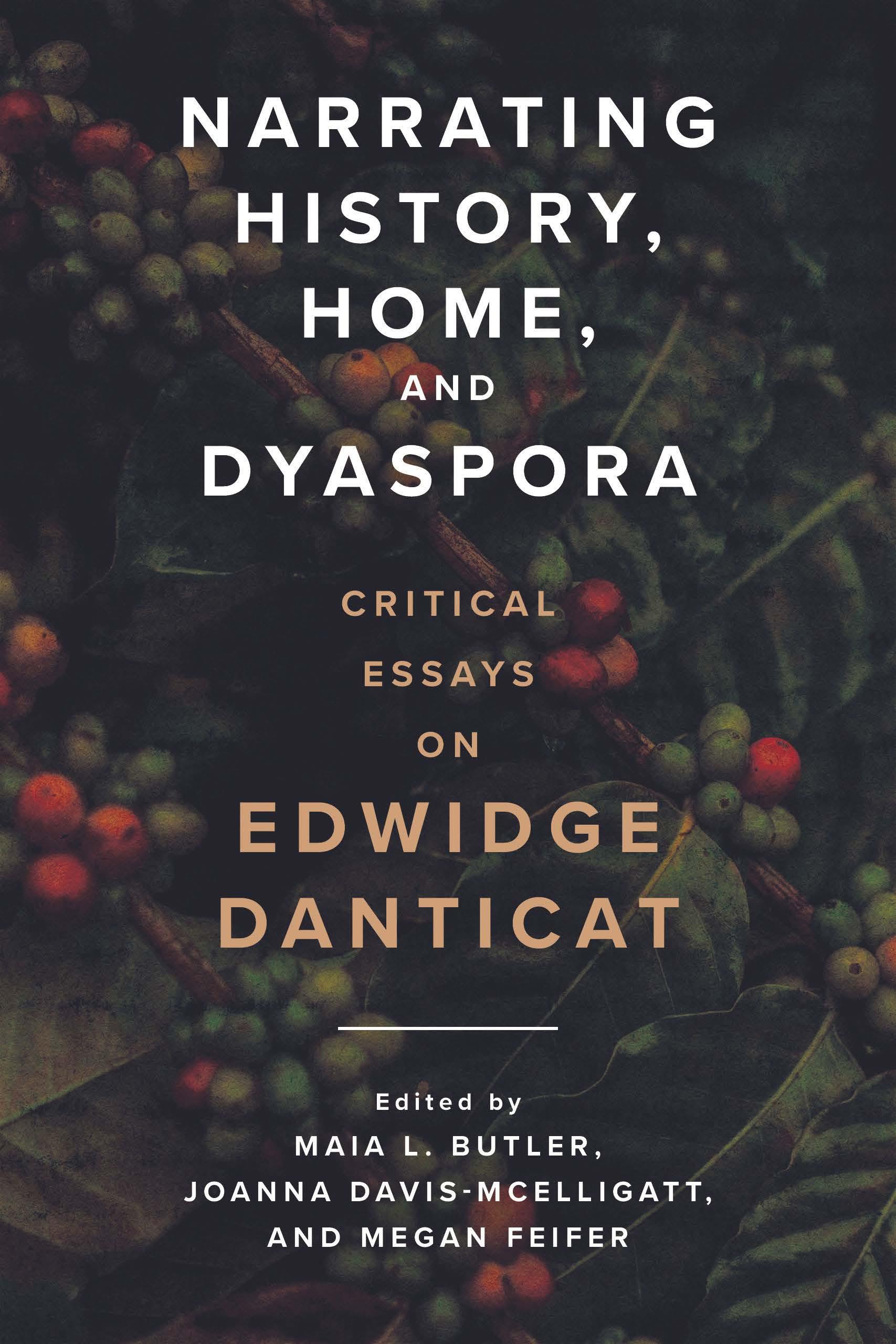
Narrating History, Home, and Dyaspora: Critical Essays on Edwidge Danticat contains fifteen essays addressing how Edwidge Danticat’s writing, anthologizing, and storytelling trace, (re)construct, and develop alternate histories, narratives of nation building, and conceptions of home and belonging. The prolific Danticat is renowned for novels, collections of short fiction, nonfiction, and editorial writing. As her experimentation in form expands, so does her force as a public intellectual. Danticat’s literary representations, political commentary, and personal activism have proven vital to classroom and community work imagining radical futures. Among increasing anti-immigrant sentiment and containment and rampant ecological volatility, Danticat’s contributions to public discourse, art, and culture deserve sustained critical attention. These essays offer essential perspectives to scholars, public intellectuals, and students interested in African diasporic, Haitian, Caribbean, and transnational American literary studies. This collection frames Danticat’s work as an indictment of statelessness, racialized and gendered state violence, and the persistence of political and economic margins.
The first section of this volume, “The Other Side of the Water,” engages with Danticat’s construction and negotiation of nation, both in Haiti and the United States; the broader dyaspora; and her own, her family’s, and her fictional characters’ places within them. The second section, “Welcoming Ghosts,” delves into the ever-present specter of history and memory, prominent themes found throughout Danticat’s work. From origin stories to broader Haitian histories, this section addresses the underlying traumas involved when remembering the past and its relationship to the present. The third section, “I Speak Out,” explores the imperative to speak, paying particular attention to the narrative form with which such telling occurs. The fourth and final section, “Create Dangerously,” contends with Haitians’ activism, community building, and the political and ecological climate of Haiti and its dyaspora.
Contributions by Cécile Accilien, Maria Rice Bellamy, Gwen Bergner, Olga Blomgren, Maia L. Butler, Isabel Caldeira, Nadège T. Clitandre, Thadious M. Davis, Joanna Davis-McElligatt, Laura Dawkins, Megan Feifer, Delphine Gras, Akia Jackson, Tammie Jenkins, Shewonda Leger, Jennifer M. Lozano, Marion Christina Rohrleitner, Thomás Rothe, Erika V. Serrato, Lucía Stecher, and Joyce White
Narrating History, Home, and Dyaspora: Critical Essays on Edwidge Danticat contains fifteen essays addressing how Edwidge Danticat’s writing, anthologizing, and storytelling trace, (re)construct, and develop alternate histories, narratives of nation building, and conceptions of home and belonging. The prolific Danticat is renowned for novels, collections of short fiction, nonfiction, and editorial writing. As her experimentation in form expands, so does her force as a public intellectual. Danticat’s literary representations, political commentary, and personal activism have proven vital to classroom and community work imagining radical futures. Among increasing anti-immigrant sentiment and containment and rampant ecological volatility, Danticat’s contributions to public discourse, art, and culture deserve sustained critical attention. These essays offer essential perspectives to scholars, public intellectuals, and students interested in African diasporic, Haitian, Caribbean, and transnational American literary studies. This collection frames Danticat’s work as an indictment of statelessness, racialized and gendered state violence, and the persistence of political and economic margins.
The first section of this volume, “The Other Side of the Water,” engages with Danticat’s construction and negotiation of nation, both in Haiti and the United States; the broader dyaspora; and her own, her family’s, and her fictional characters’ places within them. The second section, “Welcoming Ghosts,” delves into the ever-present specter of history and memory, prominent themes found throughout Danticat’s work. From origin stories to broader Haitian histories, this section addresses the underlying traumas involved when remembering the past and its relationship to the present. The third section, “I Speak Out,” explores the imperative to speak, paying particular attention to the narrative form with which such telling occurs. The fourth and final section, “Create Dangerously,” contends with Haitians’ activism, community building, and the political and ecological climate of Haiti and its dyaspora.
Płać wygodnie kartą, Klarną, Apple Pay lub Google Pay. Nie jesteś zadowolony? Zawsze masz 14-dniową gwarancję zwrotu pieniędzy. Więcej przeczytasz w naszych warunkach. Masz pytania? Napisz do nas na hello@memmo.org.
Memmo ułatwia naukę – gdziekolwiek jesteś na świecie. U nas znajdziesz podręczniki i sprytne narzędzia do nauki w jednym miejscu: streszczenia, quizy, podcasty i fiszki. A do tego Ted, Twój kumpel do nauki, który odpowie na wszystko, co Cię nurtuje. Ponad 50 000 studentów już tu się uczy – stworzone, byś uczył się szybciej i mniej stresował.
Może Ci się spodobać
Kup książkę0