
In December 2018, the United States Senate unanimously passed the nation’s first antilynching act, the Justice for Victims of Lynching Act. For the first time in US history, legislators, representing the American people, classified lynching as a federal hate crime.
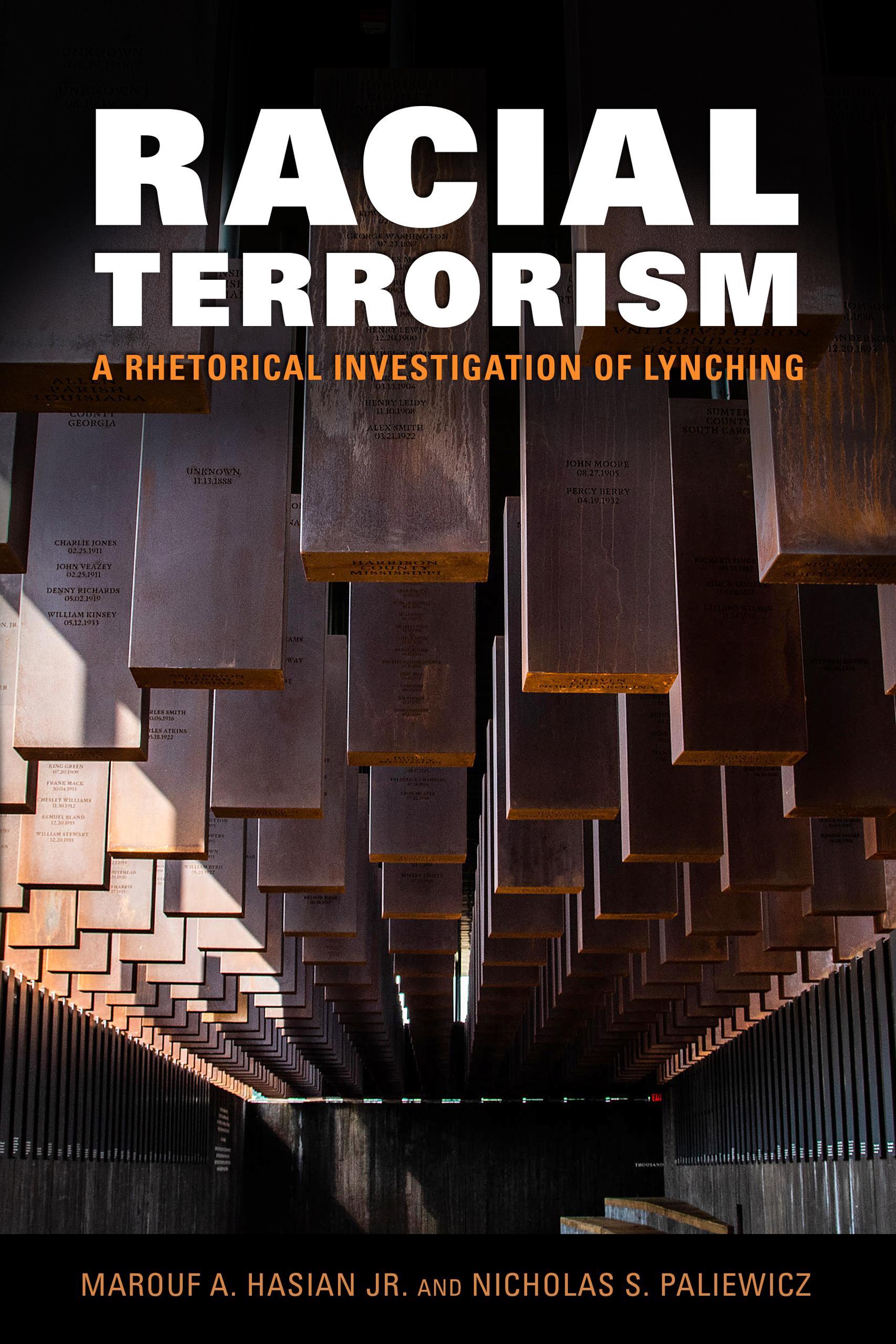
While lynching histories and memories have received attention among communication scholars and some interdisciplinary studies of traditional civil rights memorials exist, contemporary studies often fail to examine the politicized nature of the spaces. This volume represents the first investigation of the National Memorial for Peace and Justice and the Legacy Museum, both of which strategically make clear the various links between America’s history of racial terror and contemporary mass incarceration conditions, the mistreatment of juveniles, and capital punishment.
Racial Terrorism: A Rhetorical Investigation of Lynching focuses on several key social agents and organizations that played vital roles in the public and legal consciousness raising that finally led to the passage of the act. Marouf A. Hasian Jr. and Nicholas S. Paliewicz argue that the advocacy of attorney Bryan Stevenson, the work of the Equal Justice Initiative (EJI), and the efforts of curators at Montgomery’s new Legacy Museum all contributed to the formation of a rhetorical culture that set the stage at last for this hallmark lynching legislation. The authors examine how the EJI uses spaces of remembrance to confront audiences with race-conscious messages and measure to what extent those messages are successful.
While lynching histories and memories have received attention among communication scholars and some interdisciplinary studies of traditional civil rights memorials exist, contemporary studies often fail to examine the politicized nature of the spaces. This volume represents the first investigation of the National Memorial for Peace and Justice and the Legacy Museum, both of which strategically make clear the various links between America’s history of racial terror and contemporary mass incarceration conditions, the mistreatment of juveniles, and capital punishment.
Racial Terrorism: A Rhetorical Investigation of Lynching focuses on several key social agents and organizations that played vital roles in the public and legal consciousness raising that finally led to the passage of the act. Marouf A. Hasian Jr. and Nicholas S. Paliewicz argue that the advocacy of attorney Bryan Stevenson, the work of the Equal Justice Initiative (EJI), and the efforts of curators at Montgomery’s new Legacy Museum all contributed to the formation of a rhetorical culture that set the stage at last for this hallmark lynching legislation. The authors examine how the EJI uses spaces of remembrance to confront audiences with race-conscious messages and measure to what extent those messages are successful.
Płać wygodnie kartą, Klarną, Apple Pay lub Google Pay. Nie jesteś zadowolony? Zawsze masz 14-dniową gwarancję zwrotu pieniędzy. Więcej przeczytasz w naszych warunkach. Masz pytania? Napisz do nas na hello@memmo.org.
Memmo ułatwia naukę – gdziekolwiek jesteś na świecie. U nas znajdziesz podręczniki i sprytne narzędzia do nauki w jednym miejscu: streszczenia, quizy, podcasty i fiszki. A do tego Ted, Twój kumpel do nauki, który odpowie na wszystko, co Cię nurtuje. Ponad 50 000 studentów już tu się uczy – stworzone, byś uczył się szybciej i mniej stresował.
Może Ci się spodobać
Kup książkę0