
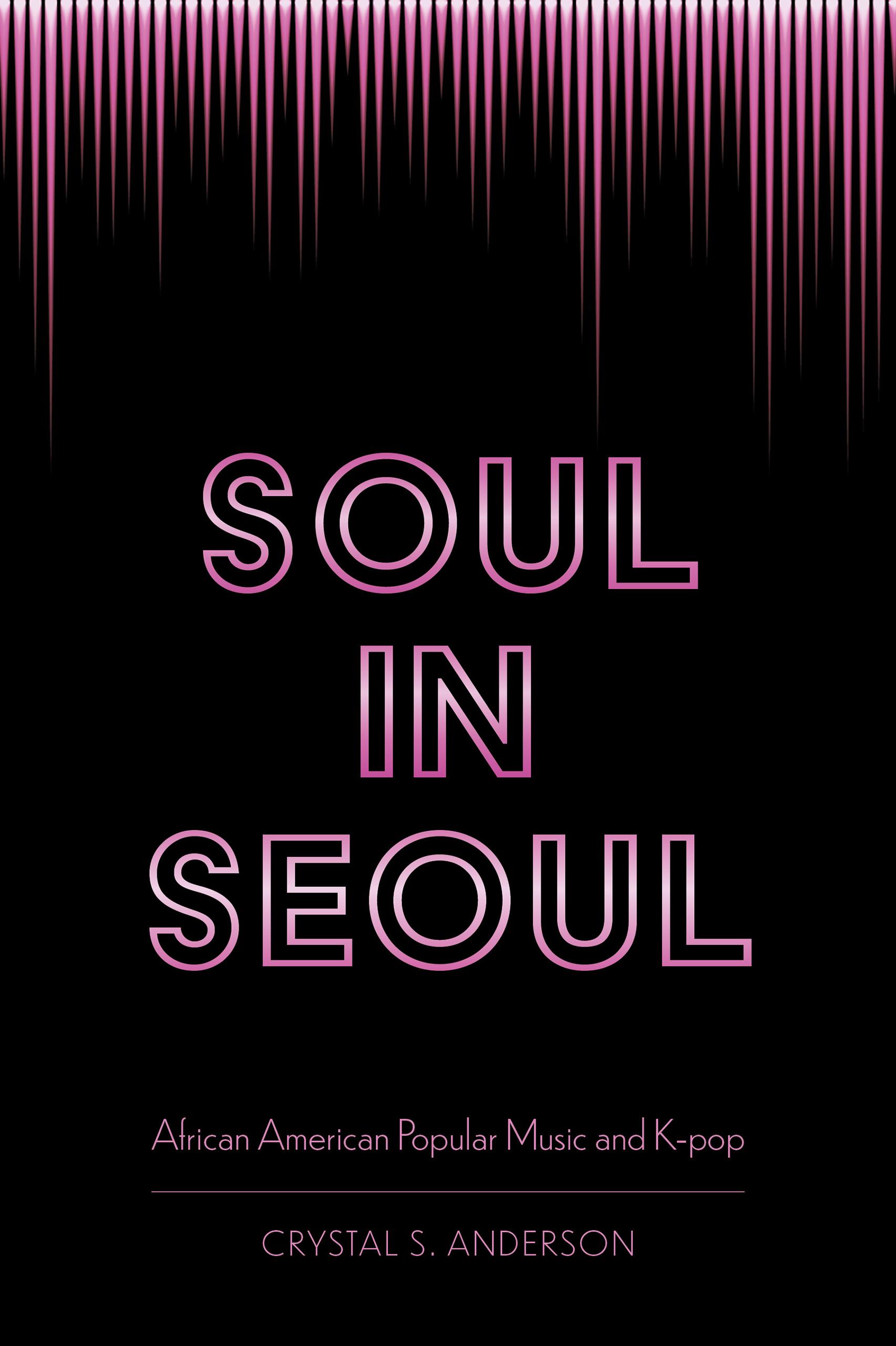
K-pop (Korean popular music) reigns as one of the most popular music genres in the world today, a phenomenon that appeals to listeners of all ages and nationalities. In Soul in Seoul: African American Popular Music and K-pop, Crystal S. Anderson examines the most important and often overlooked aspect of K-pop: the music itself. She demonstrates how contemporary K-pop references and incorporates musical and performative elements of African American popular music culture as well as the ways that fans outside of Korea understand these references.
K-pop emerged in the 1990s with immediate global aspirations, combining musical elements from Korean and foreign cultures, particularly rhythm and blues genres of black American popular music. Korean solo artists and groups borrow from and cite instrumentation and vocals of R&B genres, especially hip-hop. They also enhance the R&B tradition by utilizing Korean musical strategies. These musical citational practices are deemed authentic by global fans who function as part of K-pop’s music press and promotional apparatus. K-pop artists also cite elements of African American performance in Korean music videos. These disrupt stereotyped representations of Asian and African American performers. Through this process K-pop has arguably become a branch of a global R&B tradition. Anderson argues that Korean pop groups participate in that tradition through cultural work that enacts a global form of crossover and by maintaining forms of authenticity that cannot be faked, and furthermore propel the R&B tradition beyond the black-white binary.
K-pop emerged in the 1990s with immediate global aspirations, combining musical elements from Korean and foreign cultures, particularly rhythm and blues genres of black American popular music. Korean solo artists and groups borrow from and cite instrumentation and vocals of R&B genres, especially hip-hop. They also enhance the R&B tradition by utilizing Korean musical strategies. These musical citational practices are deemed authentic by global fans who function as part of K-pop’s music press and promotional apparatus. K-pop artists also cite elements of African American performance in Korean music videos. These disrupt stereotyped representations of Asian and African American performers. Through this process K-pop has arguably become a branch of a global R&B tradition. Anderson argues that Korean pop groups participate in that tradition through cultural work that enacts a global form of crossover and by maintaining forms of authenticity that cannot be faked, and furthermore propel the R&B tradition beyond the black-white binary.
Strony: 212
Kategoria: Musikvetenskap
e-ISBN: 9781496830128
Waga przesyłki: 1.2 kg
Wysyłka w ciągu: 1-2 dni
Płać wygodnie kartą, Klarną, Apple Pay lub Google Pay. Nie jesteś zadowolony? Zawsze masz 14-dniową gwarancję zwrotu pieniędzy. Więcej przeczytasz w naszych warunkach. Masz pytania? Napisz do nas na hello@memmo.org.
Memmo ułatwia naukę – gdziekolwiek jesteś na świecie. U nas znajdziesz podręczniki i sprytne narzędzia do nauki w jednym miejscu: streszczenia, quizy, podcasty i fiszki. A do tego Ted, Twój kumpel do nauki, który odpowie na wszystko, co Cię nurtuje. Ponad 50 000 studentów już tu się uczy – stworzone, byś uczył się szybciej i mniej stresował.
Może Ci się spodobać
Kup książkę0