
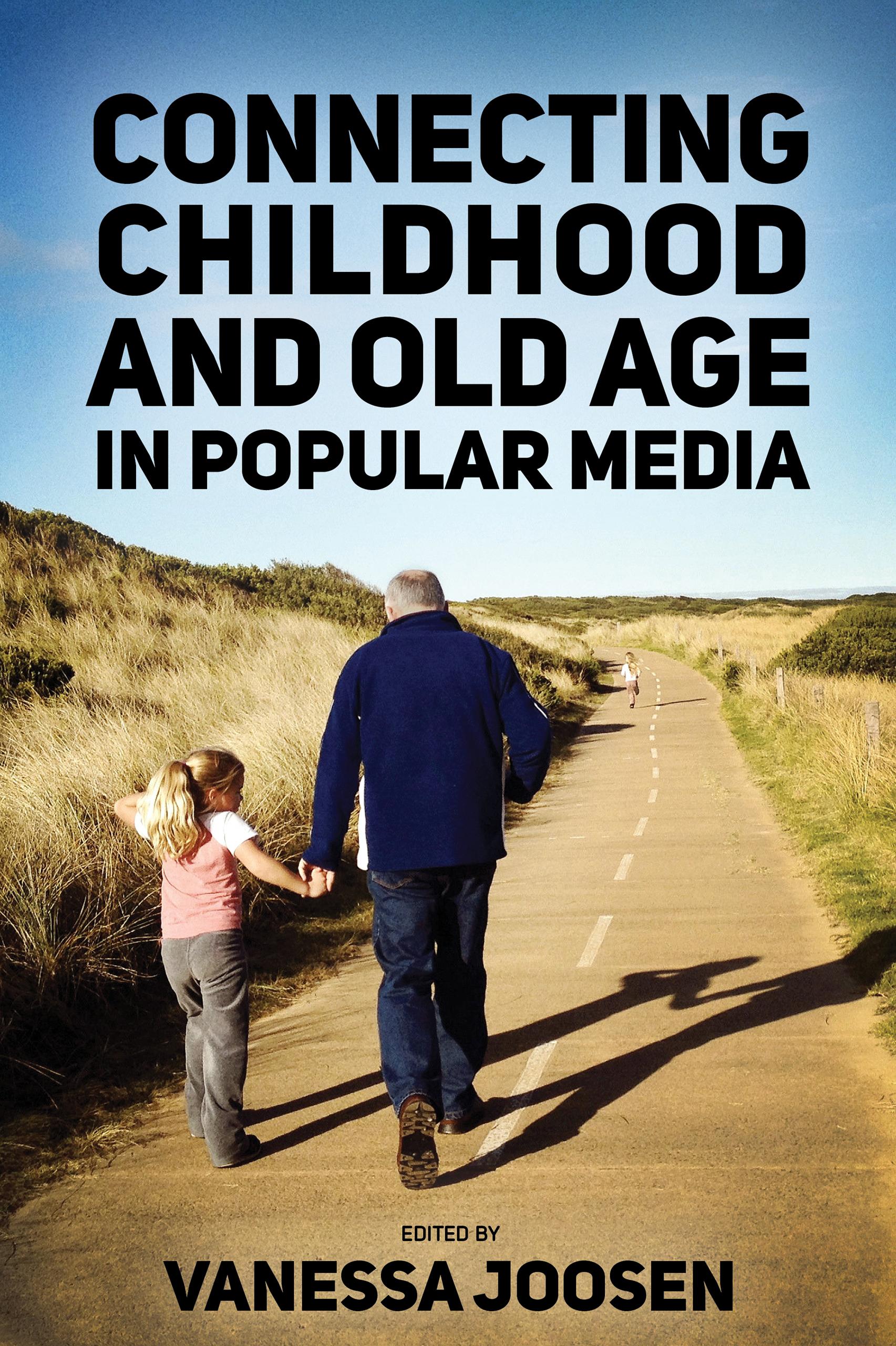
Contributions by Gökçe Elif Baykal, Lincoln Geraghty, Verónica Gottau, Vanessa Joosen, Sung-Ae Lee, Cecilia Lindgren, Mayako Murai, Emily Murphy, Mariano Narodowski, Johanna Sjöberg, Anna Sparrman, Ingrid Tomkowiak, Helma van Lierop-Debrauwer, Ilgim Veryeri Alaca, and Elisabeth Wesseling
Media narratives in popular culture often assign interchangeable characteristics to childhood and old age, presuming a resemblance between children and the elderly. These designations in media can have far-reaching repercussions in shaping not only language, but also cognitive activity and behavior. The meaning attached to biological, numerical age—even the mere fact that we calculate a numerical age at all—is culturally determined, as is the way people “act their age.”
With populations aging all around the world, awareness of intergenerational relationships and associations surrounding old age is becoming urgent. Connecting Childhood and Old Age in Popular Media caters to this urgency and contributes to age literacy by supplying insights into the connection between childhood and senescence to show that people are aged by culture.
Treating classic stories like the Brothers Grimm's fairy tales and Heidi; pop culture hits like The Simpsons and Mad Men; and international productions, such as Turkish television cartoons and South Korean films, contributors explore the recurrent idea that “children are like old people,” as well as other relationships between children and elderly characters as constructed in literature and media from the mid-nineteenth century to the present. This volume deals with fiction and analyzes language as well as verbally sparse, visual productions, including children's literature, film, television, animation, and advertising.
Media narratives in popular culture often assign interchangeable characteristics to childhood and old age, presuming a resemblance between children and the elderly. These designations in media can have far-reaching repercussions in shaping not only language, but also cognitive activity and behavior. The meaning attached to biological, numerical age—even the mere fact that we calculate a numerical age at all—is culturally determined, as is the way people “act their age.”
With populations aging all around the world, awareness of intergenerational relationships and associations surrounding old age is becoming urgent. Connecting Childhood and Old Age in Popular Media caters to this urgency and contributes to age literacy by supplying insights into the connection between childhood and senescence to show that people are aged by culture.
Treating classic stories like the Brothers Grimm's fairy tales and Heidi; pop culture hits like The Simpsons and Mad Men; and international productions, such as Turkish television cartoons and South Korean films, contributors explore the recurrent idea that “children are like old people,” as well as other relationships between children and elderly characters as constructed in literature and media from the mid-nineteenth century to the present. This volume deals with fiction and analyzes language as well as verbally sparse, visual productions, including children's literature, film, television, animation, and advertising.
Płać wygodnie kartą, Klarną, Apple Pay lub Google Pay. Nie jesteś zadowolony? Zawsze masz 14-dniową gwarancję zwrotu pieniędzy. Więcej przeczytasz w naszych warunkach. Masz pytania? Napisz do nas na hello@memmo.org.
Memmo ułatwia naukę – gdziekolwiek jesteś na świecie. U nas znajdziesz podręczniki i sprytne narzędzia do nauki w jednym miejscu: streszczenia, quizy, podcasty i fiszki. A do tego Ted, Twój kumpel do nauki, który odpowie na wszystko, co Cię nurtuje. Ponad 50 000 studentów już tu się uczy – stworzone, byś uczył się szybciej i mniej stresował.
Może Ci się spodobać
Kup książkę0