
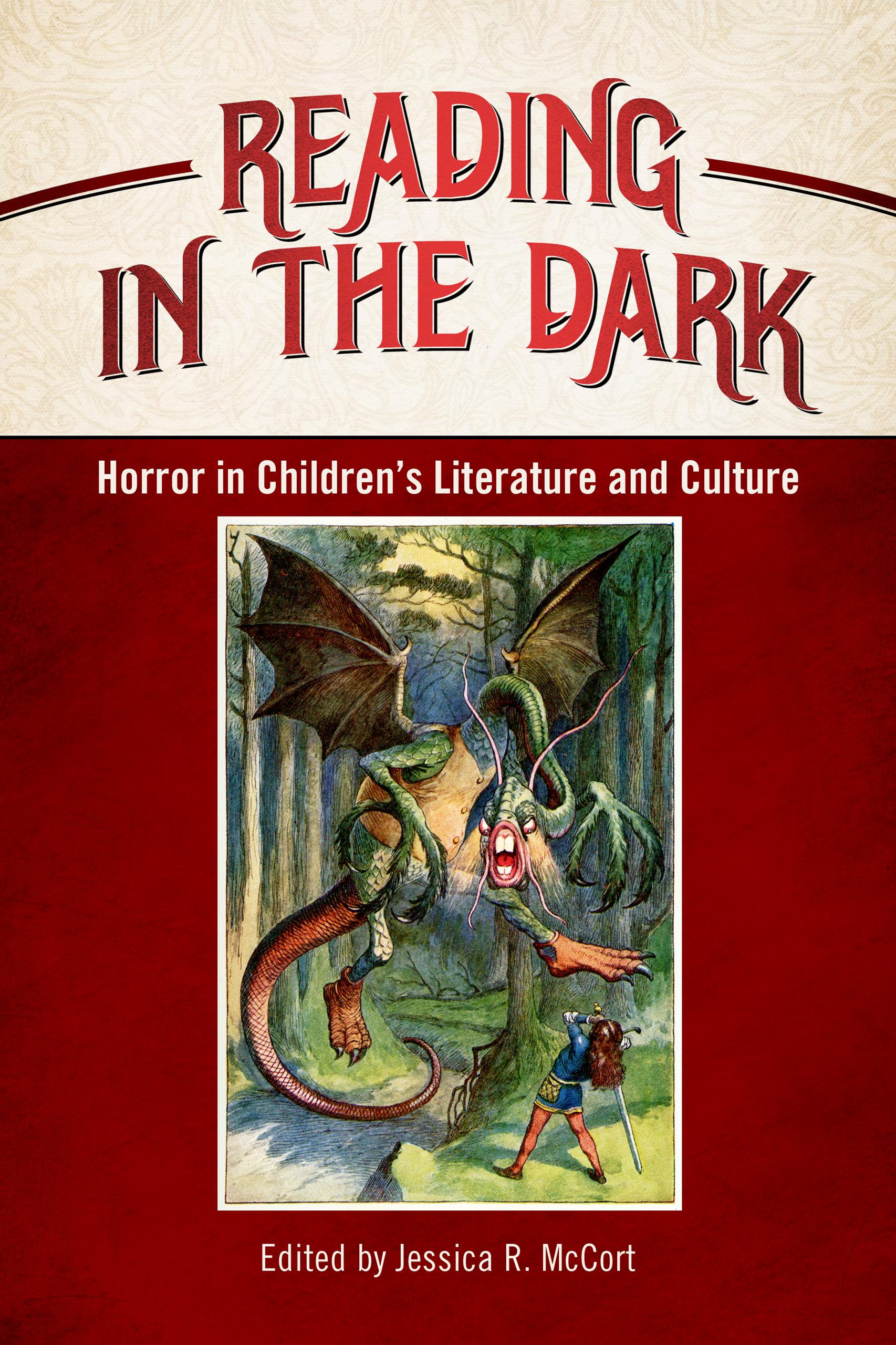
Contributions by Rebecca A. Brown, Justine Gieni, Holly Harper, Emily L. Hiltz, A. Robin Hoffman, Kirsten Kowalewski, Peter C. Kunze, Jorie Lagerwey, Nick Levey, Jessica R. McCort, and Janani Subramanian
Dark novels, shows, and films targeted toward children and young adults are proliferating wildly. It is even more crucial now to understand the methods by which such texts have traditionally operated and how those methods have been challenged, abandoned, and appropriated. Reading in the Dark fills a gap in criticism devoted to children's popular culture by concentrating on horror, an often-neglected genre. These scholars explore the intersection between horror, popular culture, and children's cultural productions, including picture books, fairy tales, young adult literature, television, and monster movies.
Reading in the Dark looks at horror texts for children with deserved respect, weighing the multitude of benefits they can provide for young readers and viewers. Refusing to write off the horror genre as campy, trite, or deforming, these essays instead recognize many of the texts and films categorized as "scary" as among those most widely consumed by children and young adults. In addition, scholars consider how adult horror has been domesticated by children's literature and culture, with authors and screenwriters turning that which was once horrifying into safe, funny, and delightful books and films. Scholars likewise examine the impetus behind such re-envisioning of the adult horror novel or film as something appropriate for the young. The collection investigates both the constructive and the troublesome aspects of scary books, movies, and television shows targeted toward children and young adults. It considers the complex mechanisms by which these texts communicate overt messages and hidden agendas, and it treats as well the readers' experiences of such mechanisms.
Dark novels, shows, and films targeted toward children and young adults are proliferating wildly. It is even more crucial now to understand the methods by which such texts have traditionally operated and how those methods have been challenged, abandoned, and appropriated. Reading in the Dark fills a gap in criticism devoted to children's popular culture by concentrating on horror, an often-neglected genre. These scholars explore the intersection between horror, popular culture, and children's cultural productions, including picture books, fairy tales, young adult literature, television, and monster movies.
Reading in the Dark looks at horror texts for children with deserved respect, weighing the multitude of benefits they can provide for young readers and viewers. Refusing to write off the horror genre as campy, trite, or deforming, these essays instead recognize many of the texts and films categorized as "scary" as among those most widely consumed by children and young adults. In addition, scholars consider how adult horror has been domesticated by children's literature and culture, with authors and screenwriters turning that which was once horrifying into safe, funny, and delightful books and films. Scholars likewise examine the impetus behind such re-envisioning of the adult horror novel or film as something appropriate for the young. The collection investigates both the constructive and the troublesome aspects of scary books, movies, and television shows targeted toward children and young adults. It considers the complex mechanisms by which these texts communicate overt messages and hidden agendas, and it treats as well the readers' experiences of such mechanisms.
Płać wygodnie kartą, Klarną, Apple Pay lub Google Pay. Nie jesteś zadowolony? Zawsze masz 14-dniową gwarancję zwrotu pieniędzy. Więcej przeczytasz w naszych warunkach. Masz pytania? Napisz do nas na hello@memmo.org.
Memmo ułatwia naukę – gdziekolwiek jesteś na świecie. U nas znajdziesz podręczniki i sprytne narzędzia do nauki w jednym miejscu: streszczenia, quizy, podcasty i fiszki. A do tego Ted, Twój kumpel do nauki, który odpowie na wszystko, co Cię nurtuje. Ponad 50 000 studentów już tu się uczy – stworzone, byś uczył się szybciej i mniej stresował.
Może Ci się spodobać
Kup książkę0