
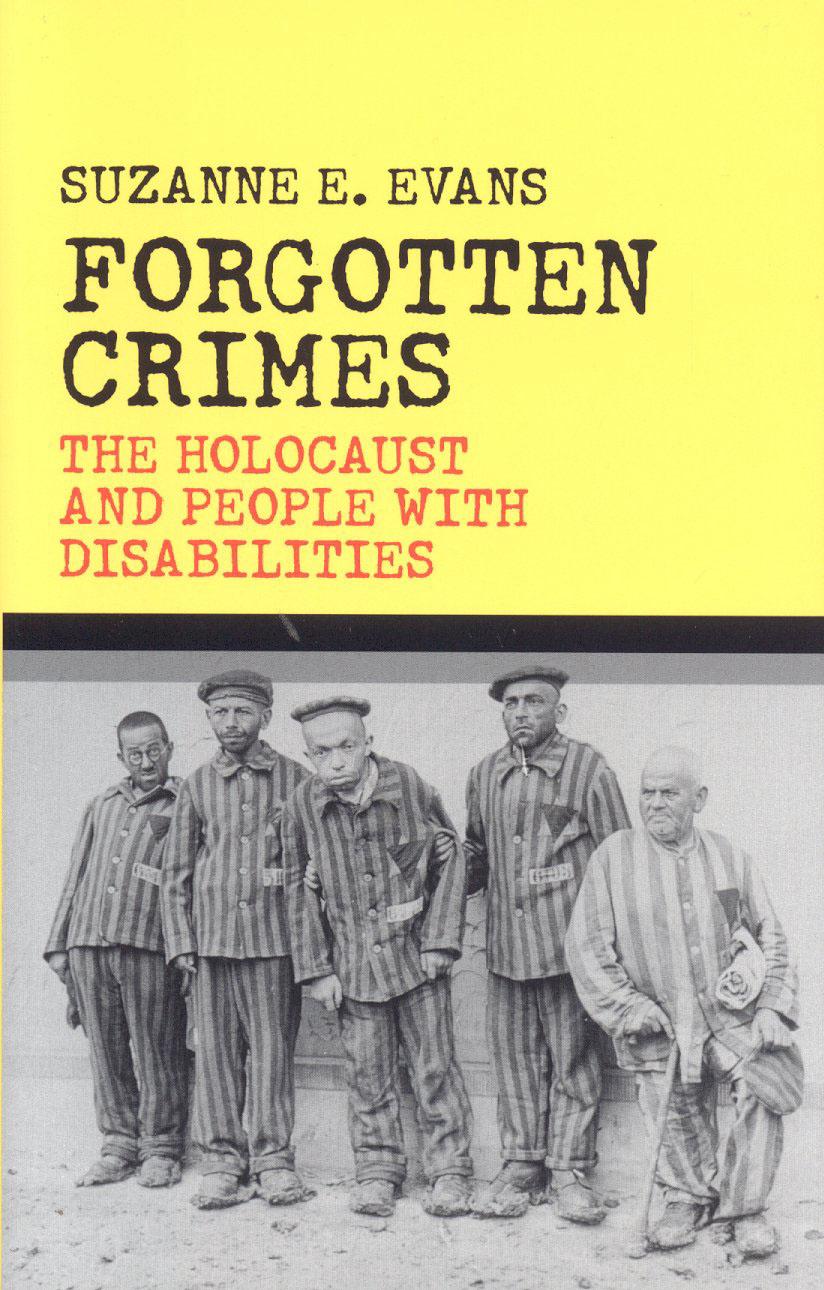
Between 1939 and 1945 the Nazi regime systematically murdered hundreds of thousands of children and adults with disabilities as part of its "euthanasia" programs. These programs were designed to eliminate all persons with disabilities who, according to Nazi ideology, threatened the health and purity of the German race. Forgotten Crimes explores the development and workings of this nightmarish process, a relatively neglected aspect of the Holocaust. Suzanne Evans's account draws on the rich historical record as well as scores of exclusive interviews with disabled Holocaust survivors. It begins with a description of the Nazis' Children's Killing Program, in which tens of thousands of children with mental and physical disabilities were murdered by their physicians, usually by starvation or lethal injection. The book goes on to recount the T4 euthanasia program, in which adults with disabilities were disposed of in six official centers, and the development of the Sterilization Law that allowed the forced sterilization of at least a half-million young adults with disabilities. Ms. Evans provides portraits of the perpetrators and accomplices of the killing programs, and investigates the curious role of Switzerland's rarely discussed exclusionary immigration and racially eugenic policies. Finally, Forgotten Crimes notes the inescapable implications of these Nazi medical practices for our present-day controversies over eugenics, euthanasia, genetic engineering, medical experimentation, and rationed health care.
Płać wygodnie kartą, Klarną, Apple Pay lub Google Pay. Nie jesteś zadowolony? Zawsze masz 14-dniową gwarancję zwrotu pieniędzy. Więcej przeczytasz w naszych warunkach. Masz pytania? Napisz do nas na hello@memmo.org.
Memmo ułatwia naukę – gdziekolwiek jesteś na świecie. U nas znajdziesz podręczniki i sprytne narzędzia do nauki w jednym miejscu: streszczenia, quizy, podcasty i fiszki. A do tego Ted, Twój kumpel do nauki, który odpowie na wszystko, co Cię nurtuje. Ponad 50 000 studentów już tu się uczy – stworzone, byś uczył się szybciej i mniej stresował.