
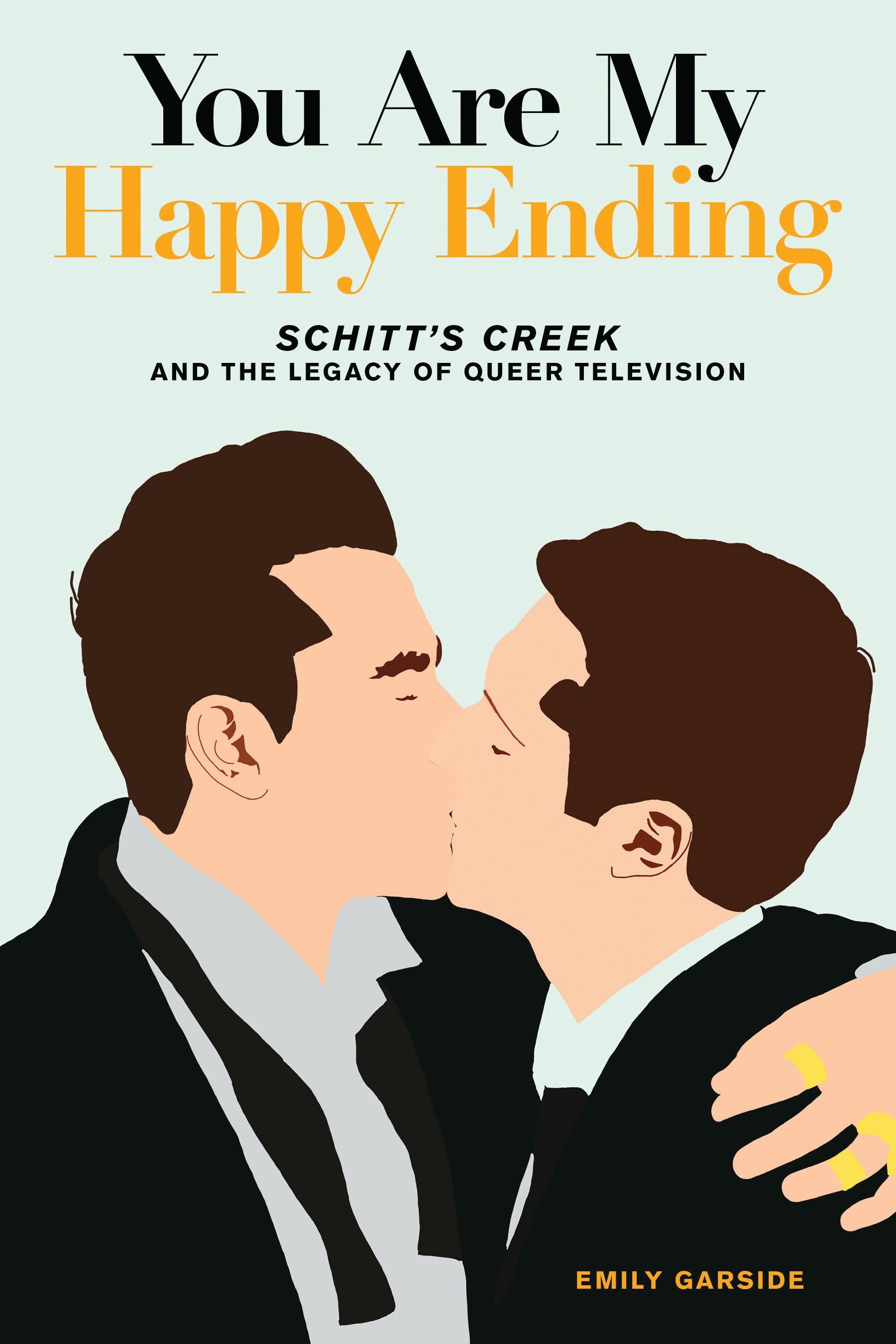
From the show's modest beginnings to its massive Emmy sweep, You Are My Happy Ending tells the story of how Schitt’s Creek became the surprise hit that changed the way we think about LGBTQ relationships.
Cultural analyst Emily Garside shows how this series fused classic romcom and sitcom tropes to create a world with a queer love story at its core, starting with Daniel Levy, the co-creator who plays David. She examines the show’s Canadian identity and its diverse incorporation of references from literature (Brideshead Revisited) to cinema (Hitchcock’s The Birds), as well as numerous romantic comedy texts. Schitt’s Creek is an homage to all these elements of the past literary and cinematic canon while also creating an important contemporary narrative of its own. Most importantly, Garside delves into the references to queer icons and culture—from Cabaret to drag.
How did this supposedly light comedy embrace an activist perspective? And how does it use (and subvert) its romantic-comedy genre in order to make that activism even more powerful? Combining a fan's affection with a scholar's insight, Garside explains how this “little show that could” is the product of a long history of queer activism, breaking down barriers and marking a turning point in future representation of LGBTQ stories.
Cultural analyst Emily Garside shows how this series fused classic romcom and sitcom tropes to create a world with a queer love story at its core, starting with Daniel Levy, the co-creator who plays David. She examines the show’s Canadian identity and its diverse incorporation of references from literature (Brideshead Revisited) to cinema (Hitchcock’s The Birds), as well as numerous romantic comedy texts. Schitt’s Creek is an homage to all these elements of the past literary and cinematic canon while also creating an important contemporary narrative of its own. Most importantly, Garside delves into the references to queer icons and culture—from Cabaret to drag.
How did this supposedly light comedy embrace an activist perspective? And how does it use (and subvert) its romantic-comedy genre in order to make that activism even more powerful? Combining a fan's affection with a scholar's insight, Garside explains how this “little show that could” is the product of a long history of queer activism, breaking down barriers and marking a turning point in future representation of LGBTQ stories.
Strony: 282
Kategoria: Drama, Teater & Scenkonst
e-ISBN: 9781493067985
Waga przesyłki: 1.2 kg
Wysyłka w ciągu: 1-2 dni
Płać wygodnie kartą, Klarną, Apple Pay lub Google Pay. Nie jesteś zadowolony? Zawsze masz 14-dniową gwarancję zwrotu pieniędzy. Więcej przeczytasz w naszych warunkach. Masz pytania? Napisz do nas na hello@memmo.org.
Memmo ułatwia naukę – gdziekolwiek jesteś na świecie. U nas znajdziesz podręczniki i sprytne narzędzia do nauki w jednym miejscu: streszczenia, quizy, podcasty i fiszki. A do tego Ted, Twój kumpel do nauki, który odpowie na wszystko, co Cię nurtuje. Ponad 50 000 studentów już tu się uczy – stworzone, byś uczył się szybciej i mniej stresował.