
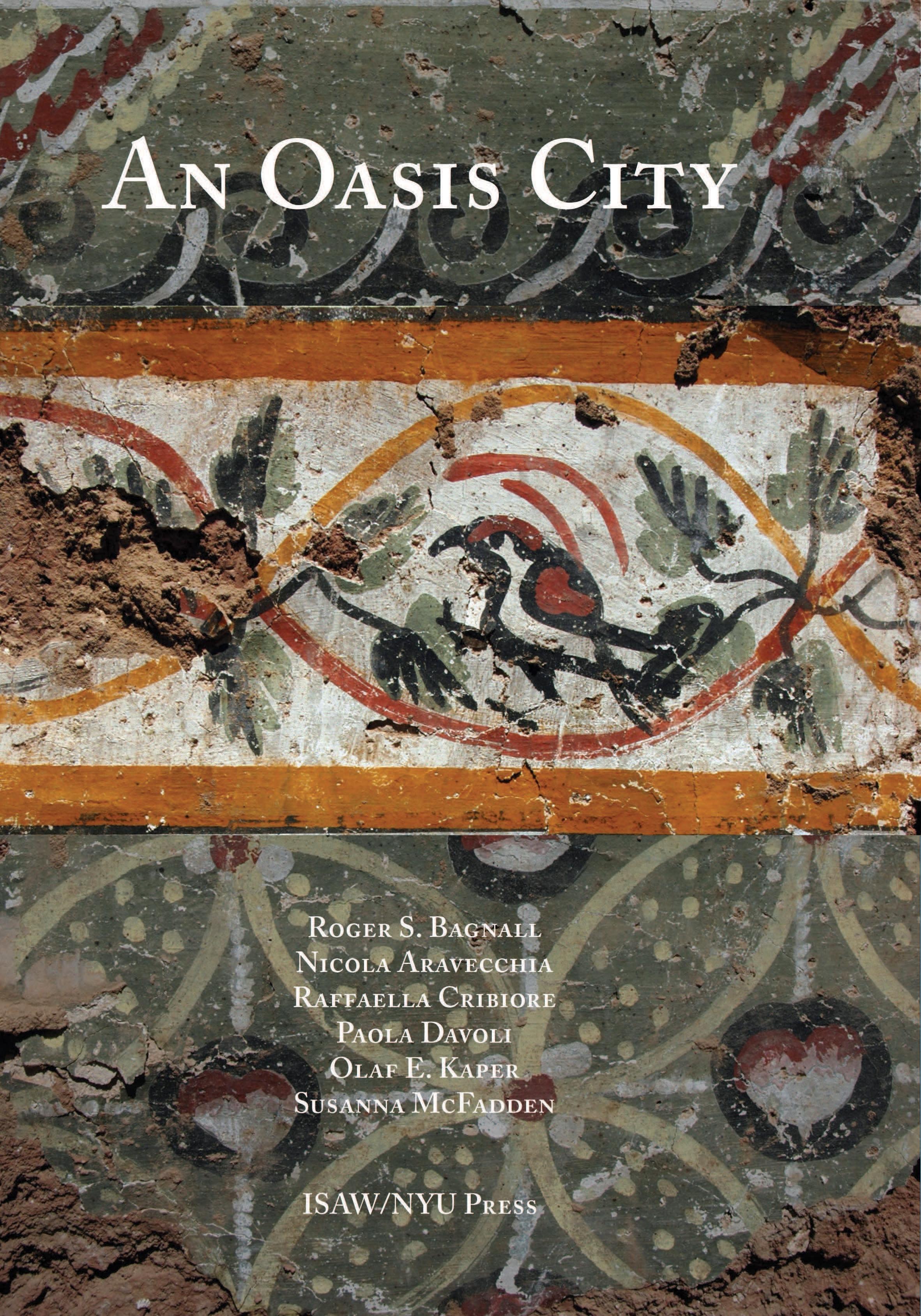
Scattered through the vast expanse of stone and sand that makes up Egypt’s Western Desert are several oases. These islands of green in the midst of the Sahara owe their existence to springs and wells drawing on ancient aquifers. In antiquity, as today, they supported agricultural communities, going back to Neolithic times but expanding greatly in the millennium from the Saite pharaohs to the Roman emperors. New technologies of irrigation and transportation made the oases integral parts of an imperial economy.
Amheida, ancient Trimithis, was one of those oasis communities. Located in the western part of the Dakhla Oasis, it was an important regional center, reaching a peak in the Roman period before being abandoned. Over the past decade, excavations at this well-preserved site have revealed its urban layout and brought to light houses, streets, a bath, a school, and a church. The only standing brick pyramid of the Roman period in Egypt has been restored. Wall-paintings, temple reliefs, pottery, and texts all contribute to give a lively sense of its political, religious, economic, and cultural life. This book presents these aspects of the city’s existence and its close ties to the Nile valley, by way of long desert roads, in an accessible and richly illustrated fashion.
Płać wygodnie kartą, Klarną, Apple Pay lub Google Pay. Nie jesteś zadowolony? Zawsze masz 14-dniową gwarancję zwrotu pieniędzy. Więcej przeczytasz w naszych warunkach. Masz pytania? Napisz do nas na hello@memmo.org.
Memmo ułatwia naukę – gdziekolwiek jesteś na świecie. U nas znajdziesz podręczniki i sprytne narzędzia do nauki w jednym miejscu: streszczenia, quizy, podcasty i fiszki. A do tego Ted, Twój kumpel do nauki, który odpowie na wszystko, co Cię nurtuje. Ponad 50 000 studentów już tu się uczy – stworzone, byś uczył się szybciej i mniej stresował.