
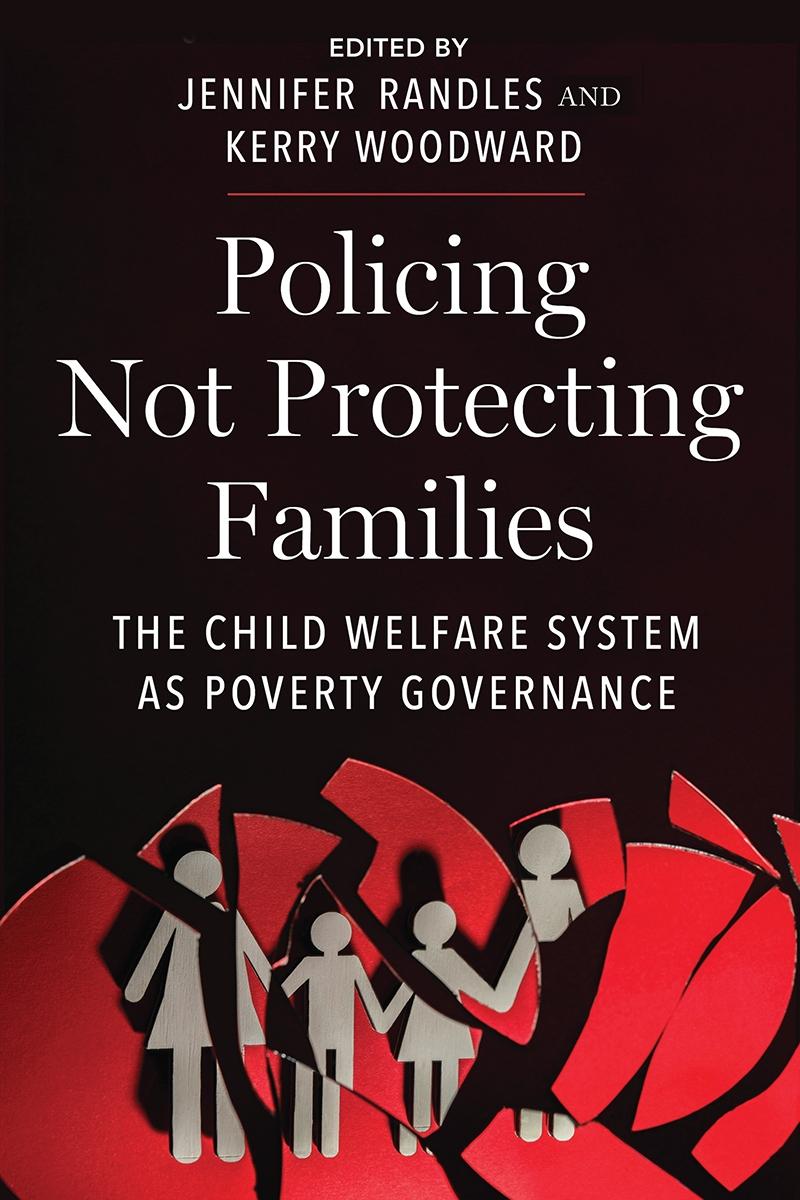
Controlling, surveilling, and punishing poor families through the child welfare system
In a typical year, one in five US children have some interaction with the child welfare system. Countless other families, particularly those who struggle to care for their children due to poverty or economic insecurity, fear child welfare system involvement. Though imagined as a system that protects children from caregivers’ maltreatment, contributors to Policing Not Protecting Families argue that the child welfare system polices and punishes poor parents who are unable to meet white, middle class parenting standards due to structural inequalities.
Bringing together scholars from anthropology, sociology, law, and social work, this collection is the first to critically examine the child welfare system’s role in governing poor, disproportionately Black and Native families. It shows that the child welfare system is a key site of poverty governance, or state control and management of poor families. Chapters bring together empirical research from diverse settings across the US, highlighting the system’s interactions with other state systems and its wide impact on marginalized families. Together the chapters illustrate the failure of the child welfare system to protect children and families from the structural inequalities that shape the lives of poor and other marginalized families.
Płać wygodnie kartą, Klarną, Apple Pay lub Google Pay. Nie jesteś zadowolony? Zawsze masz 14-dniową gwarancję zwrotu pieniędzy. Więcej przeczytasz w naszych warunkach. Masz pytania? Napisz do nas na hello@memmo.org.
Memmo ułatwia naukę – gdziekolwiek jesteś na świecie. U nas znajdziesz podręczniki i sprytne narzędzia do nauki w jednym miejscu: streszczenia, quizy, podcasty i fiszki. A do tego Ted, Twój kumpel do nauki, który odpowie na wszystko, co Cię nurtuje. Ponad 50 000 studentów już tu się uczy – stworzone, byś uczył się szybciej i mniej stresował.