
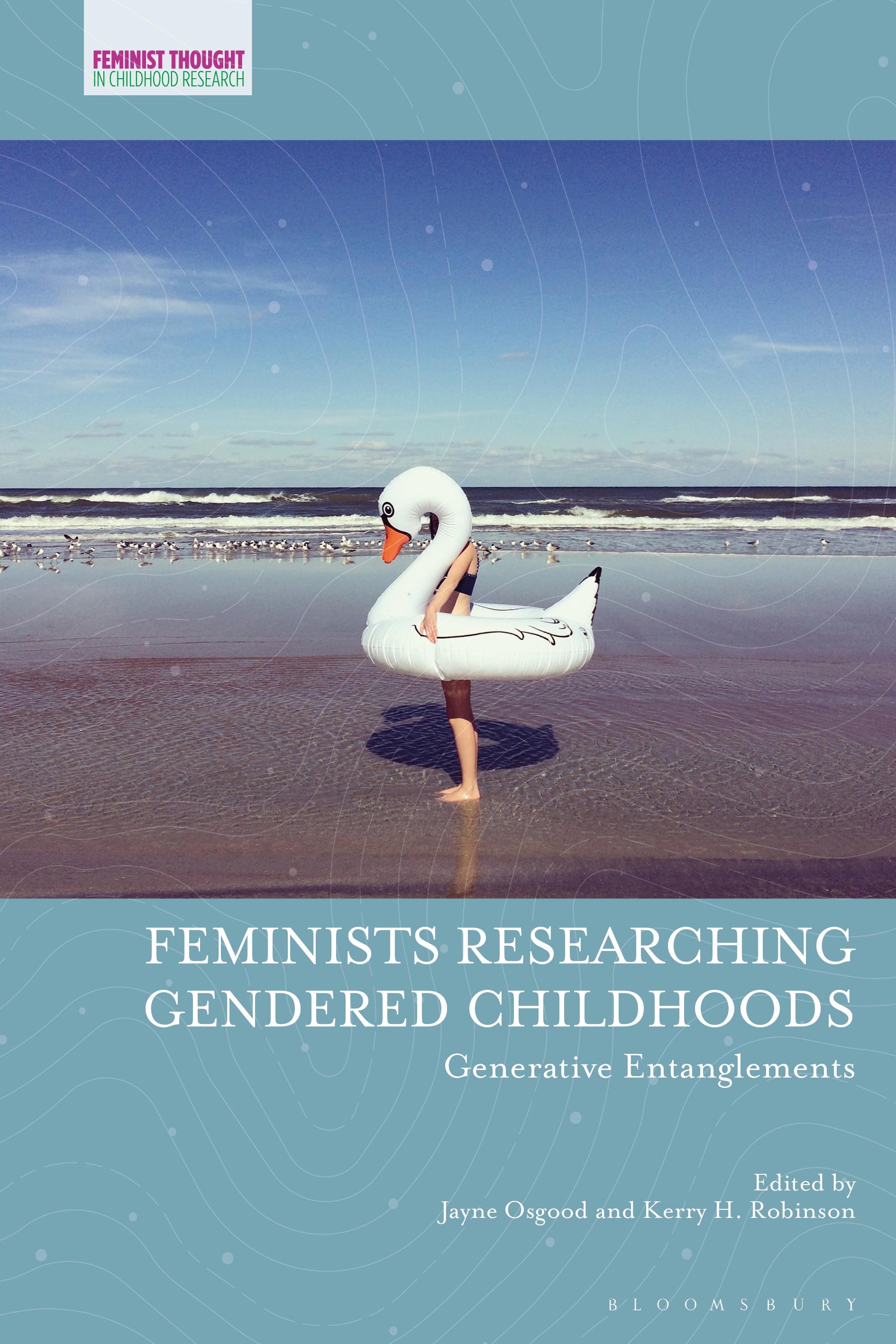
Feminists Researching Gendered Childhoods charts the evolving nature of feminist theory and research methods in childhood studies and the generative potential this holds for researchers, academics and educators to continue to push ideas and practices. The book traces the threads of affect and effect that feminist theories and methodologies have made over time to thinking more, and differently, about gender in childhood. In the wake of the 'new materialist turn' in feminist research, the book sought to address two pressing questions: what is especially new about feminist new materialism, and what is especially feminist about feminist new materialism. These questions are generative, troubling, unsettling and invited the contributors on an adventure that involved re-turning and reconfiguring ideas and practices about gender and childhood.
Along with the editors, Jayne Osgood (UK), and Kerry H. Robinson (Australia), five key international feminist scholars, Mindy Blaise (Australia), Bronwyn Davies (Australia), Debbie Epstein (UK), Jen Lyttleton-Smith (UK), and Veronica Pacini-Ketchabaw (Canada) collaborated on this book project. Their reflective accounts capture the contribution of their own work and that of their peers, to advancing research practices and theorisations of gender in childhood. Having all approached the study of gendered childhoods in creative and critical ways, these important feminist researchers re-engage and critically reflect on their earlier work alongside their more contemporary contributions to the field. The book is as much about the processes involved in its creation as it about the material/digital end product. The chapters work with both familiar and unfamiliar feminist methodological frameworks that bring affect, materiality and embodiment, as well as textual representations of gender and childhood, into play. The book engages with, and generates artwork, poetry, photographs as a means to grapple with how gender, childhood, family, curriculum and policy have been, and might be researched. The book captures a lively, collaborative, feminist experiment that sought to make space for fresh conceptualisations of gender in childhood. Issues addressed include: social justice and transformative methodologies in childhood research; advancing theoretical perspectives that contribute to fresh understandings of gender in young children's lives; the ways that research into gender in childhood play out in educational agendas; and the specific gender issues perceived critical to address in contemporary childhoods lived in the post-Anthropocene.
Along with the editors, Jayne Osgood (UK), and Kerry H. Robinson (Australia), five key international feminist scholars, Mindy Blaise (Australia), Bronwyn Davies (Australia), Debbie Epstein (UK), Jen Lyttleton-Smith (UK), and Veronica Pacini-Ketchabaw (Canada) collaborated on this book project. Their reflective accounts capture the contribution of their own work and that of their peers, to advancing research practices and theorisations of gender in childhood. Having all approached the study of gendered childhoods in creative and critical ways, these important feminist researchers re-engage and critically reflect on their earlier work alongside their more contemporary contributions to the field. The book is as much about the processes involved in its creation as it about the material/digital end product. The chapters work with both familiar and unfamiliar feminist methodological frameworks that bring affect, materiality and embodiment, as well as textual representations of gender and childhood, into play. The book engages with, and generates artwork, poetry, photographs as a means to grapple with how gender, childhood, family, curriculum and policy have been, and might be researched. The book captures a lively, collaborative, feminist experiment that sought to make space for fresh conceptualisations of gender in childhood. Issues addressed include: social justice and transformative methodologies in childhood research; advancing theoretical perspectives that contribute to fresh understandings of gender in young children's lives; the ways that research into gender in childhood play out in educational agendas; and the specific gender issues perceived critical to address in contemporary childhoods lived in the post-Anthropocene.
Płać wygodnie kartą, Klarną, Apple Pay lub Google Pay. Nie jesteś zadowolony? Zawsze masz 14-dniową gwarancję zwrotu pieniędzy. Więcej przeczytasz w naszych warunkach. Masz pytania? Napisz do nas na hello@memmo.org.
Memmo ułatwia naukę – gdziekolwiek jesteś na świecie. U nas znajdziesz podręczniki i sprytne narzędzia do nauki w jednym miejscu: streszczenia, quizy, podcasty i fiszki. A do tego Ted, Twój kumpel do nauki, który odpowie na wszystko, co Cię nurtuje. Ponad 50 000 studentów już tu się uczy – stworzone, byś uczył się szybciej i mniej stresował.