
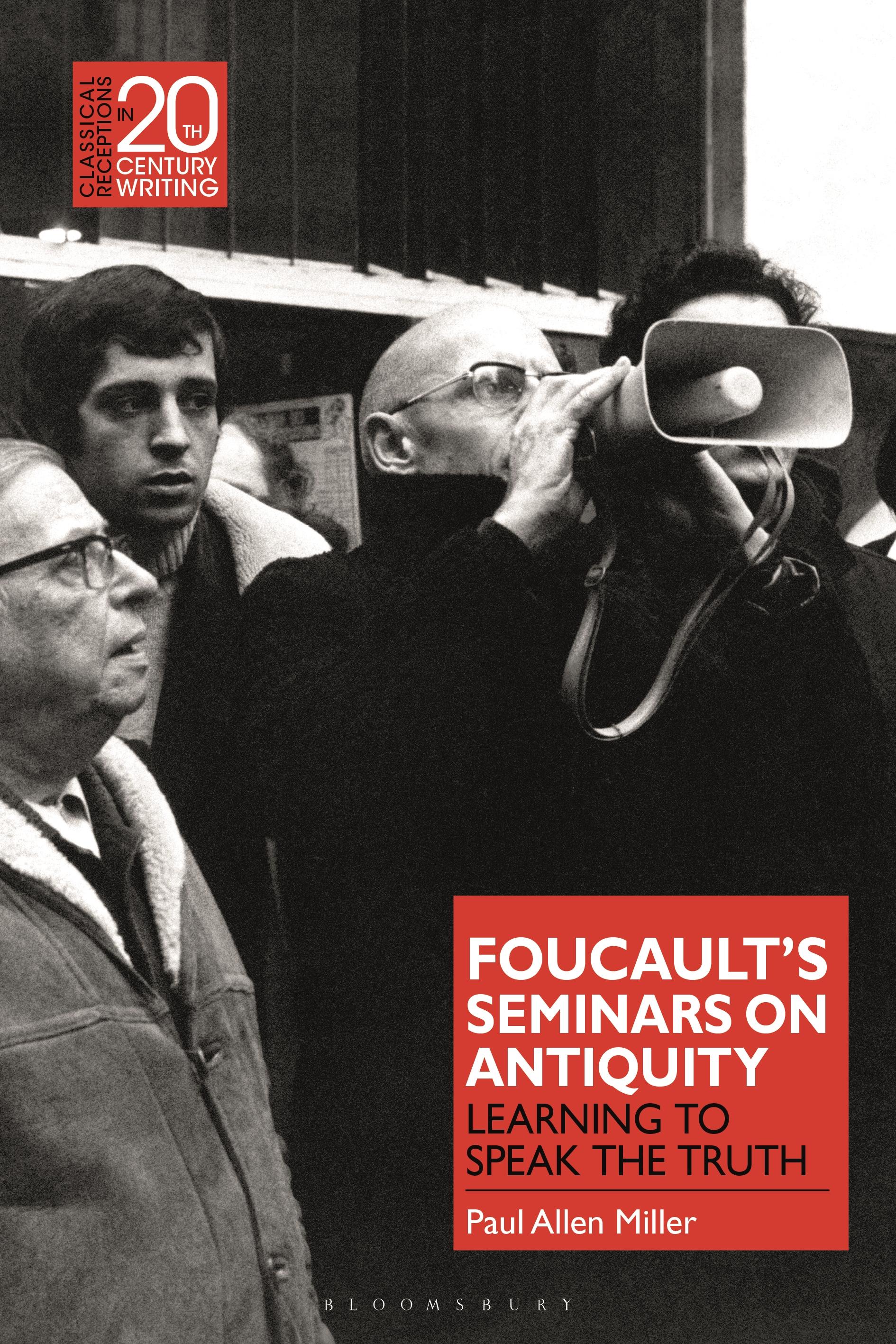
In 1980, Michel Foucault's work makes two decisive turns. On the one hand, as announced at the start of his course at the Collège de France for that year, Le Gouvernement des vivants, his topic will be the modalities through which power constitutes itself in relation to truth. On the other, the texts on which he will concentrate will no longer be those of the early modern period. Rather, he begins with one by Dio Cassius on the emperor Septimius Severus and then proceeds to spend the next two sessions offering a reading of Oedipus Tyrannus. He will concentrate on works from antiquity for the rest of his life.
This book will offer the first detailed account of these lectures, examining both the development of their philosophical argument and the ancient texts on which that argument is based. This is the period during which Foucault also began work on Volumes 2 and 3 of the History of Sexuality. Yet, while there are clear overlaps between the work he was presenting in his course and the last books he published before his death, nonetheless the seminars are anything but rough drafts for the published work. Instead they offer a sustained encounter with the texts of the classical and early Christian era while seeking to trace a genealogy of the western subject as a speaker of truth.
This book will offer the first detailed account of these lectures, examining both the development of their philosophical argument and the ancient texts on which that argument is based. This is the period during which Foucault also began work on Volumes 2 and 3 of the History of Sexuality. Yet, while there are clear overlaps between the work he was presenting in his course and the last books he published before his death, nonetheless the seminars are anything but rough drafts for the published work. Instead they offer a sustained encounter with the texts of the classical and early Christian era while seeking to trace a genealogy of the western subject as a speaker of truth.
Płać wygodnie kartą, Klarną, Apple Pay lub Google Pay. Nie jesteś zadowolony? Zawsze masz 14-dniową gwarancję zwrotu pieniędzy. Więcej przeczytasz w naszych warunkach. Masz pytania? Napisz do nas na hello@memmo.org.
Memmo ułatwia naukę – gdziekolwiek jesteś na świecie. U nas znajdziesz podręczniki i sprytne narzędzia do nauki w jednym miejscu: streszczenia, quizy, podcasty i fiszki. A do tego Ted, Twój kumpel do nauki, który odpowie na wszystko, co Cię nurtuje. Ponad 50 000 studentów już tu się uczy – stworzone, byś uczył się szybciej i mniej stresował.